

Courtesy Flag Size and Placement: Where to Fly It and How Large
A courtesy flag is more than decoration: its size and position help identify a visiting vessel and show respect for the waters it enters. As a practical starting point for courtesy flag size and placement, use the rule of thumb of one-half inch of flag for every foot of vessel length, and fly it from the starboard spreader or yardarm in foreign waters. Wait until customs and immigration clearance is complete before replacing the yellow Q flag with the host country’s courtesy flag.
A courtesy flag is more than a gesture: some destinations may make flying one a local legal requirement. Seattle Yacht Club advises raising it when entering the host country’s waters and keeping it flying until leaving those waters.
This guide explains when to fly a courtesy flag, what it can signal beyond courtesy, and how to choose a size that suits your vessel. It also covers placement on sailboats and motor cruisers, including why the starboard spreader or yardarm is the usual choice in foreign waters.
Table of Contents
1. When Should I Fly a Courtesy Flag?
Raise a courtesy flag when entering a host country’s waters, then keep it flying until the vessel leaves. Before customs and immigration clearance, fly the yellow Q quarantine flag; replace it with the host country’s flag after clearance. This sequence distinguishes a vessel awaiting clearance from one cleared to cruise in foreign waters.
On a commercial vessel, keep the courtesy flag separate from the national flag. U.S.-flagged commercial vessels must display the American flag during daylight hours while in port and when meeting or passing other vessels at sea. The national flag belongs at the stern, while the courtesy flag uses a separate suitable position. This keeps the vessel’s national identity clear while showing respect to the host country.
For a sailing vessel with one flag halyard, Seattle Yacht Club guidance allows the courtesy flag at the top of the halyard, with remaining flags in order of precedence below it. Follow the clearance sequence: fly the Q flag first, then the host country’s courtesy flag after clearance. On a motor vessel, choose a visible position that keeps the courtesy flag separate from the national flag and clear of navigation and deck operations.
Use vessel length as the starting point for flag size. A common rule of thumb is one-half inch of flag for every foot of overall length. Use the vessel’s overall length as a starting point when choosing a stern flag size. Approximate dimensions for vessels under 100 feet range from 12 by 18 inches to 24 by 36 inches. For vessels 100–200 feet long, the listed range is 3 by 5 feet to 4 by 6 feet.
Vessel type can affect the sizing calculation. Seattle Yacht Club guidance sizes a powerboat’s courtesy flag at five-eighths inch on the fly per foot of overall length, compared with the general one-half-inch rule of thumb. Treat these as separate approaches rather than combining them. Apply the general rule consistently, or use the powerboat guidance for that vessel type.
Before hoisting, check that the flag is readable in its intended position and not oversized beside the national flag. In foreign waters, the courtesy flag should be smaller than the American flag. Also consider the vessel’s clearance status, destination waters, overall length, and available halyard, as these determine the right timing, size, and arrangement.
2. Courtesy flags: more than a courtesy?
A courtesy flag signals respect for the host country and follows a clear display sequence. It differs from a national flag or yacht ensign: the ensign identifies the vessel’s national connection, while the courtesy flag represents the country whose waters the vessel is visiting. The yacht ensign is appropriate only in U.S. waters. Keep each flag in its proper position so one signal doesn’t obscure or replace another.
After customs and immigration clearance, replace the yellow Q quarantine flag with the host country’s courtesy flag. At morning colors, hoist or set the national or yacht ensign first, then display the foreign courtesy flag; Seattle Yacht Club guidance gives 0800 each morning as the time for this sequence. Some countries courteously accept a visiting vessel hoisting the host flag above the Q flag before clearance, but the standard sequence is to wait until clearance is complete.
Flag etiquette also governs when each flag comes down. Seattle Yacht Club guidance says to retire the national flag or yacht ensign at sunset and reinstate it at 0800 the following morning. The courtesy flag, by contrast, is advised to fly 24 hours a day, seven days a week while the vessel remains in foreign waters. Lower it when departing those waters. The Federal Flag Code says the U.S. flag is generally displayed from sunrise to sunset, but may be flown 24 hours a day for a patriotic effect if properly illuminated at night.
There’s no general legal requirement to fly a courtesy flag everywhere, though local rules may require one. Indonesia, for example, requires foreign vessels to fly its courtesy flag, with any national ensign smaller and lower. This illustrates why the flag can signal more than politeness: local requirements may affect what a visiting vessel displays and where each flag goes.
Where can you buy courtesy flags, and what do they cost? Tower Flags offers flags, and the cost depends on the flag’s size and construction. Choose one that suits the vessel and display position: an oversized flag can overwhelm the ensign, while one that is too small may be difficult to identify.
Common mistakes include replacing the Q flag before clearance, raising the courtesy flag before the ensign at morning colors, and leaving it flying after departure. Another is treating the courtesy flag as a national flag or yacht ensign. Keep the flags distinct, follow the sequence, and lower the visiting-country flag when leaving its waters. For a flag suited to your display, explore available flags.
3. Courtesy flag placement on sailboats and motor cruisers
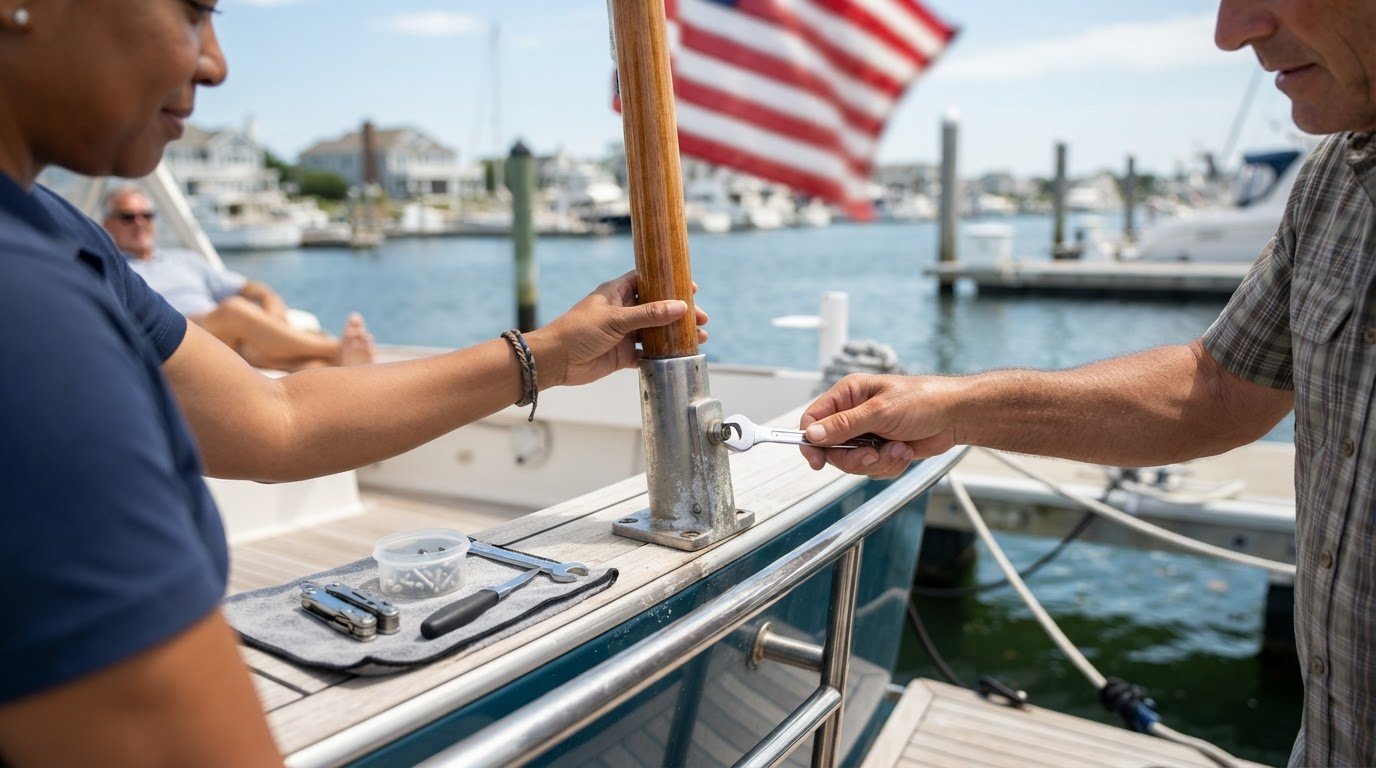
Where should a courtesy flag be displayed on a boat? On a sailboat, use the starboard crosstrees or spreader; on a motor cruiser without a dedicated signal halyard, use the bow. The right position depends on the vessel’s rig and available halyards. Keeping the courtesy flag separate from the national flag preserves the meaning of each signal.
On a single-masted yacht, place the courtesy flag at the uppermost flag position on the starboard crosstrees. A yacht with multiple masts should display it from the starboard spreader of the forward mast. These positions keep the visiting-country flag high and visible without confusing it with the national ensign, which has its own established position.
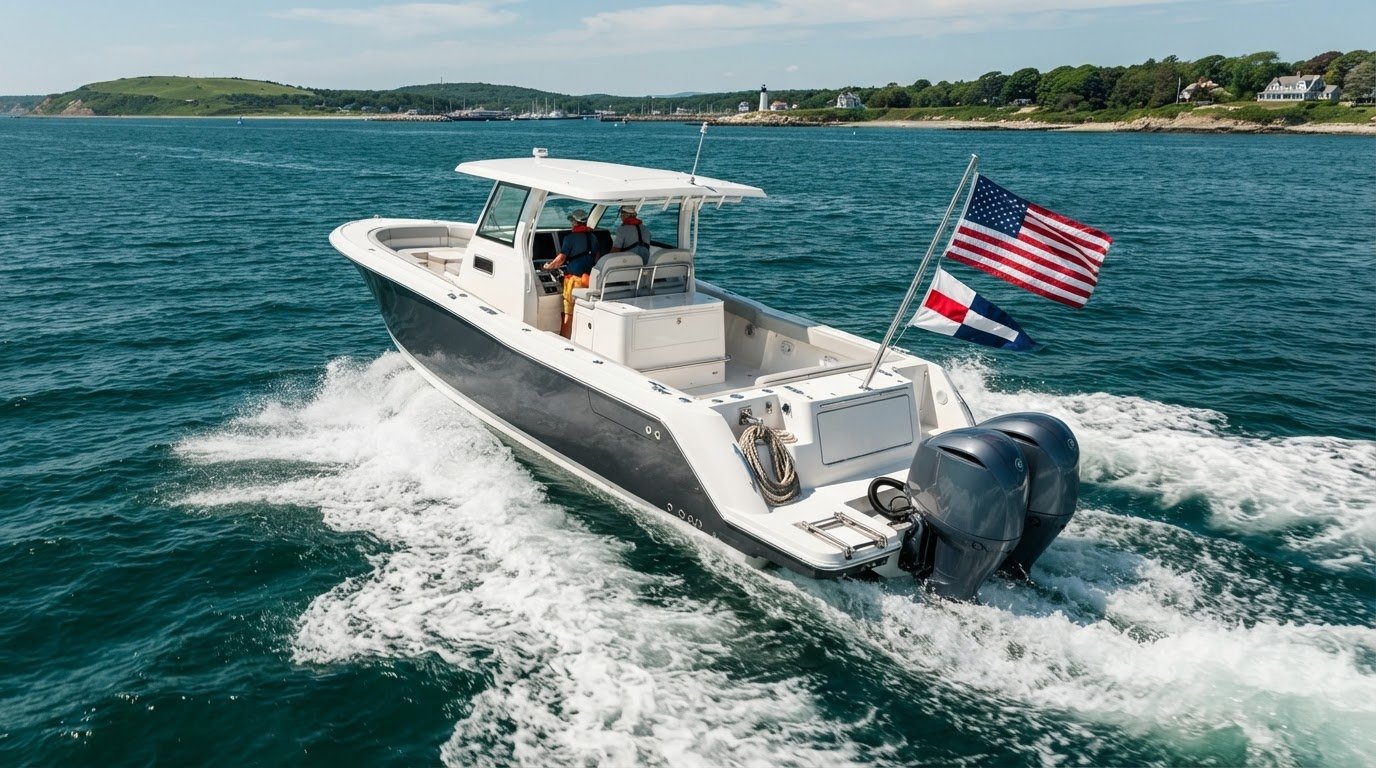
For a motor cruiser, a dedicated signal halyard gives the courtesy flag its own display point. Without one, fly it at the bow or use an appropriate separate flagpole. It can also sit beside the national flag or at the starboard spreader, provided it remains distinct. Fly it alone on its halyard: stacking other flags there can obscure the signal and depart from flag protocol.
Keep the stern reserved for the vessel’s national flag. On a U.S. boat at anchor or made fast, fly the national ensign from the stern staff. A U.S. Marconi-rigged sailboat may instead display its ensign from the leech of the aftermost sail or the backstay, about two-thirds of the way up. Regional, county, and cruising-club flags belong on the port spreader, not beside the stern ensign or the starboard courtesy flag.
Flag sizing for sailboats depends on the flag’s purpose. For club burgees, officer flags, and private signals, Seattle Yacht Club guidance uses approximately one-half inch of fly for each foot of the tallest mast above the waterline. For example, a sailboat with a mast 30 feet above the waterline calls for a 15-inch fly for these other flags. This is a separate calculation from sizing a courtesy flag by vessel length.
Before setting sail, identify the national ensign’s position, then choose a separate starboard display for the courtesy flag. Check that lines run freely and that sails, rigging, and deck activity won’t hide or foul the flag. On a multi-mast yacht, use the forward mast’s starboard spreader; on a cruiser without a signal halyard, use the bow. This vessel-type check helps keep the display clear in foreign or international waters.
4. Boat flag and staff sizing
Choosing the right courtesy flag size and placement starts by identifying the flag’s purpose and matching the staff to its dimensions. A vessel’s national flag or ensign at the stern uses a different sizing rule from a courtesy flag, burgee, or private signal. Keeping those calculations separate helps the display stay proportionate in U.S. waters and when cruising in another country.
For a stern national flag or ensign, use a fly of one inch per foot of the vessel’s overall length. A 30-foot vessel, for example, calls for a 30-inch fly under this guideline. For a courtesy flag, a common rule of thumb is one-half inch per foot of overall vessel length. Seattle Yacht Club guidance instead sizes a powerboat’s courtesy flag at five-eighths inch on the fly per foot of overall length.
Other reference sizes offer a useful comparison by vessel length:
These size ranges are practical reference points, while the fly-per-foot calculation offers a way to scale flags for other lengths. For vessels under 100 feet, approximate flag dimensions range from 12 by 18 inches to 24 by 36 inches. Vessels 100–200 feet long use approximate dimensions from 3 by 5 feet to 4 by 6 feet; vessels over 200 feet use 5 by 8 feet or larger.
Staff length follows the flag’s vertical edge. A boat flag staff should be twice the length of the ensign’s vertical edge. For a 24-inch hoist, that means a 48-inch staff. A 33-foot boat is also given as an example of a vessel using a 24-by-36-inch nautical flag with a 48-inch staff.
Flag proportions matter, too. The U.S. flag has a traditional hoist-to-fly ratio of 10:19, though other proportions are also found today. Seattle Yacht Club guidance gives the Canadian flag a 1:2 ratio. A union jack should match the canton of the national ensign flown from the staff.
For club burgees, officer flags, and private signals, size by vessel type rather than using the stern-ensign rule. Seattle Yacht Club guidance recommends approximately one-half inch of fly per foot of a sailboat’s tallest mast above the waterline. On powerboats, it recommends five-eighths inch per foot of overall boat length. A sailboat with a mast 30 feet above the waterline, for instance, uses a 15-inch fly for these flags.
To decide on courtesy flag size and placement, compare the flag’s hoist and fly with the available staff, halyard, and display position. The correct ratio keeps the design in proportion, while a staff twice the length of the flag’s vertical edge supports a balanced display. Choose a size suited to the vessel, and keep the flag in good condition for clear identification in cruising waters.
5. Courtesy flag placement on the starboard spreader or yardarm
How should a courtesy flag be mounted and oriented? In foreign waters, fly it alone from a halyard on the starboard side, commonly at the starboard spreader or yardarm. Secure the hoist edge to the halyard so the flag can hang or fly freely, with its design visible and unobstructed.
The starboard spreader is a practical position on a sailboat because it separates the courtesy flag from the national ensign. Seattle Yacht Club guidance places a foreign courtesy flag alone on the starboard spreader. It also describes a halyard on the main mast’s starboard side, up to the lowest spreader, as an option. The key is a clear, separate display.
A yardarm can provide another elevated position when the vessel’s rig has one. Choose a halyard that lets the flag hang clear of sails, lines, and other signals. Check its travel before hoisting: the flag should raise and lower without catching on rigging or contacting equipment. The position should also keep the national flag distinct rather than crowding its display point.
Powerboats use a different setup. Seattle Yacht Club guidance says to fly a foreign courtesy flag alone, typically from a powerboat’s starboard antenna. A motor cruiser without a dedicated signal halyard can display it at the bow. The vessel’s available mounting points determine which option is practical. Keep the flag visible without interfering with navigation or normal boat operation.
Before departure, inspect the chosen halyard and attachment point. Secure the flag by its hoist edge, with its identifying design facing outward. Raise it high enough to remain visible, and check that it won’t wrap around a stay, mast, or antenna. A flag that twists or snags can be difficult to identify, so freedom of movement matters as much as position.
Keep other signals off the courtesy flag’s halyard. Seattle Yacht Club guidance calls for the foreign courtesy flag to fly alone, not beneath guest flags or burgees. A regional, county, or cruising-club flag belongs on the port spreader rather than in the starboard courtesy-flag position. This separation makes the vessel’s flag arrangement easier to read.
Use the starboard spreader or yardarm when the sailboat’s rig allows a clear, dedicated display. For a powerboat, use the starboard antenna or bow according to its setup. To prepare a vessel for a clean marine display, choose a flag for your boat.
Tower Flags: Flag Pole Brackets
Tower Flags offers a practical mounting solution for your courtesy-flag setup. Its Flag Pole Brackets and Flag Poles are made to the exact specifications of your boat’s tower, giving you a dedicated place to display flags. The brackets and poles are threaded so the poles screw directly into the brackets, making installation and removal quick. Choose this option when your existing arrangement lacks the position or support you need for a clear display.
Start by choosing the mounting location. A starboard-side display, bow position, or separate pole each needs hardware suited to that setup. Tower Flags designs and fabricates custom-fit brackets and poles for your tower, using a high-strength carbon fiber composite. Explore Tower Flags’ flags and mounting options, or contact the company with your questions. You can also visit towerflags.com.
Make Your Flag Setup Ready for the Water
A well-planned display depends on more than choosing a flag. The mounting point, available space, and boat’s configuration all shape how the setup works in practice. Use your understanding of courtesy flag size and placement to decide what your vessel needs before choosing its hardware.
Tower Flags offers Flag Pole Brackets and Flag Poles for boat flag displays, along with Gift Cards. A custom-fit bracket or pole can help when your current mounting arrangement doesn’t suit the chosen position. As you plan, consider how the flag will be raised and lowered and kept clear of surrounding equipment.
For guidance on selecting a flag setup, contact Tower Flags for flag advice. A considered choice now can make your display feel deliberate and ready for your next time on the water.
Frequently Asked Questions
Courtesy flags: more than a courtesy?
Yes. A courtesy flag shows respect for the country whose waters a visiting vessel enters, and it may also meet a local requirement. It doesn’t replace the vessel’s national flag or yacht ensign, which identifies its national connection. For example, a U.S. boat displaying the host country’s flag still uses its own national flag in the proper position. Treat the two flags as separate signals.
When Should I Fly a Courtesy Flag?
Raise the host country’s courtesy flag when your vessel enters its waters, and lower it when you leave. If you’re arriving from international waters, fly the yellow Q quarantine flag while awaiting official clearance. Once customs and immigration clearance is complete, switch to the courtesy flag. This timing distinguishes a vessel awaiting clearance from one that has completed the entry process.
What is a courtesy flag on a boat?
A courtesy flag represents the country a visiting boat is entering or cruising in. It acknowledges the host country and identifies the vessel as a visitor; it isn’t the boat’s national flag or yacht ensign. For instance, a U.S. vessel visiting Canadian waters may display Canada’s flag as its courtesy flag while keeping its own national flag in the proper position.
What size should a courtesy flag be for a boat?
A common starting point is one-half inch of flag for each foot of the vessel’s overall length. Powerboat sizing guidance also uses five-eighths inch of fly per foot, so choose the method that suits the vessel rather than blending formulas. The flag should remain legible in its display position and smaller than the American flag when flown in foreign waters.
How do you choose courtesy flag size based on boat length?
Measure the vessel’s overall length, then apply the sizing guideline consistently. Under the one-half-inch-per-foot rule, a 40-foot boat would use a 20-inch fly. For powerboats, the five-eighths-inch guidance would yield a 25-inch fly for the same length. Compare the result with the flag’s proportions and available mounting position so the flag can fly clearly without dominating the display.
When should a boat fly a courtesy flag?
Fly the flag while visiting a foreign country’s waters, following that country’s clearance process. A courtesy flag is generally displayed after customs and immigration clearance; before clearance, the yellow Q flag signals quarantine status. Keep the courtesy flag up until the vessel leaves those waters. Local rules can differ, so consider the destination when planning the flag sequence for an international cruise.
What are the rules for flying courtesy flags in U.S. waters?
There’s no general requirement to fly a courtesy flag in U.S. waters, though local rules may impose one in particular places. The yacht ensign is appropriate only in U.S. waters. Under Section 2, paragraph (a), of the United States Flag Code, the U.S. flag is generally displayed from sunrise to sunset; it may fly overnight for patriotic effect when properly illuminated.
Comments