

How to Fix a Loose Flag Pole Mount: A Practical Guide
A loose flag pole mount isn’t always caused by a loose screw. Movement can come from the pole shifting inside the bracket, fasteners backing out, or the mounting surface weakening. Before tightening anything, find the source. If you’re figuring out how to fix a loose flag pole mount, identifying the moving connection can help prevent further damage to the bracket, pole, or surface.
It’s tempting to reach for a wrench right away, but tightening hardware without knowing what has failed can make the problem worse. This guide explains how to locate the movement, match a repair to the mount and surface, and recognize when damage makes replacement the safer option.
You’ll learn what to inspect, how to assess common mounting problems, and when to stop using a mount that may no longer be secure. For boat owners, a damaged or unsuitable mount may call for a custom-fabricated bracket and pole designed for the intended marine application. Start with a clear diagnosis, not more force on a wrench.
Table of Contents
Why Is Your Flag Pole Mount Loose? Identify the Connection First
A pole that sways, a bracket that shifts, and an in-ground pole that leans can look like the same problem from a distance. But each points to a different connection, and tightening the wrong one can damage sound hardware or a weakened surface. Before deciding how to fix a loose flag pole mount, identify exactly where the movement starts.
Think of the assembly as a series of connections: the pole sits in or attaches to a bracket, and the bracket attaches to a wall, deck, or other support. In-ground poles use a different arrangement, typically a sleeve set into the ground. A general overview of flagpole types and components is available in Flagpole.
Which part of the flag pole mount is moving?
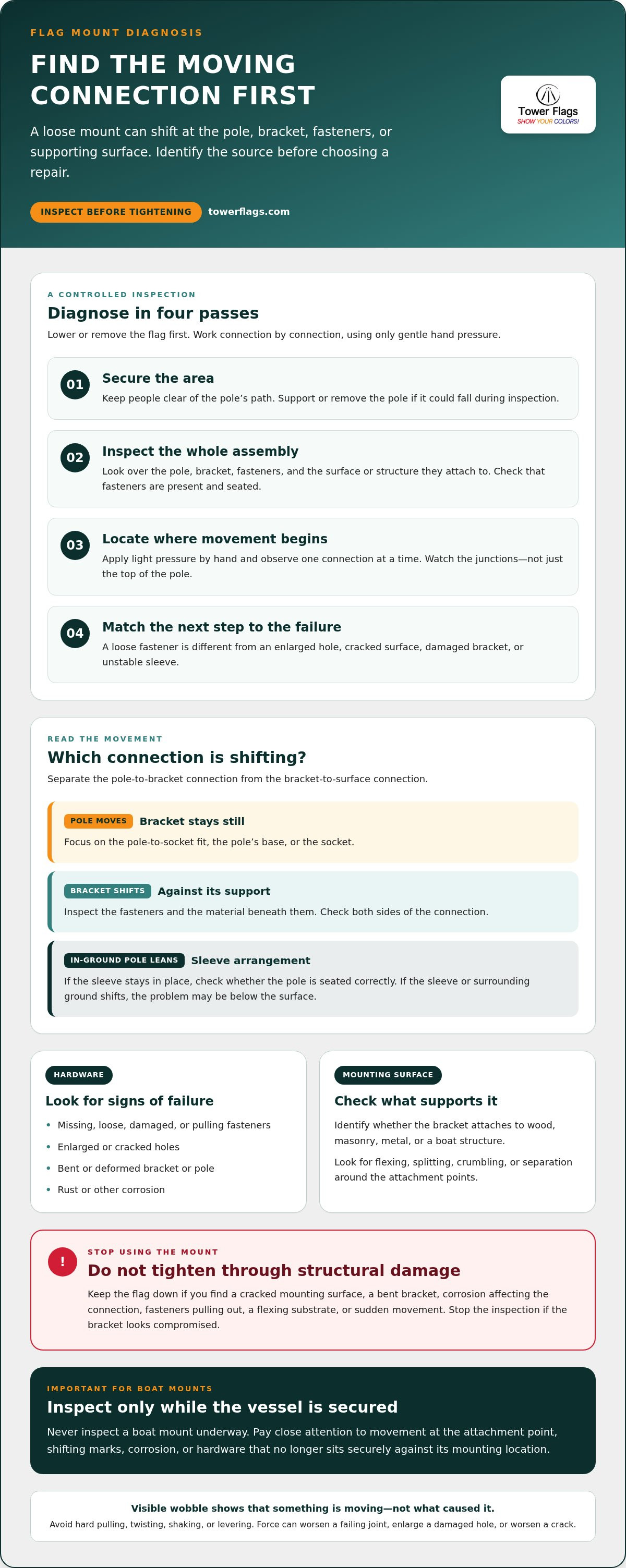
Check the pole-to-bracket connection separately from the bracket-to-surface connection. If the pole shifts inside a fixed socket, focus on the pole’s base or the socket. If the pole and bracket move together, inspect the fasteners and the surface beneath them. On a boat, pay close attention to movement at the attachment point, where a loose connection can shift as the vessel moves.
Watch the junctions, not just the top of the pole. A visible wobble confirms that something is moving, but it doesn’t show whether the cause is a loose fastener, a poor fit, or a damaged support. Avoid pulling or twisting hard to test it, since force can worsen a failing joint.
Loose bracket or leaning in-ground flagpole?
An in-ground sleeve is a receiving tube set into the ground, not a bracket fixed to a wall or boat structure. If the pole leans while the sleeve stays in place, the pole may not be seated correctly. If the sleeve or surrounding ground shifts, the problem may be below the surface rather than at a bracket fastener. Treat in-ground alignment separately from wall- and boat-mount repairs.
For an attached mount, inspect both sides of the connection. A wall bracket can appear to be the source of a lean when the actual issue is a loose or deteriorated attachment point. On a boat, look for shifting marks, corrosion, or hardware that no longer sits securely against its mounting location.
Stop using the mount if you find a cracked mounting surface, a bent bracket, corrosion that affects the connection, or movement that began suddenly. Don’t try to correct structural damage by tightening harder. Keep the flag down until you understand the mount’s condition. A compromised connection needs an appropriate repair or replacement, not added strain.
Pole moves inside a stationary bracket: Focus your inspection on the pole-to-socket fit.
Bracket shifts against the surface: Inspect its fasteners and the material supporting them.
In-ground pole leans: Assess the sleeve and surrounding ground, not attached-bracket hardware.
This distinction narrows down the cause before you begin a repair. A loose fastener may be straightforward to address, while movement caused by a cracked surface, damaged bracket, or unstable sleeve calls for a different response.
How to Diagnose a Loose Flag Pole Mount Before Repairing It
Start with a controlled inspection, not a wrench. Lower or remove the flag and clear the area around the pole. A flag catches wind and adds load to the assembly, which can obscure small movements and make an unstable mount harder to handle. On a boat, inspect the mount only while the vessel is secured, never underway.
Work through these checks in order. The goal is to locate the failed connection before choosing how to fix a loose flag pole mount.
Secure the area. Keep people clear of the pole’s path, and support or remove the pole if it could fall during inspection.
Look over the full assembly. Check the pole, bracket, fasteners, and the surface or structure they attach to.
Locate where movement begins. Use only gentle hand pressure and observe one connection at a time.
Choose the next step. A sound bracket with a loose fastener is different from an enlarged hole, cracked surface, or damaged bracket.
Inspect fasteners, bracket, pole, and mounting surface
Check that each fastener is present and seated. Look for looseness, damage, or signs that a fastener is pulling away from its support. Examine the holes for enlargement or cracking, and inspect the bracket and pole for bending, deformation, rust, or other corrosion. If a fastener turns without securing the bracket, the hole or supporting material may be compromised.
Identify what the bracket attaches to, such as wood, masonry, metal, or a boat structure. The same symptom can have different causes depending on the mounting surface. Look for flexing, splitting, crumbling, or separation around the attachment points. A replacement fastener won’t necessarily solve a problem in the material beneath it.
Find the source of movement without forcing the mount
Apply light pressure by hand to the pole, then observe the bracket and attachment point. If the pole shifts while the bracket stays still, focus on the connection between those parts. If the bracket moves against its support, the issue is at the attachment. Don’t lever the pole, shake it forcefully, or use a tool to test movement. This can enlarge a damaged hole or worsen a crack.
Stop the inspection if the substrate flexes, fasteners pull out, or the bracket looks compromised. Keep the flag down rather than testing how much force the mount can take. For a boat installation, assess a shifting attachment point while the vessel is safely secured. Movement underway can put additional strain on the assembly.
Once you’ve noted what moves and what damage is visible, choose a repair that addresses the actual failure instead of tightening every fastener indiscriminately. If a boat bracket is damaged or unsuitable for its mounting location, custom marine flag brackets offer a replacement option tailored to the boat application.
How to Fix a Loose Flag Pole Mount Based on the Failure
The right repair depends on what failed. A loose fastener in an otherwise sound mount may need careful tightening. An enlarged hole, cracked surface, or bent bracket is a different problem. If you’re deciding how to fix a loose flag pole mount, don’t treat every wobble as a reason to tighten harder. Match the repair to the condition of the hardware and the material supporting it.
When careful tightening may solve the problem
Tightening is appropriate only when the fasteners are intact and accessible, visibly loose, and the bracket and mounting surface show no signs of damage. Use the correct tool and tighten gradually until the fastener is secure. Stop if it spins without holding, the bracket shifts, or the surface begins to deform. Excessive force can strip threads, damage a mounting hole, or cause a sound connection to fail.
After tightening, check the bracket gently by hand. Don’t reinstall the flag or load the pole to test it. The mount should stay seated under light pressure. If movement persists, stop and reassess rather than applying more torque.
When damaged hardware or mounting material needs a different fix
Repeated tightening won’t restore an enlarged hole, secure a fastener in weakened material, repair a crack, or straighten a bent bracket. These signs call for a repair suited to the damaged surface or replacement of the affected hardware. A new fastener alone can’t make a compromised bracket or surface sound again.
Keep the flag down if the attachment point is damaged, especially on a boat. Don’t improvise repairs to structural boat or tower components, or drill, bend, or modify a load-bearing structure to fit a flag mount. If the bracket itself has failed, choose a replacement that matches the boat and intended mounting location. Custom-fabricated marine flag brackets can be a suitable option when a damaged or unsuitable mount can’t be securely repaired. Custom boat flag brackets are designed around the boat application.
Before choosing a repair, distinguish a fastener problem from damage to the holding surface or bracket. Replacement fasteners must suit both the mount and its substrate. Don’t guess at the size or type, and don’t force hardware into a hole that no longer holds securely.
Loose, intact fastener: Tighten carefully with the appropriate tool, then check the bracket by hand.
Enlarged or stripped hole: Don’t rely on repeated tightening or a replacement fastener alone.
Cracked surface or pulled-out fastener: Stop using the mount until the supporting material is properly addressed.
Bent or compromised bracket: Replace unsuitable hardware rather than forcing it back into position.
If damage reaches the mounting surface or a boat structure, the safer fix may be to stop using the mount and replace or properly address the failed part. Then check that the completed repair stays secure without renewed movement.
How to Check the Repair and Reduce Future Mount Movement
A repair isn’t complete just because the bracket looks straight again. Verify the connection in stages, starting with a visual check and moving only to a gentle hand test. This helps confirm that the fasteners are seated and the pole is secure without putting unnecessary strain on the mount.
Verify the mount before raising the flag
With the flag still down, inspect the fasteners and bracket. Confirm that the bracket sits flush against its support, the fasteners remain seated, and there are no cracks, bends, or fresh signs of movement. Check that the pole fits its holder without force. A small amount of movement at a designed joint may be normal, but obvious looseness or shifting at the attachment point isn’t.
Apply light pressure by hand and watch the pole, bracket, and mounting surface. Don’t pull hard, lever the pole, or use the flag itself to test the repair. Check a boat mount while the vessel is secured. Don’t test a repaired mount at speed or under avoidable load. If anything moves, stop and reassess before raising the flag.
Recurring movement means the failure is unresolved. Keep the flag down until the cause is addressed.
Watch for repeat loosening and environmental wear
After the mount returns to use, pay attention to changes rather than relying on a fixed inspection schedule. Recheck after use and whenever you notice new rattling, shifting, corrosion, or damage. On a boat, vibration and repeated movement can expose a connection that seemed stable during a stationary hand check. Corrosion or surface damage may also become more visible over time.
Look for fasteners that have backed out, new marks where a bracket has shifted, or movement between the pole and holder that wasn’t present before. If the same connection loosens again, don’t keep tightening it as a routine fix. Repeated movement may point to a poor fit, a damaged mounting surface, or hardware that isn’t suited to the application.
For marine use, consider the bracket’s fit and intended boat application when choosing hardware. The guide to durable boat flag hardware explains why marine mounting hardware should be considered in the context of its environment and use.
If inspection shows that a boat bracket is damaged or unsuitable for its mounting location, consider a replacement designed for that application. Explore custom marine flag brackets for a mounting solution tailored to the boat and intended use.
When to Replace a Loose Boat Flag Mount Instead of Repairing It
Not every loose boat flag mount needs replacement. If the bracket is intact and movement comes from a sound, accessible fastener, a suitable repair may be enough. Bent, cracked, badly corroded, or repeatedly shifting hardware is different. Knowing how to fix a loose flag pole mount includes recognizing when another attempt to tighten it won’t restore a secure connection.
Signs a boat flag bracket has reached its repair limit
Reassess the mount if it keeps moving after appropriate tightening, or if you see cracks, deformation, damaged threads, or corrosion affecting the connection. Also look for fasteners pulling away, holes that no longer hold securely, and a mounting surface that flexes or shows damage. These conditions point beyond routine tightening. Keep the flag down while the attachment remains uncertain.
Replacing the bracket addresses the bracket, not damage to the boat structure beneath it. A cracked or weakened mounting location must be addressed before another bracket is installed. Don’t cover structural damage with a new part or improvise a repair to a tower or other boat structure. The replacement mount needs a sound place to attach.
Repair may be reasonable: The bracket and mounting point remain sound, and the looseness is limited to an intact fastener.
Replacement may be appropriate: The bracket is bent, cracked, corroded, has damaged threads, or continues to shift.
Stop before reinstalling: The boat’s mounting structure itself is cracked, weakened, or moving.
Choose marine flag hardware that fits the application
A replacement bracket should suit both the intended mounting point and the flag pole it will hold. Consider how the bracket attaches to the boat and whether its design matches that location. A mount intended for one setup may not suit a different surface or structure, so don’t assume one bracket fits every boat, tower, or pole. The right fit is central to a stable connection.
For a damaged or unsuitable mount, a custom-fit marine bracket can be a practical alternative. Tower Flags designs and manufactures custom boat flag brackets and poles for marine use, with mounting solutions tailored to boat owners and their applications. The custom boat flag bracket guide offers further context on selecting a bracket for a particular installation.
Before returning the flag to use, confirm that the replacement is seated securely and the underlying mounting point is sound. If the structure still shows damage or movement, leave the mount unused until that issue is addressed. For a bracket suited to your boat and mounting location, browse custom boat flag brackets.
Make the Next Mount a Better Fit
Use the repair as a chance to choose hardware that suits the boat, attachment point, and flag pole, so the parts work together as intended. Fit matters especially when the existing bracket has proved unsuitable for its location.
If you’re deciding how to fix a loose flag pole mount and the damaged hardware isn’t a sound candidate for repair, a tailored replacement may be the more practical next step. Tower Flags designs and manufactures custom marine flag brackets and poles, with mounting solutions tailored to boat owners and marine environments.
Browse custom boat flag brackets to explore a replacement suited to your boat’s application.
Frequently Asked Questions
How do you tighten a loose flag pole mount?
First confirm the fastener and the material around it are intact. Use a correctly fitting hand tool and tighten gradually until the bracket is seated. Stop if the screw spins, the surface compresses, or the bracket shifts. Don’t use extra leverage to force a stubborn fastener. Once secure, check the connection gently before putting the flag back up. If it loosens again, tightening alone hasn’t addressed the cause.
Why does my flag pole bracket keep coming loose?
A bracket can loosen because repeated movement works fasteners free, the mounting surface no longer holds them, or the bracket and pole don’t fit together securely. On a boat, vibration and changing loads can make a marginal connection shift again during use. Look for a pattern: if the same fastener backs out or the bracket moves at the same point, the underlying fit or support may need attention instead of another tightening.
Can I use a larger screw to fix a loose flag pole mount?
Not as a quick fix. A larger screw may not match the bracket opening or the material behind it, and forcing one in can split wood, damage threads, or weaken an already compromised attachment. First determine why the original fastener no longer holds. Replacement hardware must suit both the mount and its substrate. If the hole is enlarged or the surface is damaged, address that failure rather than assuming a bigger screw will restore it.
How do I fix a loose flag pole mount on a boat?
Keep the flag down and inspect the boat while it’s secured, not underway. Check whether movement comes from the pole holder, bracket, fasteners, or the structure where the mount attaches. Don’t drill into or modify a boat structure to compensate for a poor fit. If the bracket doesn’t suit the intended mounting point or pole, choose marine hardware designed for that application. Stop using the mount if its attachment point is damaged.
When should I replace a flag pole bracket instead of repairing it?
Replace a bracket if it’s cracked, bent, badly corroded, has damaged threads, or keeps shifting after an appropriate repair. A loose but undamaged fastener may be repairable; a bracket that can’t hold its shape or connection is not. Also inspect the surface it attaches to. A new bracket won’t fix a cracked or weakened boat structure, so address structural damage before installing replacement hardware.
Is a loose flag pole mount dangerous?
It can be, especially if the pole may fall or the bracket is attached above a walkway, seating area, or moving vessel. A loose mount can also cause the pole to strike nearby surfaces or put extra strain on its fasteners. Keep the flag lowered if the assembly shifts, the support is damaged, or the pole doesn’t remain secure. Don’t stand beneath a pole while testing an unstable mount.
How can I tell whether the flagpole or its mount is loose?
Watch the connection while applying only light pressure. If the bracket stays still but the pole moves inside its holder, the movement is at the pole-to-bracket fit. If the bracket shifts with the pole, the issue is likely at its attachment point or supporting surface. For an in-ground pole, leaning may involve the sleeve or surrounding ground instead. Don’t force the assembly to make the movement easier to see.
Comments