

Custom Boat Mounts or Standard Mounts: Compare Support and Cost
A custom boat mount isn’t automatically the better choice. The right option depends on how well it fits your vessel and the support you need. Custom mounts are designed around specific mounting needs, while a standard mount can work when it fits and supports the intended use. That’s why custom boat mounts are better when a standard option doesn’t suit the boat’s requirements.
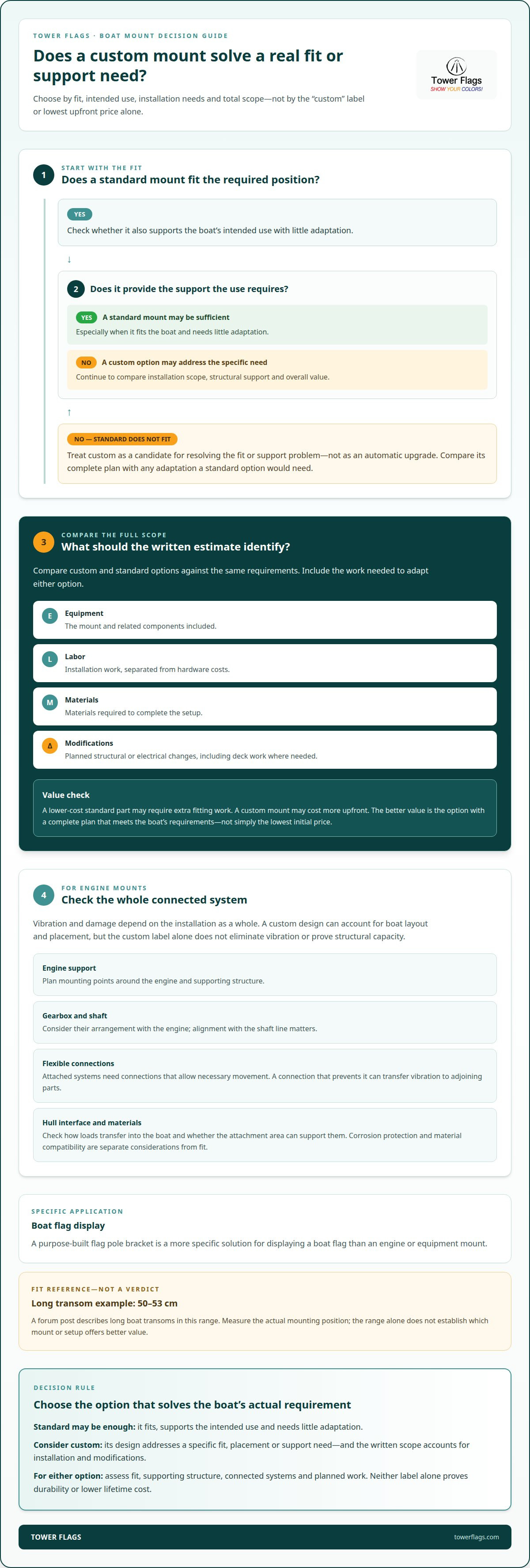
Upfront cost matters, but fit, modifications and long-term usefulness also shape the decision. Compare custom and standard mounts by their fit, installation needs and overall value. For a boat flag display, a purpose-built flag pole bracket is a more specific solution than an engine or equipment mount.
Table of Contents
Upfront cost and long-term value
A custom mount is designed for a particular boat and use, so its estimate may cover more than hardware. Compare the full scope with a standard option, not just the purchase price. A lower-cost standard part may need extra work to fit the intended position. The case for why custom boat mounts are better depends on whether the tailored fit solves a real need.
Ask for a written estimate that identifies equipment, labor, materials and any planned structural or electrical modifications. This makes the comparison more useful: deck work, for example, can be weighed against an option that uses an existing mounting point. A detailed scope also shows what drives the total without relying on a generic price range.
Equipment: Identify the mount and related components included.
Labor: Separate installation work from hardware costs.
Materials: Account for materials needed to complete the setup.
Modifications: Include anticipated structural or electrical changes.
Deck modifications can change the value calculation. Include any extra work needed to adapt a standard mount in the comparison. A custom mount may cost more upfront, but its value depends on how well it serves the boat’s intended use and avoids unnecessary changes. Custom boat mounts are better when their specifications solve a specific fit or support problem, not simply because they are custom.
Custom-fit thinking also applies to boat trailers, though a trailer is not a mount. A custom trailer may use bunks or rollers shaped to support the hull, with axle placement tailored for balance. Fishing boats with unusual hulls, pontoon boats, high-performance boats and modified boats are examples where a tailored design may address specific needs. These cases show why fit matters, not that customization guarantees lower costs.
Compare long-term value by looking at each option’s fit, support and planned modifications. A standard option may be suitable if it fits the boat and needs little adaptation. Consider a custom option when its design better matches the boat’s configuration. Neither label alone proves durability or a lower lifetime cost.
For a clear comparison, list the required mounting position, expected structural or electrical work and included equipment. Then check each written scope against those needs. The better value is the option that meets the boat’s requirements with a complete plan, not simply the one with the lowest initial price.
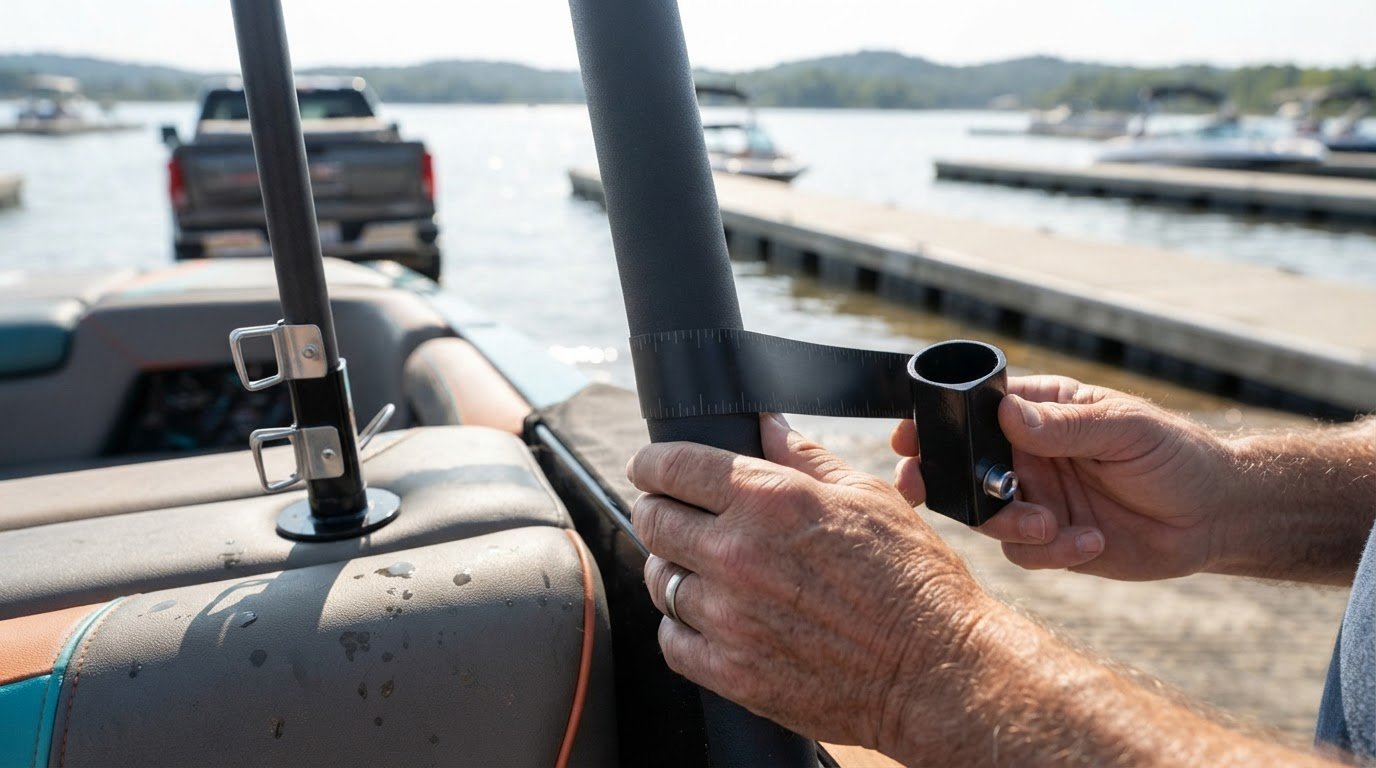
A forum post describes long boat transoms as ranging from 50 to 53 cm in height. That range can be included in the fit assessment, but it does not by itself establish which mount or setup offers better value.
How custom mounts reduce boat vibration and damage
A custom engine mount can be designed around the engine’s position and support points. This allows the design to account for how engine loads transfer into the boat’s structure. The outcome depends on the entire installation, not just whether the mount is custom. The engine, gearbox and shaft need to work together.
Vibration travels through connected components. Resilient engine mounting requires flexible connections for attached systems, with attention to the engine, gearbox and shaft arrangement. A connection that prevents necessary movement can transfer vibration to adjoining parts. A tailored design can account for these connections and the boat’s layout. This is one reason why custom boat mounts are better when the boat’s geometry calls for specific placement and alignment.
Alignment also deserves close attention. An engine mount designed without regard to the shaft line can leave connected components misaligned. A boat-specific design can position support points in relation to the engine space and shaft arrangement. This treats fit as part of the whole installation, rather than as an isolated bracket issue. It does not eliminate vibration on its own.
Engine support: Plan mounting points around the engine and supporting structure.
Connected systems: Account for flexible connections to attached equipment.
Drivetrain layout: Consider the gearbox and shaft with the engine.
Hull interface: Plan how loads transfer into the boat’s structure.
Damage prevention also depends on the surrounding structure. A mount that concentrates load at an unsuitable point can stress the attachment area. A design tailored to the boat can account for available support and mounting position. Custom dimensions alone do not establish structural capacity; the supporting structure and installation remain essential.
Corrosion is a separate consideration. A custom shape does not automatically resist corrosion, and fit alone cannot establish material compatibility or protection. Design choices should account for marine exposure and connections to nearby components. Positioning can address fit, while material selection and the condition of the connection address other concerns.
Evaluate the mounting system as a whole. Consider support points, shaft arrangement, gearbox position and flexible connections together. This clarifies what a custom design can address and what it cannot solve by itself. Understanding why custom boat mounts are better for a particular setup means considering how the components work together, not relying on the custom label alone.
What are the drawbacks or risks of custom boat mounts?
A custom mount can solve a fit problem, but it may also create new demands on the boat. Its design must suit the hull, mounting location and intended load. A tailored shape alone does not prove the structure can support that load. Risks often relate to the boat’s construction, the mount’s position or installation changes.
Inflatable boats show why hull compatibility matters. Some have no transom, so a transom-mounted accessory needs a suitable built-in transom or one the boat can accept. Thin, minimally reinforced plywood transoms on inexpensive inflatables can flex under motor torque. Water exposure can also contribute to delamination. A custom mount cannot make an unsuitable transom structurally sound just by matching its dimensions.
Bow-mounted equipment can also affect handling. On a smaller inflatable, added weight forward may change how the boat responds to waves and wake. A tailored mount can place equipment where intended, but it does not remove the effect of that weight. Adding a bow mount and motor, for example, changes load distribution compared with using the same boat without them.
Deck and gunwale alterations carry another risk. Rod-holder openings must be sealed properly to prevent water intrusion, especially where a wood or composite core is present. Poor sealing can let water reach the core, turning the opening into a source of damage rather than a useful mounting point. This concern applies to both custom and standard fittings.
Check compatibility: Match the mounting method to the hull and its existing structure.
Account for load: Consider how an added bow-mounted item affects balance and handling.
Protect the deck: Seal rod-holder openings through wood or composite cores.
Respect the transom: Don’t treat a custom fit as a substitute for suitable reinforcement.
Custom work can also involve more design decisions. The mounting position, attachment method and any deck changes need to work together. If the design requires an opening, its location affects both fit and water protection. If it adds forward equipment to an inflatable, weight placement becomes part of the handling equation. These are practical trade-offs, not reasons to reject every tailored mount.
Use these risks to decide whether customization addresses a real fit issue. A standard mount may be the simpler choice when it suits the boat’s existing structure and intended use. For a custom option, evaluate the hull interface, load location, and any penetrations together. Review your boat’s mounting requirements before choosing a configuration.
Tower Flags
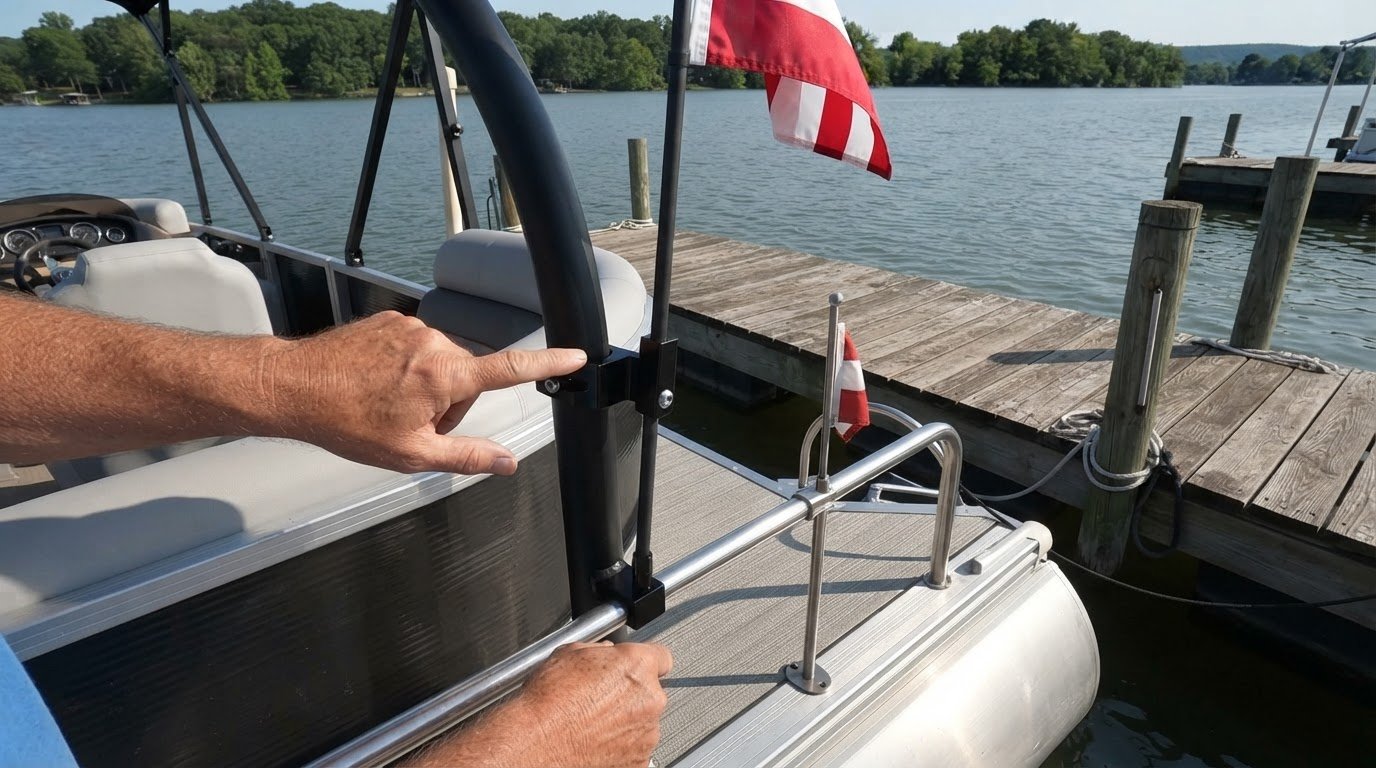
Tower Flags designs and manufactures flag pole brackets and flag poles for displaying flags aboard boats. The comparison above focuses on structural support, deck changes and value; a flag mount serves a more specific purpose than an engine or equipment mount. Matching the bracket and pole to your intended flag display keeps that distinction clear.
Consider Tower Flags when your next step is outfitting a boat to fly a flag. The available offerings include Flag Pole Brackets, Flag Poles, and Flags, giving you options for the display itself rather than unrelated mounting or repair work.
For help choosing flag display products for your boat, contact Tower Flags.
Make the next choice fit your boat
Before choosing a mounting solution, define what the boat needs to carry and where it needs to sit. Understanding why custom boat mounts are better for a particular setup starts with that practical decision, not the word “custom.” A tailored design makes sense when it solves a real fit or support requirement; a standard option can work when it already suits the boat.
For a boat flag display, Tower Flags offers Flag Pole Brackets and Flag Poles. A Gift Card is another option when someone else will choose the hardware. Keep that purpose distinct from engine or equipment mounting, which involves different structural needs.
Ready to discuss a flag display for your boat? Contact Tower Flags about your mount. A clear idea of the intended use is a strong place to start, and the right setup can make displaying your flag feel straightforward.
Frequently Asked Questions
What are the advantages of custom boat mounts over universal mounts?
Custom mounts can address boat-specific constraints that a universal design may not account for. For example, the chosen position may need to preserve hatch access or avoid nearby equipment. A universal option’s adjustability can be practical when its range suits the setup. The advantage depends on whether tailored placement solves a genuine fit or access issue.
How do custom boat mounts improve fit, stability, and safety?
A custom mount can be made to align with a boat’s intended attachment points and equipment position. That can avoid awkward placement, but customization alone does not establish stability or safety. The load, attachment method and supporting structure still matter. For example, a mount near a hatch should preserve access while providing suitable support for its intended use.
How much do custom boat mounts cost compared with off-the-shelf mounts?
Custom mounts are designed and fabricated for a particular boat, while an off-the-shelf option uses an existing design. The final cost depends on complexity, materials, fabrication and any required fitting work. There is no single price comparison that applies to every boat. A straightforward configuration and a complex installation can involve very different scopes.
How are custom boat mounts designed and installed?
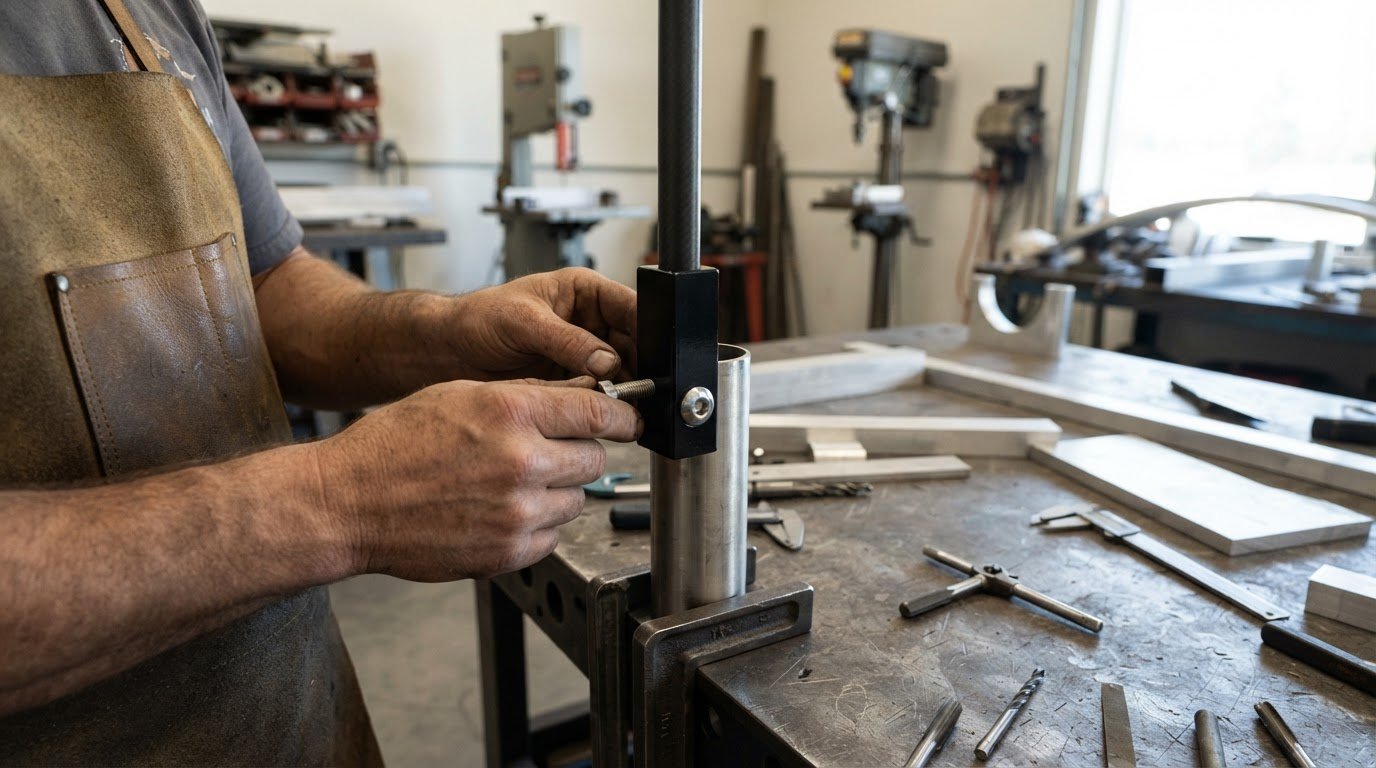
Design starts by defining what the mount will carry, where it needs to sit and how it attaches to the vessel. It then accounts for nearby equipment, access and the mounting surface. Fabrication follows the selected dimensions and attachment approach. During installation, fit and clearance are assessed in place so the mount works with the boat’s layout without obstructing it.
Comments