

Lead Time for Custom Marine Hardware: How Long It Takes
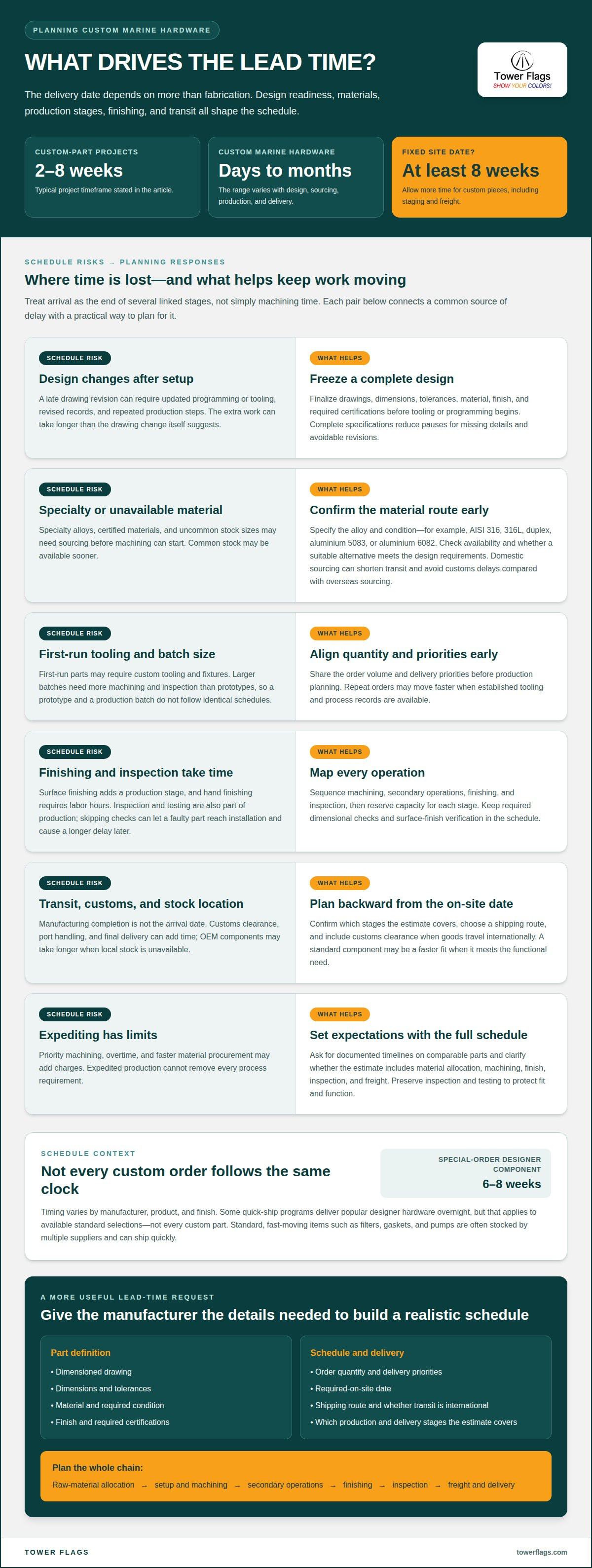
Custom marine hardware can take anywhere from days to months to arrive, while custom-part projects typically take two to eight weeks. The lead time for custom marine hardware depends on design complexity, material availability, production setup, finishing, and shipping. A repeat order may move faster than a first-run part built to exact specifications.
That range can make it difficult to plan a repair, upgrade, or new build, especially when a vessel’s schedule depends on a properly fitted component. Allow time for every stage, not just fabrication. This article explains what affects the timeline, why design changes or uncommon materials can cause delays, and how complete specifications and early planning help production stay on track. It also covers the information that makes a lead-time estimate more useful, so you can plan before the hardware is needed.
Table of Contents
Factors that affect lead times
Custom-part projects typically take two to eight weeks, but specialized marine components can range from days to months. That spread reflects differences in engineering, material sourcing, production capacity, finishing, and delivery. A repeat component with a stable drawing can move through manufacturing faster than a first-run design requiring new tooling. A special-order designer component may take 6-8 weeks, with timing varying by manufacturer, product, and finish.
Design readiness is a major schedule factor. Before production begins, engineering teams turn dimensions and tolerances into production instructions. If a drawing changes after tooling and programming, the supplier may need to revise the setup, update the records, and repeat affected production steps. A late revision can add more time than the drawing change itself suggests. Finalizing the design before production helps avoid this extra work.
Material selection also affects when components can enter manufacturing. Common stock may be available sooner than specialty alloys, certified materials, or uncommon bar sizes. Specifying an alloy and condition, such as AISI 316, 316L, duplex, aluminium 5083, or aluminium 6082, gives the supplier a clearer procurement target. If the required material is unavailable, orders wait for sourcing before machining can start. Surface finish adds another production stage, and hand finishing is difficult to compress because it requires labor hours.
Order volume affects both setup requirements and machine time. First-run parts may need custom tooling and fixtures, while repeat orders can use established setups. Larger batches generally require more machining and inspection than prototypes. The supplier must schedule cutting, secondary operations, and quality checks for the full order. A single prototype and a production batch of the same design therefore won’t follow identical schedules.
Demand and logistics affect arrival time after manufacturing ends. A part described as in stock may still take weeks to arrive when customs clearance, port handling, and final delivery are included. OEM components may also take longer when the manufacturer doesn’t hold local stock. Standard, fast-moving items such as filters, gaskets, and pumps, by contrast, are often stocked by multiple suppliers and can ship quickly. Choosing bespoke hardware when a standard component would work can turn a routine replacement into a longer-lead order.
For a vessel with a fixed maintenance window, treat delivery as the final point in several linked stages, not simply machining time. Material availability, tooling, finish, inspection, and transit all affect when the hardware arrives. Confirm which stages the estimate covers to better understand the schedule and spot where delays could occur.
Ways a manufacturer can help shorten custom-part lead time
A manufacturer can reduce avoidable delays in the lead time for custom marine hardware by resolving design decisions before production starts. Final drawings should specify dimensions, tolerances, material, finish, and any required certifications. A complete package lets engineering plan tooling and operations without pausing for missing details. It also reduces the risk that a late revision will require new programming or setup.
Material planning is another way to prevent delays. The manufacturer can determine whether the specified raw material is available and whether a suitable alternative meets the design requirements. Domestic sourcing can shorten transit and avoid customs delays compared with overseas sourcing. For a specialized alloy or uncommon stock size, procurement needs to start before machining is scheduled. Confirming the material route early makes it easier to set a realistic production start date.
Production planning can reduce idle time between operations. The manufacturer can sequence machining, finishing, and inspection, then reserve capacity for each stage. For repeat orders, established tooling and process records may simplify setup. A first article still needs the required inspection and testing. Skipping dimensional checks or surface-finish verification can allow a faulty part to reach installation, causing a longer delay later.
Useful schedule controls include:
Freeze the design: Approve drawings and specifications before tooling or programming begins.
Align the batch: Set order volume and delivery priorities early, so production can plan the actual quantity.
Map each stage: Separate raw-material allocation, machining, secondary operations, inspection, finish, and freight.
Plan transit: Choose a shipping route and include customs clearance when the material or finished parts travel internationally.
Expedited production may help when a date is fixed, but priority machining, overtime, and faster material procurement can add charges. It also cannot remove every process requirement. Inspection and testing still protect fit and function. For installation dates, work backward from the day hardware must be on site, including staging and freight. Projects with a firm site date should allow at least 8 weeks, with more time for custom pieces.
Timing matters during renovations and new builds. Manufacturers can begin planning hardware while design choices are underway, rather than waiting until installation is near. Some quick-ship programs deliver popular designer hardware overnight, but that applies to available standard selections, not every custom part. Distinguishing standard from bespoke requirements helps align the schedule with the build. To shorten the lead time for custom marine hardware, specify the required fit early. If a standard component meets the functional need, it can avoid custom production.
What information should I provide to get an accurate lead-time quote for custom marine hardware?
Give the manufacturer enough detail to assess engineering, material procurement, production, finishing, inspection, and delivery. A request that says only “custom bracket” leaves key requirements undefined. A dimensioned drawing, clearly defined requirements, and the date the part must be on site give the manufacturer a better basis for estimating the schedule.
Include the technical information that determines the part’s fit and manufacture:
Drawings and dimensions: Provide a current drawing with critical measurements, tolerances, mounting details, and interface points. Identify the drawing revision so everyone estimates against the same design.
Material: Name the alloy and condition, rather than describing it only as stainless steel or aluminium. Specify certification needs and whether an approved alternative is acceptable.
Finish and inspection: Describe the required surface finish and any dimensional checks, material certification, or tolerance validation needed before shipment.
Quantity: State the prototype or production quantity, plus whether repeat orders are likely. Setup and inspection demands differ between a first article and a larger batch.
Next, define the schedule target. Give the date the hardware must be on site, not just the date it should leave the factory. Include the delivery location and whether transit, customs clearance, or staging must fit within the timeline. If the part is needed for a drydock or maintenance window, identify that window so the manufacturer can account for the impact of late arrival.
Ask for a schedule broken down by stage. For custom fasteners, request separate estimates for mill allocation, header or machining capacity, secondary operations, and transit with customs clearance. For other components, apply the same principle: distinguish material procurement, machining, finishing, inspection, and freight. A single total can hide where the longest wait occurs.
To judge whether an estimate fits the job, ask for documented average lead times and timelines for similar parts. Compare like with like: a repeat component made from available stock is different from a first-run part requiring specialized material or a new finish. Ask which assumptions the schedule depends on, including approved drawings, material availability, quantity, and delivery route.
Finally, identify any open decisions before the quote is prepared. An unresolved tolerance, finish, or material choice can affect operations and sourcing after the schedule is set. Send one current specification package, clearly mark the required delivery date, and request a stage-by-stage estimate for your custom marine hardware order.
Tower Flags
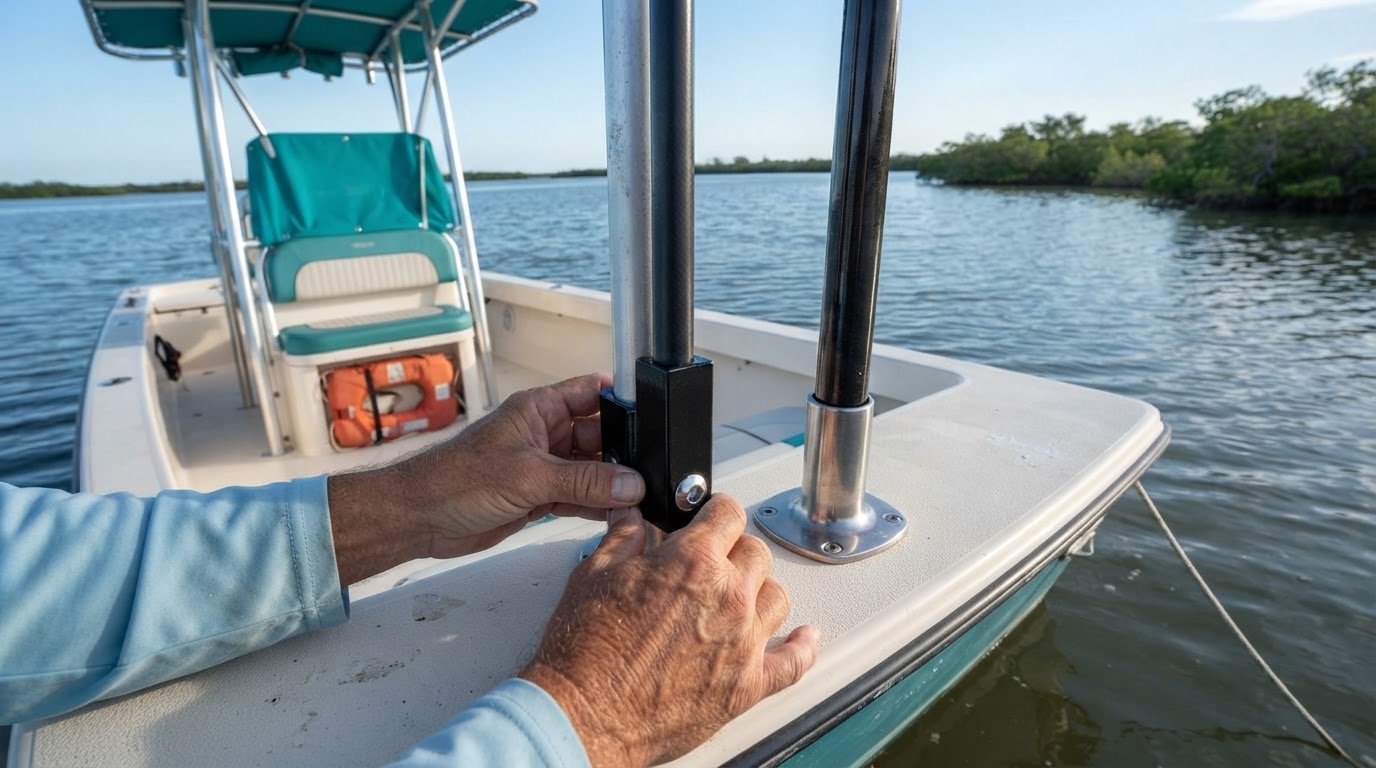
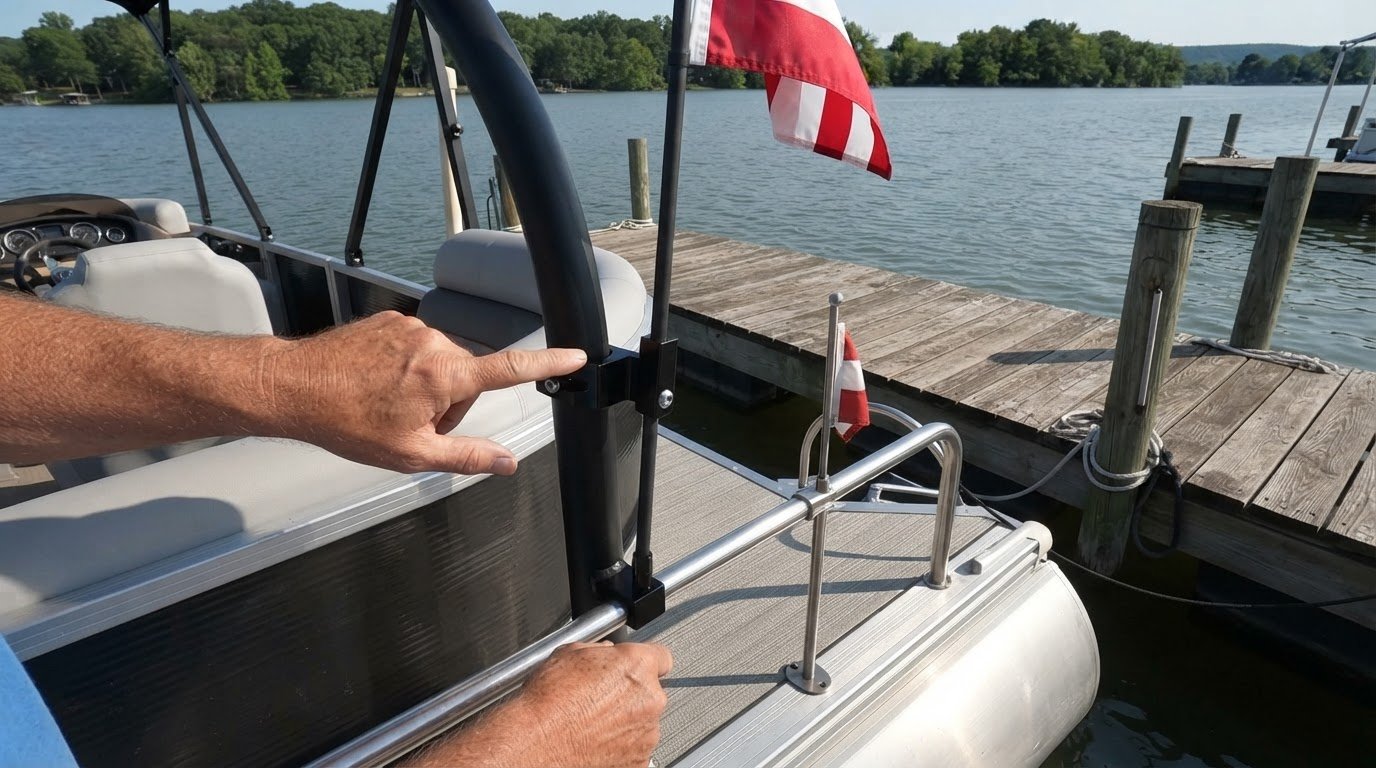
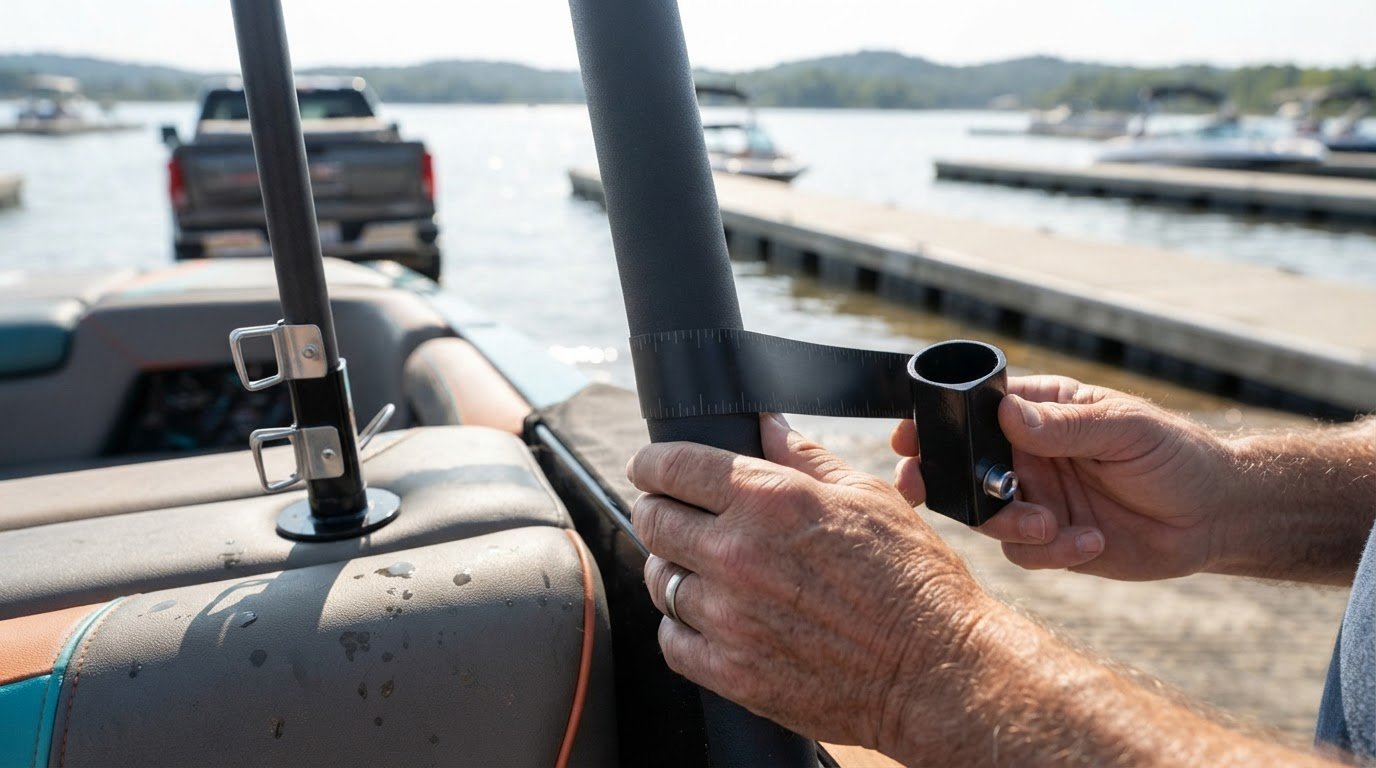
Tower Flags designs and manufactures custom-fit flag brackets and poles for boat owners. Each bracket is made to order to match a tower’s specifications, using a high-strength carbon fiber composite. If your project is a marine flag display, this custom hardware provides a purpose-built mounting solution. Tower Flags also offers Flags; its products are designed for flag displays, not unrelated marine components.
For a flag setup, start with the vessel’s mounting requirements and the type of display you want. Clear project details help narrow the relevant hardware and keep the decision focused on fit and function. If you’re planning a marine flag display, contact Tower Flags to discuss the right next step.
Choose the Right Next Step for Your Vessel
The right next step depends on the project. Custom marine components may require engineering and production planning, while a flag display needs a suitable pole and mounting solution. Keeping those needs distinct helps you focus on the relevant specifications and avoid treating every vessel upgrade as the same manufacturing job.
If your project is specifically about displaying a flag, Tower Flags offers Flag Pole Brackets and Flag Poles for boat owners. For other custom components, use the technical requirements and delivery priorities developed for your project to guide the conversation with its manufacturer. A clear distinction makes the lead time for custom marine hardware easier to discuss in context, without assuming a flag display product covers unrelated needs.
Take the next step with the project details that matter to you. Contact Tower Flags about your project if you’re planning a marine flag display, and move forward with a clearer sense of what your vessel needs.
Frequently Asked Questions
What Determines Lead Time for Custom Parts?
Lead time depends on the production stages a part must pass through and how they relate to one another. Machining can’t begin until the required material and approved design are ready. After fabrication, finishing, inspection, packing, and shipping add more time. For planning, distinguish the factory schedule from the date the finished hardware needs to arrive.
How do material, size, and design complexity affect custom marine hardware lead times?
Material, size, and design complexity affect both preparation and production. A larger part may require different equipment or more handling, while a complex shape may need additional machining setups. Material requirements affect sourcing, especially when a specified grade or condition isn’t readily available. These factors also interact: a complex component made from uncommon stock may require more coordination than either requirement alone.
How long do marine hardware design, prototyping, and approval typically take?
Time for design, prototyping, and approval depends on how completely the part is specified and how many decisions remain open. A finalized drawing gives engineering a clear basis for a prototype; unresolved fit or interface details can lead to another design round. Approval also affects the handoff to production. The schedule should therefore identify design review and prototype approval as separate milestones.
How long does manufacturing and finishing custom marine hardware take?
Manufacturing and finishing make up the production phase, but their duration depends on the part and the processes it requires. Machining capacity, batch size, secondary operations, inspection, and finish all affect the schedule. A polished or hand-finished surface requires work beyond forming the part. For a useful estimate, ask how the manufacturer sequences these stages and when inspection takes place.
What causes delays in custom marine hardware production and delivery?
Delays often begin when a design changes after production preparation or specified material can’t be procured on schedule. Either issue can interrupt planned work and push back later operations. A missed inspection or finishing stage can also hold completed parts before dispatch. After shipment, freight handling and customs clearance may extend arrival time. A milestone-based schedule helps identify whether a delay is in production or transit.
Comments