

Machined Aluminum Flag Pole Mount Finishes and Fit
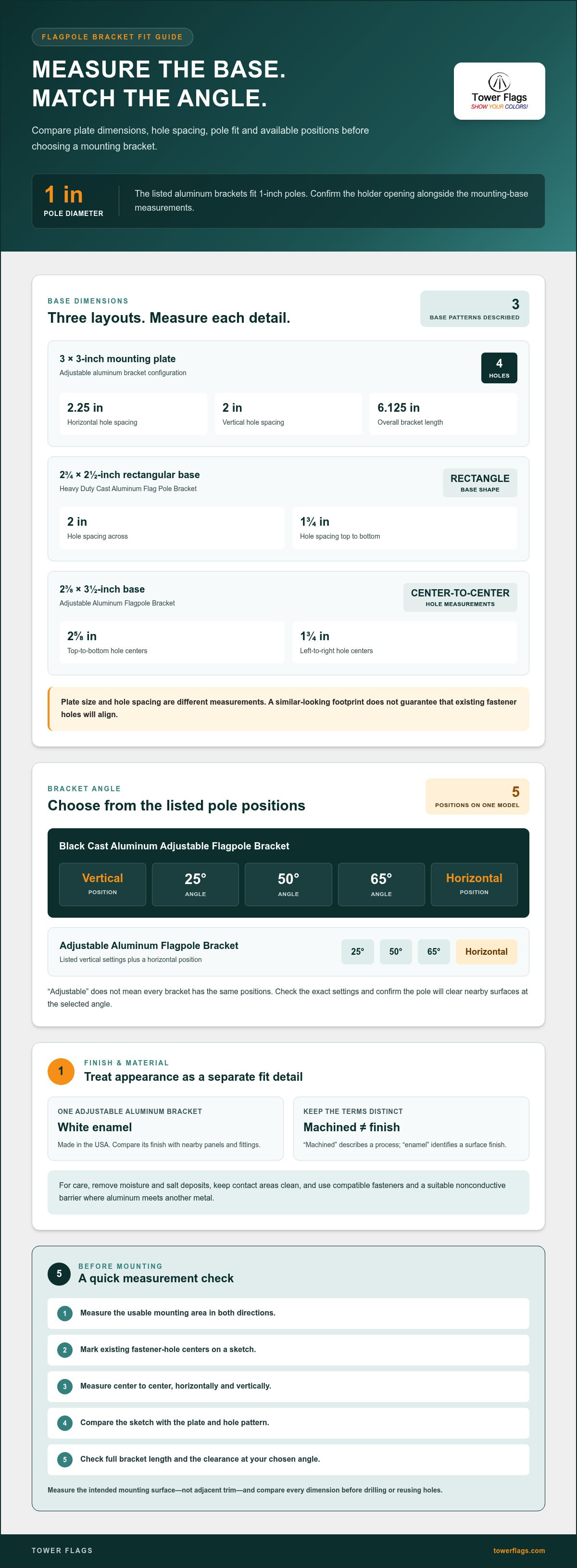
The finish is only part of the fit. An adjustable aluminum flagpole bracket has a white enamel finish, fits a 1-inch pole, and can be set at 25, 50, or 65 degrees or horizontally. With a machined aluminum flag pole mount, base dimensions and hole spacing matter just as much as the pole diameter and angle.
A bracket can look secure yet still be the wrong fit if its base does not align with the mounting surface or its holder does not suit the pole. Compare those details before choosing hardware for your installation.
This guide covers finishes, base dimensions, bracket angles, pole fit, and mounting methods. You’ll learn which measurements to compare to assess fit and choose hardware suited to your setup.
Table of Contents
Available finishes
A bracket’s finish affects its appearance and surface. One adjustable aluminum flagpole bracket has a white enamel finish and is made in the USA. These details describe that bracket’s material, finish, and origin, not the options available for every mount. Compare each product’s specifications with your installation rather than assuming all aluminum hardware looks alike.
Start with the surrounding surface. White enamel contrasts with dark panels or fittings and may blend in beside light trim. Look at the bracket next to nearby hardware before installation, considering the pole, rail, and mounting surface together. This gives you a practical sense of the finished assembly rather than judging the bracket alone.
Distinguish the manufacturing method from the finish. “Machined” describes shaping material, not a color or coating. “Enamel” identifies a surface finish. A machined aluminum flag pole mount is described by its process and material, but those terms alone do not tell you how it looks. Check the finish as a separate specification.
Before choosing, compare these details:
Material: Identify whether the bracket is aluminum.
Finish: Note the stated surface treatment, such as white enamel.
Setting: Compare the finish with nearby panels and fittings.
Condition: Inspect the surface for visible damage before mounting.
Remove moisture and salt deposits from the mount to help prevent corrosion. Where aluminum meets another metal, use a suitable nonconductive barrier and compatible fasteners to reduce galvanic corrosion. Keep contact areas clean and inspect around fasteners during routine care. Choosing a finish alone cannot prevent corrosion if water and residue remain trapped at joints.
Inspect the enamel surface before installation, and keep the bracket and mounting area clean while positioning it. If you find a chip or scratch, do not cover it with an unsuitable coating. Choose touch-up and cleaning methods compatible with enamel. Abrasive tools can alter the visible surface, so use a gentle method suited to the finish.
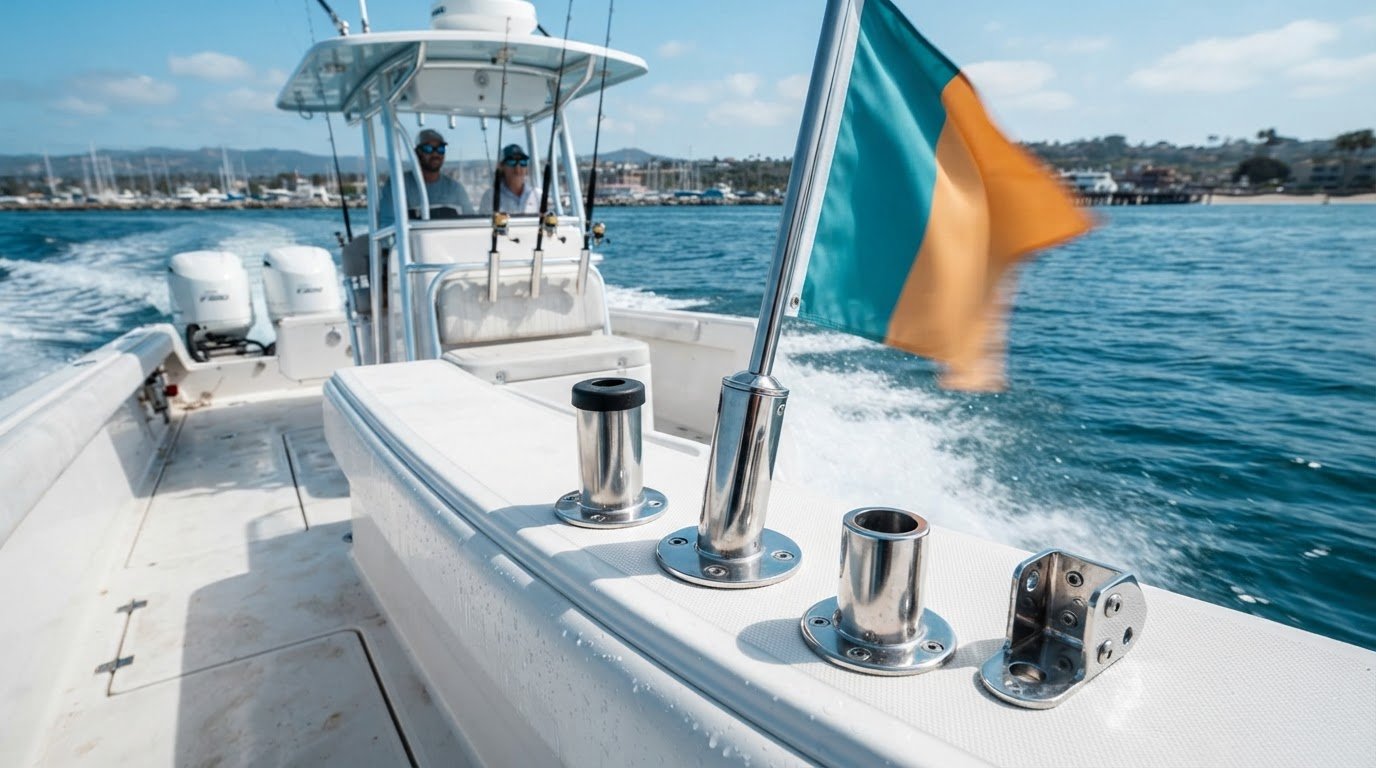
For a boat installation, compare the finish with nearby fittings and account for exposure to salt and moisture. A machined aluminum flag pole mount still needs sound installation and regular attention to exposed contact points. The finish affects appearance, while care and the materials touching the bracket affect how its surface weathers. Treat these as related but distinct considerations.
Note the material and finish alongside the fit details you’re comparing. This helps distinguish a white enamel aluminum bracket from other mount descriptions. Choose a finish suited to the setting, then assess the bracket’s dimensions and compatibility separately.
Base dimensions
A bracket base must sit properly on its mounting surface. Compare the plate’s outer dimensions and the center of each fastener hole. A similar footprint does not guarantee alignment: both the plate and screw pattern matter. Before choosing a machined aluminum flag pole mount, measure the available surface to see whether the base fits without crowding nearby features.
One adjustable aluminum flagpole bracket has a 3-by-3-inch mounting plate. It has four mounting holes. Included mounting screws are spaced 2.25 inches apart horizontally and 2 inches vertically. The bracket’s overall length is 6.125 inches. Keep these measurements distinct. Plate size describes surface coverage, while hole spacing shows where fasteners land.
The Heavy Duty Cast Aluminum Flag Pole Bracket has a rectangular base. It measures 2-3/4 inches by 2-1/2 inches. Its screw holes sit 2 inches apart across and 1-3/4 inches apart top to bottom. That layout differs from the square plate’s pattern. Even close-looking bases may not share aligned holes.
The Adjustable Aluminum Flagpole Bracket has a 2 3/8-inch by 3 1/2-inch base. Its top and bottom screw-hole centers are 2 5/8 inches apart. Its left and right hole centers are 1 3/4 inches apart. Center-to-center measurements help distinguish its pattern from other bracket bases.
Before selecting a bracket, map the surface and holes:
Measure the usable area in both directions.
Mark existing hole centers on a sketch.
Measure center to center, horizontally and vertically.
Compare the drawing with the plate and hole pattern.
Check the bracket’s full length for obstructions.
For example, a 3-by-3-inch plate differs from a 2-3/4-by-2-1/2-inch base. Their footprints aren’t identical, and their hole patterns may also differ. Compare every dimension before drilling or reusing holes. On a narrow surface, plate edges and nearby hardware need attention. The full 6.125-inch bracket length can matter beside rails or trim.
Use inches consistently when comparing measurements. A labeled sketch helps distinguish plate size from the spacing between hole centers. Measure the intended mounting surface, not adjacent trim. A machined aluminum flag pole mount should rest on the planned area, with its fasteners aligned to the surface pattern. This makes your selection more precise.
Bracket angle
Bracket angle determines how the pole projects from the mounting surface. Designs may offer adjustable settings or a fixed position. Consider the display direction, nearby clearance, and the bracket’s listed settings. A pole angled outward presents differently from one positioned vertically. Match the mounting location to the selected angle before fastening the bracket.
The Black Cast Aluminum Adjustable Flagpole Bracket offers five positions: vertical, 25 degrees, 50 degrees, 65 degrees, and horizontal. These settings give you distinct options for orienting the pole. The vertical and horizontal positions mark different orientations; the numbered settings provide intermediate choices. Identify the position you want, then make sure the surrounding space accommodates the pole.
The Adjustable Aluminum Flagpole Bracket has vertical settings of 25, 50, or 65 degrees. It can also be adjusted horizontally. These listed options differ from the Black Cast Aluminum model’s five positions. Compare the exact descriptions rather than assuming that brackets with “adjustable” in their names share identical settings. A machined aluminum flag pole mount should suit both the intended display and its mounting location.
Not every bracket adjusts. The Heavy Duty Cast Aluminum Flag Pole Bracket displays the pole at a 35-degree angle. That fixed angle suits a setup calling for that specific orientation. It does not provide the listed adjustment choices of the adjustable models. Decide whether a set position meets your needs before choosing between fixed and adjustable designs.
Use this practical sequence to narrow the options:
Choose the display direction: vertical, angled, or horizontal.
For an angled position, compare 25, 35, 50, and 65 degrees.
Check the chosen bracket’s actual settings.
Assess clearance around the pole’s path.
Match the display preference to the bracket design.
The numbered angles are not interchangeable. A 35-degree fixed bracket differs from the adjustable model’s 25-, 50-, and 65-degree settings. A preference for 50 degrees, for example, points toward a bracket listing that setting. A preference for horizontal display calls for a model that lists horizontal adjustment or positioning.
Before installation, hold the bracket against its intended surface and picture the pole in each available position. Check that the chosen direction clears nearby rails, trim, and other hardware. This simple layout check can reveal conflicts before you fasten the bracket. Because angle, base dimensions, and pole fit work together, assess all three when choosing.
Record the desired setting beside the bracket name. That prevents confusion between the 35-degree fixed design and adjustable brackets with different settings. A clear match between the display direction and listed angle makes selection more precise.
For this model, the five positions are vertical, 25 degrees, 50 degrees, 65 degrees, and horizontal. Treat these as the available choices when planning the display, and select the position that fits the direction you want. Confirm the intended orientation before securing the mount, so the pole is set as planned rather than relying on an assumed position.
Compatible pole diameter
Pole diameter determines whether the shaft fits the bracket holder. The listed adjustable aluminum bracket fits a 1-inch flagpole. The Black Cast Aluminum Adjustable Flagpole Bracket also fits a 1-inch pole. The Heavy Duty Cast Aluminum Flag Pole Bracket is designed for a 1-inch-diameter pole. These shared specifications make diameter a clear starting point.
Measure the pole’s outside diameter where it enters the holder; do not rely on a label or visual estimate. A tape measure can be awkward around a narrow shaft, so use calipers if available. Measure across the widest point. If the pole is not perfectly round, take measurements in several directions. Compare the result with the holder’s stated pole diameter.
A machined aluminum mount is shaped by cutting material to form its features. Cast aluminum is formed by pouring material into a mold. Stainless steel names a material, not a manufacturing method. These terms describe different aspects of a mount. Compare the actual holder diameter and bracket design rather than assuming the material or process determines compatibility.
Use a simple fit check before installation:
Measure the pole’s outside diameter at its mounting end.
Compare that measurement with the bracket’s stated fit.
Check whether coatings or caps change the insertion area.
Align the pole with the holder without forcing it.
Confirm that the pole seats as the bracket design intends.
For the three listed bracket examples, the stated fit is 1 inch. A pole measuring 1 inch matches that nominal specification. A different diameter is not the same fit. Avoid forcing a mismatched pole into the holder. A tight fit can prevent proper seating, while excess movement can leave the pole poorly supported. The intended fit depends on the bracket’s actual opening and pole profile.
Compare materials and manufacturing methods carefully. A machined aluminum flag pole mount has features shaped through machining, while a cast aluminum bracket is made using a casting process. Stainless steel differs in material composition. These labels alone do not establish matching dimensions, finishes, or performance. Assess the specific bracket’s holder size, mounting design, and environment. “Aluminum” and “stainless” are not substitutes for fit specifications.
Check the insertion point, not just the pole’s exposed upper section. Some poles may have a different end profile, cap, or sleeve near the holder. Measure the portion that actually enters the bracket. Then compare its shape and diameter with the bracket opening. A 1-inch outside measurement is useful only when taken at the correct location.
Keep the measurement with the bracket details during selection. Record the pole diameter, bracket model, and holder fit together. This prevents confusion between a 1-inch pole and a bracket intended for another size. The right match is determined by the pole’s measured insertion area and the bracket’s stated compatibility.
Mounting methods
Choose an attachment method suited to the surface, setting, and flag display. The bracket base, fasteners, and supporting material function as one assembly.
Installation method options
Surface mounting uses the bracket base and fasteners. The adjustable aluminum flagpole bracket includes mounting hardware. Before installation, compare its base and hole pattern with the intended surface. A flat, firm area lets the plate make direct contact. Avoid placing a fastener where the surface cannot support it.
U.S. flag display guidance concerns respectful display and flag handling; a mount does not establish a universal angle or attachment rule. Choose hardware that positions the flag as intended without damaging the flag or mounting surface.
Aluminum alone does not determine a universal wind-load or flag-size capacity. Load depends on flag area, wind exposure, pole leverage, bracket design, fasteners, and the supporting surface. Assess the whole assembly, not just the mount material.
Before drilling, position the bracket against the surface and mark the holes. Check for clearance behind the panel and around nearby hardware. Use fasteners suited to both the bracket and substrate. Tighten them evenly, then check for movement. Even a machined aluminum flag pole mount depends on a sound attachment surface.
Mounting cost depends on bracket design, material, finish, fit, and installation requirements. There is no single price for every configuration; consider the mount and the work required for its intended surface.
Vehicle, boat, and building applications
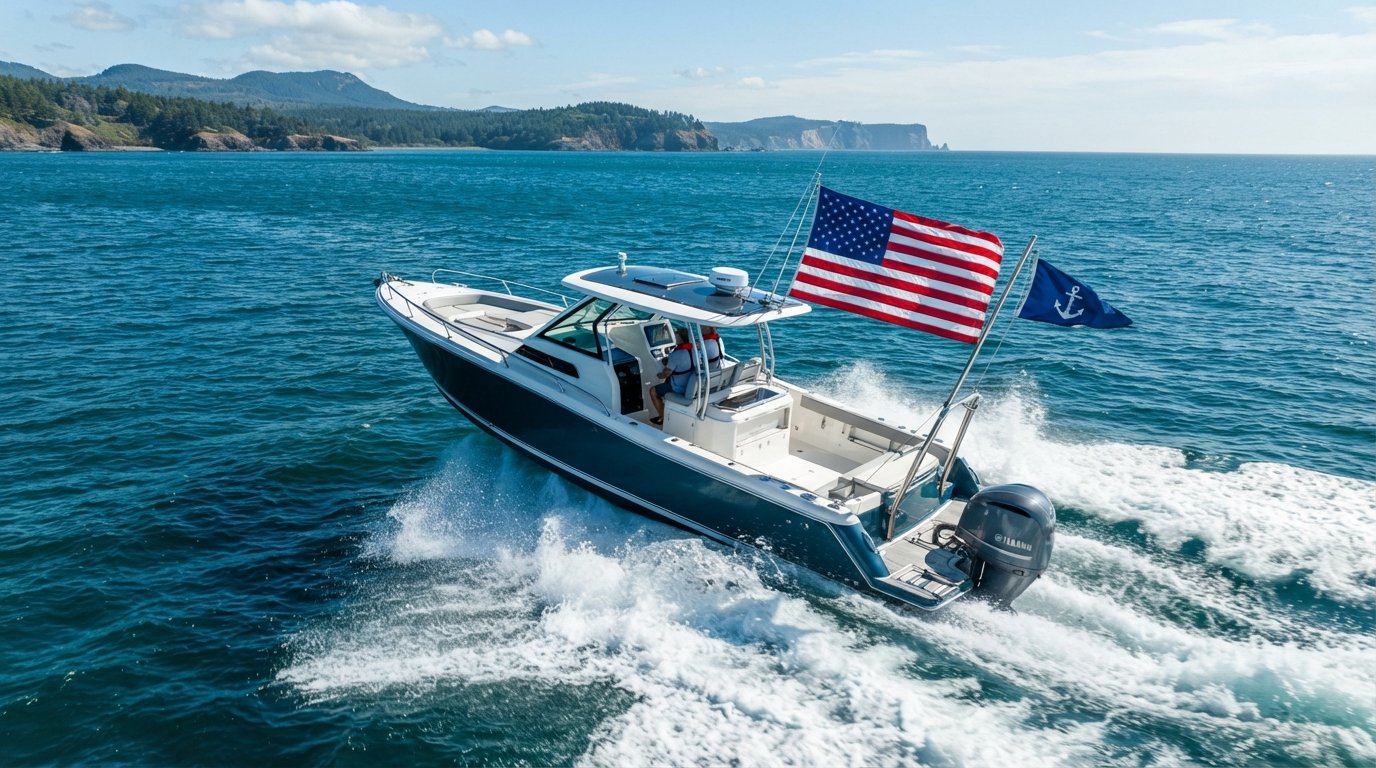
A mount may suit a vehicle, boat, or building when its base and attachment method match the location. Each surface brings different constraints. A vehicle panel may flex or vibrate, a boat faces marine exposure, and a building surface may be flat, angled, or obstructed. Assess the actual mounting area first.
On a boat, consider nearby fittings, salt deposits, and pole movement. On a vehicle, account for motion, clearance, and access to the reverse side. On a building, inspect the substrate and surrounding trim. In every case, compare the base footprint and fastener locations with the available surface.
Use this sequence to assess an application:
Identify the surface material and its condition.
Measure the usable mounting area.
Check clearance for the bracket and pole.
Match the attachment method to the substrate.
Consider exposure, movement, and flag area together.
Flag size affects the force transferred through the pole and mount, as do wind exposure and leverage. A building mount and a moving boat mount therefore need different assessments, even if both accept the same pole diameter. The supporting surface and fastener arrangement are part of the system too.
For a setup that needs purpose-built hardware, explore flag pole brackets and compare the bracket’s fit with your mounting surface.
Tower Flags: Flag Pole Brackets
Tower Flags offers Flag Pole Brackets for boat owners choosing hardware to suit a particular setup. Use the measurements covered above to compare the mounting base, hole pattern, bracket angle, and pole diameter before selecting a bracket. These details help narrow the choice to hardware that matches the mounting surface and intended flag display.
Tower Flags also offers Flag Poles and Flags, so you can consider the pole and display alongside the bracket. Explore Tower Flags Flag Pole Brackets to find custom-fit boat flag mounting hardware for your setup.
Visit towerflags.com to explore the options or contact Tower Flags.
Make Your Next Mounting Choice With Confidence
Turn your measurements into a clear plan for the complete flag display. A machined aluminum flag pole mount is one part of the setup; matching the pole, bracket, and flag to your intended use makes each choice purposeful. Consider the display you want before choosing hardware.
Tower Flags offers Flag Pole Brackets, Flag Poles, and Flags, letting you consider the mounting hardware and display together. A Gift Card is another way to let someone choose a flag-related item. Choose what best suits your project, whether you’re completing a boat display or selecting a gift.
For a next step, share your mount requirements with Tower Flags. Bring your pole and installation details into the conversation, then move ahead with a setup that suits your display. Careful choices now can make the finished installation feel deliberate and complete.
Frequently Asked Questions
What is a machined aluminum flag pole mount?
A machined aluminum flag pole mount is a bracket shaped by cutting aluminum to form its base, holder, and other features. It secures a flagpole to a mounting surface. The design determines how the pole sits and how the bracket attaches. For a specific mount, distinguish its material and manufacturing method from its fit, finish, and mounting configuration.
What sizes of flagpoles fit machined aluminum mounts?
Fit depends on the holder opening and the pole’s outside diameter. The aluminum bracket examples discussed in this article are designed for 1-inch-diameter poles. Measure the portion that enters the holder, not a cap or a different section of the shaft. For example, a pole with a different insertion diameter needs a bracket designed for that size.
What aluminum alloys and finishes are used for flagpole mounts?
The bracket examples discussed here identify aluminum as the material; one adjustable aluminum bracket has a white enamel finish. Alloy grade and surface finish describe different things: grade identifies the aluminum composition, while finish describes the exterior treatment. Compare the specific mount’s material and finish information, and do not infer an alloy grade from the word “aluminum.”
How do you install a machined aluminum flagpole mount?
Start by matching the bracket base and hole layout to the mounting surface. Position the bracket, mark the fastener locations, and confirm that the pole has clearance in its intended orientation. Attach it with hardware suited to both bracket and surface. Seat the pole without forcing it, then check that the mount stays firmly positioned. The surface and bracket design determine the appropriate attachment details.
How much does a machined aluminum flag pole mount cost?
Pricing for a machined aluminum flag pole mount typically varies based on design complexity, finish options, and included hardware. Tower Flags offers competitive pricing across our hardware selection, ensuring you receive a durable mounting solution that fits your budget and flagpole setup.
What wind loads and flag sizes can aluminum flagpole mounts withstand?
Customers report that the featured bracket held up reliably in severe weather conditions with winds exceeding 60 miles per hour. Performance depends on proper installation, the strength of the mounting surface, and the size of the flag being flown.

Comments