

Boston Whaler Flag Pole Mounts, Socket Fit and Prices
A Boston Whaler flag pole mount doesn’t have to mean drilling into the deck. A pole designed for an existing fishing-rod holder or rail can provide a no-drill option, while flush-mount and top-mount sockets attach to a surface.
It’s sensible to focus on fit before choosing hardware: the right setup depends on where you want the flag, what mounting points your boat already has, and whether the pole sits securely in its socket. This guide explains how flush-mount and top-mount sockets differ, how to fit a pole and install a mount, and what product prices to compare.
You’ll also learn when an existing rod holder or rail can provide a no-drill solution, and what to consider if a stern-mounted staff could interfere with boating activities. Once you know the mounting method, you can choose hardware suited to your boat’s layout and flag display.
Table of Contents
Flush-mount and top-mount flag pole sockets
A flush-mount socket sits within the deck surface, while a top-mount socket sits above it. To avoid drilling, use an existing fishing-rod holder or rail instead of either type of deck socket.
Mount Fit for Boston Whaler Boats
For a Boston Whaler flag pole mount, begin with the location and the structure already there. A flush-mount socket fits where it can sit within the deck; a top-mount socket attaches on top of a surface. Compare the socket base with the available mounting area, then check pole clearance and access around the spot. For a no-drill option, an existing rod holder or rail may provide a mounting point.
For boating in the United States, practical flag-placement guidance puts the national ensign at the stern and a burgee at the bow. Choose the flag’s intended position first, then assess whether a socket will fit without obstructing activities aboard.
Factory Flag Pole Mounting Points
Identify a factory mounting point on your boat by looking for an installed socket or measuring the existing mounting surface. A model name alone doesn’t establish that a particular socket will fit. Compare the mount’s base dimensions with the actual surface, and consider whether a backing plate can fit behind it. The available fit examples don’t identify specific Boston Whaler models with factory mounting points.
One example uses a four-foot teak flag staff with a deck-mounted socket. It illustrates a possible setup, not a model-by-model fit list. Consider placement, too: on some Boston Whaler boats, a stern staff can interfere with reboarding, fishing, scuba diving, or waterskiing.
Socket installation depends on support beneath the mounting surface. One described backing plate measures about 3 inches by 3 inches and about 0.150 inch thick. Its purpose is to spread the load behind the socket rather than leave the fasteners supported only by a small area. Check the underside for access before choosing a deck location.
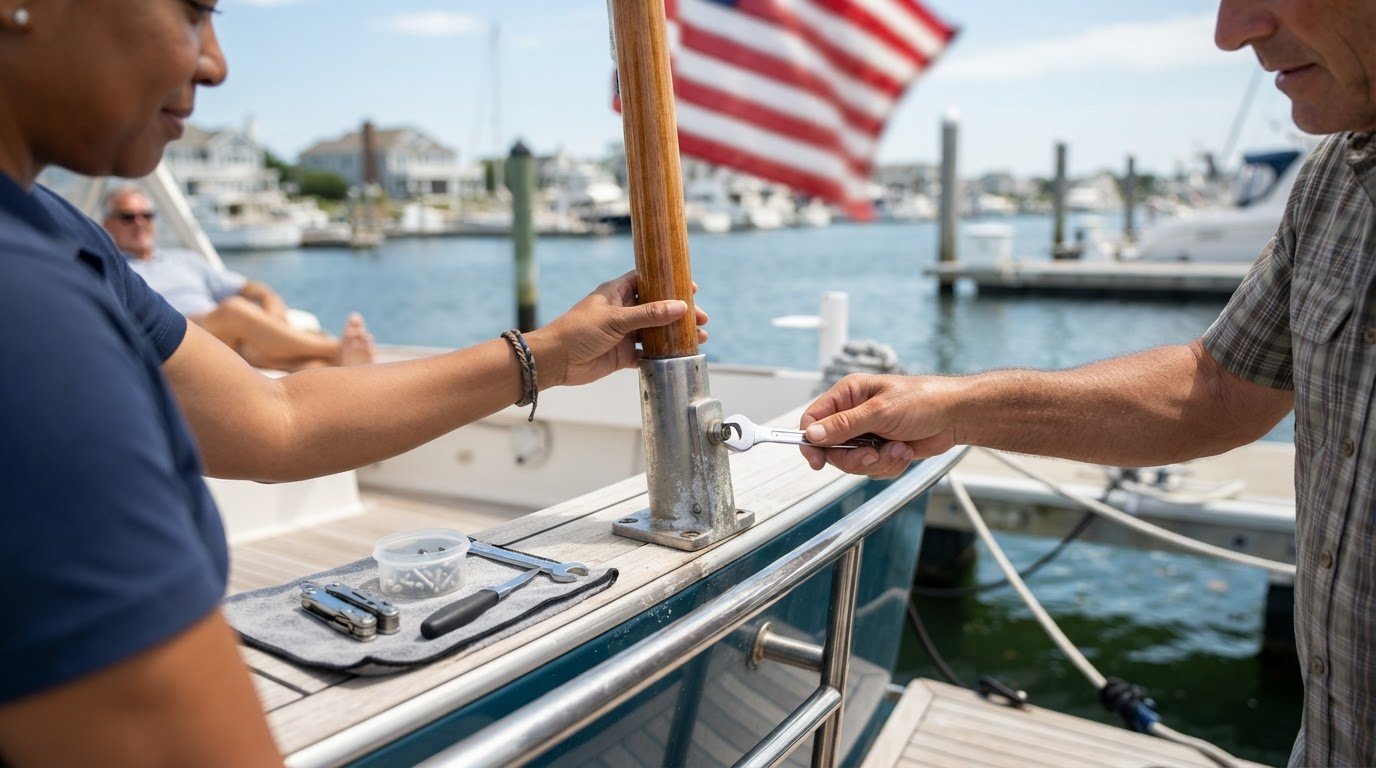
Fasteners matter on a boat exposed to vibration. The described installation uses stainless-steel fasteners with elastic stop nuts or Ny-Lok fasteners to resist loosening. Align the socket before drilling, and make sure the pole seats securely without touching nearby fittings. A thin plastic shim cut from a milk container can tighten a wooden staff that fits loosely.
Flag size also affects the choice of staff and location. Chapman's Piloting Guide indicates that a Montauk stern flag should be 18 inches long, with one inch of fly for each foot of boat length. Treat those dimensions as guidance for sizing, then match the socket to the selected staff and available mounting area. These checks help distinguish a surface-mounted socket from a setup using an existing holder or rail.
Choosing a mount and fitting a flag pole
Choosing a Boston Whaler flag pole mount starts with the attachment point already on your boat. A fishing-rod holder or rail may take a compatible pole without requiring a deck socket. If neither puts the flag in the right position, compare a surface-mounted socket with the available space, access underneath, and clearance around the pole.
Aftermarket mounts fit when their attachment method matches the boat’s holder, rail, or mounting surface. Compatibility depends on the physical connection, not the boat name alone. Measure the fitting and compare it with the mount’s specified size before choosing hardware.
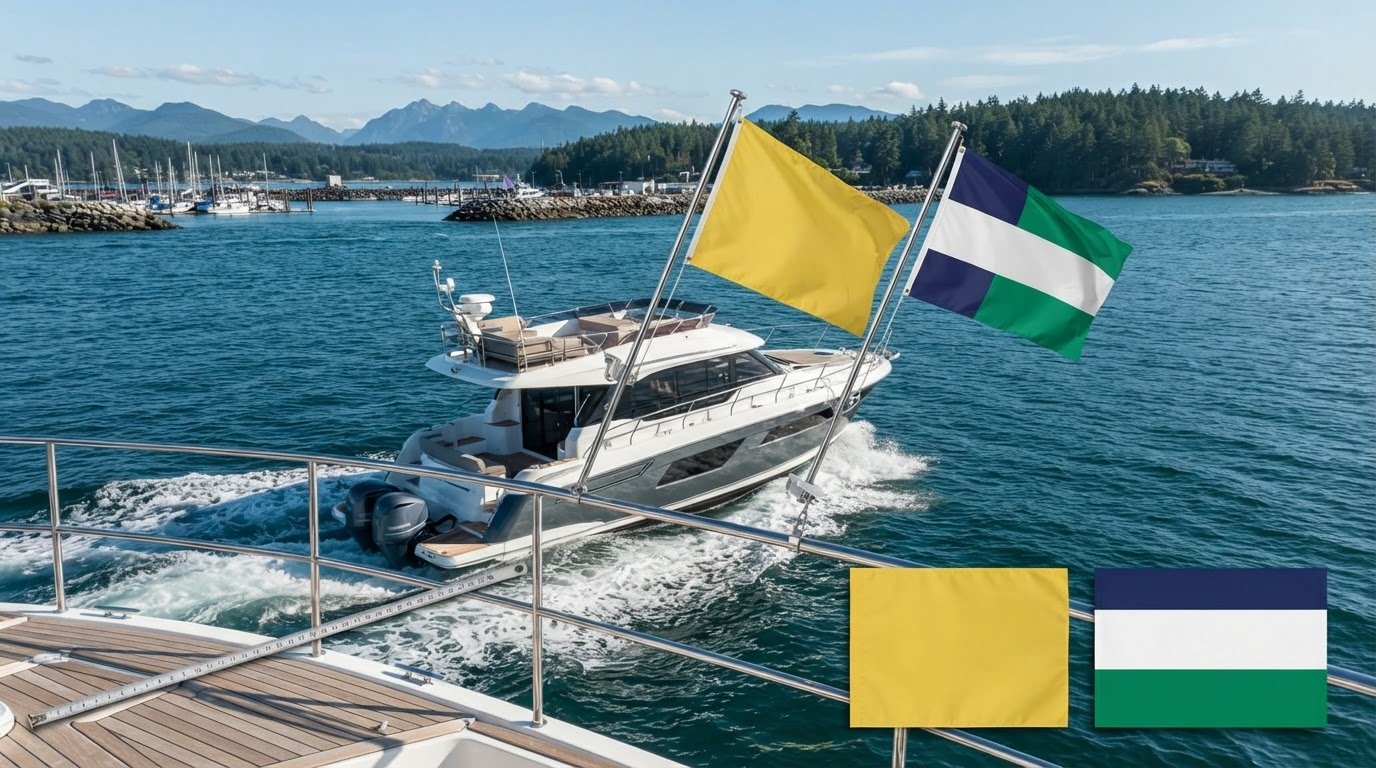
A rod-holder pole slides into the existing holder and locks with a notched bottom. A rail mount clamps onto the rail, so its specified diameter must match the rail. A deck socket needs a suitable mounting surface and a staff that fits its opening. Choose the attachment point first, then compare pole length and flag position.
Existing rod holder: Select a pole designed to slide into the holder and engage its locking notch.
Rail: Match the rail diameter precisely. One rail-mount design fits a 1-inch rail; another is designed for a 7/8-inch rail.
Socket: Compare the pole’s base with the socket opening and account for how the pole stands above the surface.
Placement: Check nearby seating, equipment, and movement around the boat before choosing a location.
Rail hardware has additional fit details. The described rail-mount pole uses 316 stainless steel bar, includes a 1/4-20 female thread at its top, and lets the flag rotate 360 degrees around the pole. Its attachment points can move up or down to accommodate different flag sizes. These details affect flag attachment and movement, but rail diameter remains the first compatibility check.
Fit the pole only after confirming the mount is secure. Slide a holder-style pole fully into its receptacle until the notched bottom locks in place. For a rail mount, seat the clamp evenly, then tighten its mounting screw. The screw is retained in the clamp to help keep it from falling into the water during installation.
Test the finished fit by hand. A burgee pole that rotates 360 degrees can follow changing wind direction, while a seated pole should remain secure in its mount. If a wooden staff fits loosely in a socket, a thin plastic shim cut from a milk container can tighten the fit. Adjust the shim rather than forcing the pole.
For a no-drill mount, an existing fishing-rod holder or rail avoids adding deck fasteners. A Boston Whaler flag pole mount should match the attachment point and leave the pole clear of nearby activity. Once the boat’s rail or holder dimensions are clear, compare boat flag mounting options against that specific fit.
Installation
To avoid damaging a Boston Whaler’s hull or gelcoat, use an existing rod holder or rail if it puts the flag in the right place. If installing a deck socket, dry-fit it first, check access underneath, and support the mounting area with a backing plate.
Installation depends on the mount type. A rod-holder pole slides into the existing holder and locks with its notched bottom. A rail mount clamps to a rail, while a deck socket needs fasteners through the mounting surface. Each method attaches differently, so don’t treat them as interchangeable.
Set the location. Place the pole and mount where the flag clears nearby equipment. Check access to the underside before marking holes for a deck socket.
Dry-fit the hardware. Seat the pole or clamp without forcing it. Make sure the socket base lies flat and the rail clamp contacts the rail evenly.
Mark and prepare. Mark the fastener positions only after the mount sits correctly. For a deck installation, use a backing plate behind the surface to distribute support around the fasteners.
Fasten carefully. Use stainless-steel fasteners for the described socket installation, with elastic stop nuts or Ny-Lok fasteners to resist vibration loosening. Tighten evenly so the base stays seated without distorting it.
Test the fit. Insert the staff and check that it sits securely. For a rail mount, tighten its clamp screw; the described burgee pole retains that screw in the clamp to help prevent it falling into the water.
Handle gelcoat carefully around any new holes. Keep the mount from shifting as you mark or fasten it, and don’t use the hardware to pull an uneven base flush. If the socket rocks during dry-fitting, reassess its position and support rather than tightening harder. A flat, supported base helps prevent concentrated pressure on the mounting surface.
Check the back side before drilling. Make sure the planned fastener path won’t meet an obstruction, and leave room to position the backing plate and nuts. The plate should sit against the underside, not hang at an angle. This also makes tightening more controlled.
After installation, remove and reseat the flag staff. Check for movement at the socket, clamp, or holder, then inspect the surrounding finish for contact marks. A thin plastic shim cut from a milk container can tighten a wooden staff that fits loosely in its socket. This avoids forcing a poorly seated pole against the socket.
For a no-drill Boston Whaler flag pole mount, use an existing fishing-rod holder or rail to avoid adding deck fasteners. The key considerations are a secure connection, clear placement, and a pole that fits the mount without force.
Product prices
Compare flagpole products by mounting style, length, material, and fit, not price alone. A pole designed for a fishing-rod holder serves a different purpose from a rail mount or deck socket. First decide which mounting point your Boston Whaler can use, then compare products designed for that connection.
Length provides a clear way to distinguish pole options. Rocket-launcher flagpoles are available in 24-inch and 48-inch lengths, and both are made from 316 stainless steel. A 60-inch Home Swivel Flagpole represents a longer pole format. These dimensions affect how the pole sits on the boat and how much clearance it needs around nearby equipment.
Mount compatibility also shapes a useful comparison. The WFBRM16 Burgee Rail Mount Pole is designed for a 1-inch rail. The WF3BRM14PI heavy-duty Burgee Rail Mount Pole is designed for a 7/8-inch rail. Compare the specified rail diameter with your boat’s rail before weighing other product differences. A mount that doesn’t match the rail won’t solve the fit problem.
Use a simple comparison checklist when reviewing prices:
Mounting interface: Separate fishing-rod-holder poles, rail mounts, and deck-socket setups.
Dimensions: Compare the 24-inch and 48-inch pole lengths with the 60-inch swivel format.
Material: Note that the rocket-launcher options use 316 stainless steel.
Rail fit: Match a 1-inch rail design or a 7/8-inch rail design to the actual rail.
Flag attachment: Consider whether adjustable attachment points would suit different flag sizes.
That last detail can change the value of a setup. Adjustable attachment points on a burgee pole can move up or down to accommodate different flag sizes. A rail-mounted pole also allows the flag to rotate 360 degrees around the pole. Compare these functions with your intended flag display rather than treating every pole as equivalent.
Include installation hardware in the comparison. A deck socket may require a backing plate and stainless-steel fasteners, while an existing rod holder avoids adding a deck socket. A rail-mounted design uses a clamp, and its mounting screw is retained to help keep it from falling into the water. These differences affect what the complete setup involves.
For a useful price comparison, put products with the same mounting style and similar dimensions side by side. Then account for fit with the boat’s rail or holder, pole material, and attachment method. This helps you identify what suits your Boston Whaler instead of choosing on price alone.
What flag pole mounts fit Boston Whaler boats?
A suitable mount matches an existing holder, rail, or deck socket. For a Boston Whaler flag pole mount, identify the attachment point first, then match the pole and mount to its dimensions. Boat model names alone don’t establish compatibility because mounting layouts and fittings can differ.
Use the boat’s actual hardware as your reference. Measure the rail where a clamp will sit, inspect the opening of a rod holder, or compare the socket with the staff. A mount that engages securely with its intended fitting is a better fit than one chosen by appearance alone.
Fishing-rod holder: Rocket-launcher flagpoles slide into holders and lock with a notched bottom. The 24-inch and 48-inch versions are made from 316 stainless steel.
1-inch rail: The WFBRM16 Burgee Rail Mount Pole is designed for this rail size.
7/8-inch rail: The WF3BRM14PI heavy-duty Burgee Rail Mount Pole is designed for this smaller rail size.
Deck socket: Match the flag staff to the socket opening and ensure the mounting location supports a fixed socket.
Rail-mounted designs have useful details beyond the clamp. The rail mount uses 316 stainless steel bar, has a 1/4-20 female thread at its top, and allows the flag to rotate 360 degrees around the pole. Its attachment points can move up or down the pole to accommodate different flag sizes. Those features help distinguish a rail pole from a holder-style pole.
Placement also determines which mount works. On some Boston Whaler boats, a stern flag staff may interfere with reboarding, fishing, scuba diving, or waterskiing. A bow rail may suit a burgee, while the national ensign is described as flown from a staff at the stern. Consider how people move around the boat before choosing a location.
Follow this fit sequence before choosing hardware: identify the mounting point, measure the rail or holder, then compare the mount’s specified fit. Check pole clearance and flag movement in the chosen location. For a deck socket, assess the surface and access behind it before installation. These checks establish compatibility more reliably than the boat’s model name.
Compare the boat’s measured rail or holder with boat flag pole brackets to narrow the mount style to the hardware already on board.
Tower Flags: Flag Pole Brackets
Tower Flags offers Flag Pole Brackets for boat owners choosing hardware around an existing mounting point. Match the bracket to the rail, rod holder, or socket you identified, then select a compatible Flag Pole and suitable flag. This practical sequence keeps fit at the center of the choice, rather than relying on a generic mount that may not suit your boat’s setup.
When you’re ready to choose a custom bracket and pole, consider how the flag will sit on your Boston Whaler and how the hardware attaches to its tower. Tower Flags also offers Flags and Gift Cards for boat owners planning a display or choosing their own setup.
Contact Tower Flags to discuss your flag pole bracket options.
Make Your Next Flag Setup a Deliberate Choice
Your next step is to turn the boat’s mounting point into a clear product choice. Decide how you want to display the flag, then choose hardware designed for that purpose. The right Boston Whaler flag pole mount should fit your setup without compromising placement.
Tower Flags makes custom Flag Pole Brackets and Flag Poles to the exact specifications of your boat’s tower. Flags complete the display, while a Gift Card can be a thoughtful option for someone choosing their own setup. Keep your mounting needs and intended flag use in mind as you consider the options.
Contact Tower Flags about your mount and take the next step toward a flag setup that feels right for your boat.
Frequently Asked Questions
Can I mount a boat flag pole without drilling the deck?
Yes. Use an existing fishing-rod holder or rail with a pole and mount designed for that fitting. For example, a rocket-launcher flagpole slides into a rod holder and locks with a notched bottom. A rail-mounted burgee pole uses a clamp instead. Match the mount to the actual holder or rail so the pole seats securely without adding deck holes.
Should I choose a flush mount or top mount socket?
Choose based on the socket’s position relative to the mounting surface and the available space. A flush-mount socket sits within the surface; a top-mount socket attaches above it. Check the deck area and access underneath before choosing either style. If avoiding deck holes is your priority, an existing rod holder or rail offers another mounting option.
Where is the flag pole mount installed on a Boston Whaler?
Install the mount where the flag can be displayed without obstructing how people use the boat. The stern is a customary location for the national ensign, while a burgee is usually placed at the bow. On some Boston Whaler boats, a stern staff may interfere with reboarding, fishing, diving, or waterskiing, so consider those activities before choosing a location.
What size flag pole and flag fit a Boston Whaler mount?
The pole must fit the socket, rod holder, or rail mount, so match its base to that specific interface. A four-foot teak staff has been used with a deck-mounted socket. For a Montauk stern flag, Chapman's Piloting Guide indicates an 18-inch length and one inch of fly for each foot of the boat’s overall length. Flag dimensions alone don’t determine pole fit.
How do you install a flag pole mount on a Boston Whaler?
Start by positioning the mount and checking pole clearance. For a deck socket, dry-fit the base and confirm access behind the surface before marking holes. Support the socket with a backing plate and use stainless-steel fasteners with elastic stop nuts or Ny-Lok fasteners. Tighten evenly, then seat the staff and check for movement. A rail clamp or existing rod holder uses its own attachment method.
How do you choose between rail, gunwale, and rod-holder flag pole mounts?
Choose a rod-holder mount if an existing fishing-rod holder provides the right position; the pole’s notched bottom locks into the holder. Select a rail clamp by matching the rail diameter: examples are designed for 1-inch or 7/8-inch rails. A gunwale or deck socket is a surface-mounted choice, so consider available mounting area, underside access, and whether drilling suits your setup.
Comments