

2026 Guide to Rust Proof Marine Flag Brackets
The "marine grade" label on most retail hardware is often a marketing mask for materials that will inevitably pit, bleed, and fail in a saltwater environment. You've likely felt the frustration of scrubbing orange rust stains off a pristine tower or hearing the distracting rattle of a loose mount while cruising at 40 knots. It's a common headache for owners who take pride in their vessel's high-end aesthetic but find themselves stuck with inferior, mass-produced components that don't respect the precision engineering of their boat.
This 2026 guide explores the specific engineering standards and material science required to manufacture truly rust proof marine flag brackets that remain mirror-polished through years of offshore use. We'll show you how to identify hardware that stays secure during high-speed transit without damaging your powder coating or structural integrity. You'll learn why a specialist approach is the only way to achieve a permanent mounting solution that reflects the quality of your vessel.
We'll examine the critical role of ASTM A240 standards, the necessity of 316L stainless steel for welded joints, and why custom-machined fits are superior to generic alternatives. We'll also cover installation best practices to ensure your hardware functions flawlessly in the harshest environments. By the end, you'll have the technical knowledge to choose hardware that offers both mechanical excellence and functional elegance.
Table of Contents
The Science of Saltwater Corrosion: Why Standard Hardware Fails
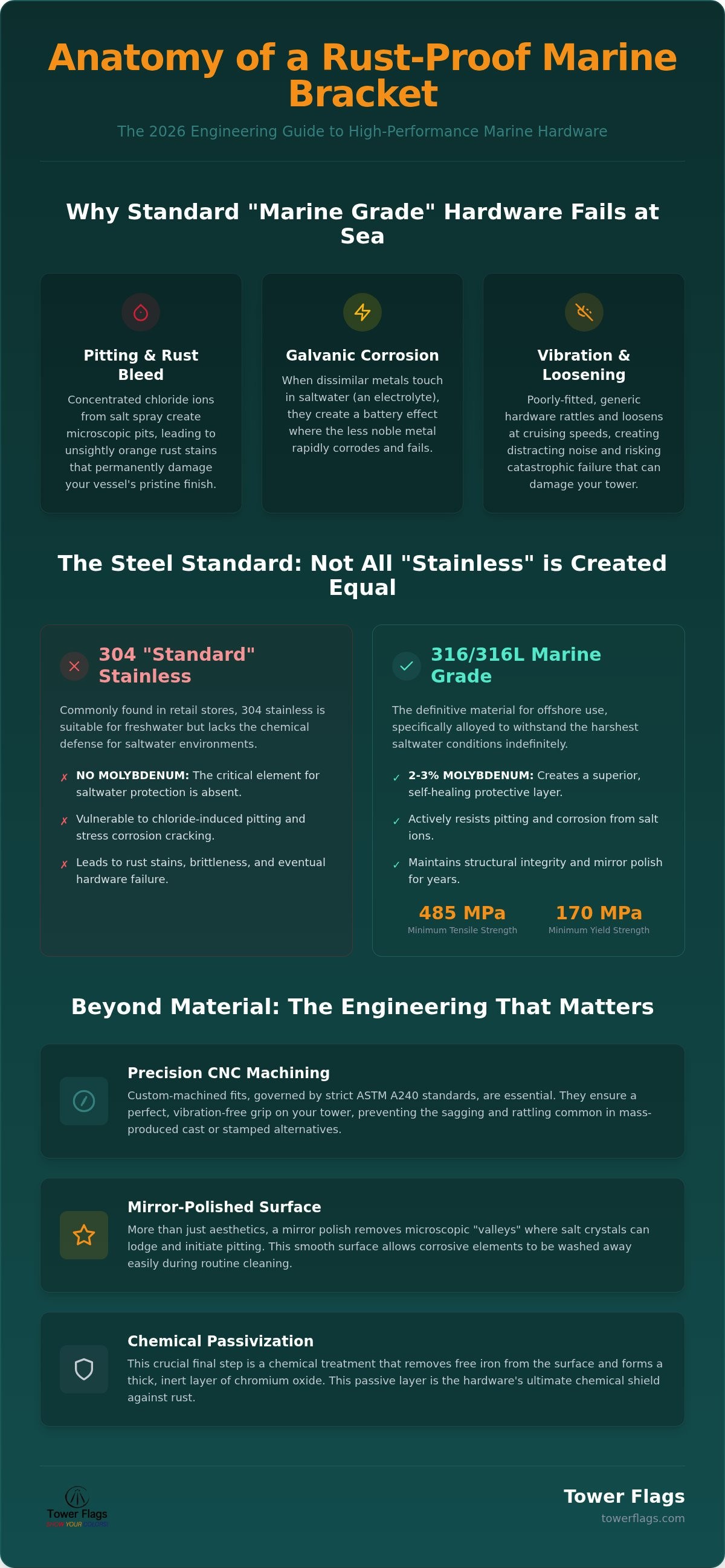
Saltwater is more than just wet; it's a powerful electrolyte. When you mount a flag bracket to your boat's tower, you're creating a micro-environment where galvanic corrosion can thrive. This process occurs when two dissimilar metals come into contact in the presence of an electrolyte, effectively turning your hardware into a low-voltage battery. The less noble metal begins to sacrifice itself, leading to the rapid decay of the bracket. While standard humidity or rain might cause surface oxidation over months, salt spray is far more aggressive. As the water evaporates, it leaves behind concentrated chloride ions that aggressively attack the metal's protective oxide layer.
Low-grade hardware often hides its failure until it's too late. The most insidious form of this is "pitting," where localized corrosion creates deep, microscopic holes in the metal. These pits act as reservoirs for salt, accelerating the damage from the inside out. This leads to unsightly orange "rust bleed" that runs down your wake tower or rail, often causing permanent staining on your gelcoat or powder coating. Investing in high-quality rust proof marine flag brackets isn't just about the hardware; it's about protecting the structural and aesthetic integrity of your entire vessel.
The Problem with Generic "Stainless" Labels
Many boaters are misled by the "stainless" tag found in big-box marine stores. Most of this hardware is 304-grade stainless steel. While 304 works well for inland freshwater lakes, it lacks the chemical resilience needed for coastal or offshore conditions. Without Molybdenum, 304 stainless steel quickly succumbs to chloride-induced stress corrosion cracking. You'll notice this as hardware fatigue; the bracket may feel brittle or develop hairline fractures that compromise its grip at high cruising speeds. True Marine grade stainless steel, specifically 316 or 316L, is the only acceptable standard for high-performance use.
Surface Finish and Corrosion Resistance
The physical finish of your bracket is your first line of defense. A mirror-polished surface isn't just for show. It removes the microscopic "valleys" and textures where salt crystals can lodge and begin the pitting process. A smooth, high-luster finish allows salt to wash away more easily during routine maintenance. Beyond the physical polish, professional manufacturing includes passivization. Passivization is a chemical shield against oxidation. This proprietary treatment removes free iron from the surface, allowing a thick, transparent layer of chromium oxide to form. This layer is what makes rust proof marine flag brackets truly inert in the face of constant salt-air exposure.
Material Science: Why 316 Stainless Steel is the Gold Standard
While many retailers use the term "marine grade" as a loose marketing catch-all, true metallurgical performance depends on the specific chemistry of the alloy. Most consumer-grade hardware utilizes 304 stainless steel. It's a versatile material for indoor use or freshwater environments, but it lacks the chemical defenses necessary for the open ocean. To manufacture rust proof marine flag brackets that actually survive years of salt spray, we must look to 316 stainless steel. The primary differentiator is the addition of Molybdenum, a transition metal that drastically increases the alloy's resistance to localized chemical attacks.
From a mechanical perspective, 316 stainless steel offers impressive durability benchmarks. It maintains a minimum tensile strength of 485 MPa and a yield strength of 170 MPa. This high weight-to-strength ratio is critical for marine mounting applications where the bracket must withstand the constant leverage of a flag pulling at 50 knots. Using an inferior metal doesn't just risk rust; it risks structural failure during high-speed transit, which can lead to lost hardware or damage to your boat's tower.
The Role of Molybdenum in Marine Hardware
The 2-3% Molybdenum content in 316 stainless steel is what creates a superior, self-healing protective layer. This specific element targets chloride-induced pitting, the microscopic "drilling" effect caused by salt ions. While 304 stainless steel will eventually develop deep pits that compromise its integrity, the Molybdenum in 316 creates a more stable surface oxide. This chemical resilience is why this specific alloy is required for salt water resistant flag pole longevity. It doesn't just resist saltwater; it stands up to de-icing salts and industrial pollutants that boats encounter at the dock or during trailering.
Longevity Expectations for Marine Grade Brackets
When you compare 316 stainless steel to common alternatives like chrome-plated zinc, the lifecycle difference is stark. Zinc hardware relies on a thin surface coating that inevitably chips or wears away, exposing the reactive core to immediate corrosion. In contrast, 316 stainless steel is a solid, homogeneous alloy. Even if the surface is scratched, the metal remains inert. 316 stainless steel is the industry standard for surgical and marine applications due to its non-reactive nature. While these high-end alloys require occasional rinsing with fresh water to remove salt crust, they don't require the constant polishing or replacement cycles of cheaper materials. If you want a mounting solution that lasts as long as your boat, selecting precision-machined Flag Pole Brackets made from 316 stainless is the only logical choice for rust proof marine flag brackets.
Custom-Engineered vs. Universal Boat Flag Mounts
Universal mounts represent a compromise that most high-end boat owners eventually regret. These "one-size-fits-all" solutions typically rely on rubber shims or plastic spacers to bridge the gap between a generic bracket and your specific tower diameter. Over time, UV exposure and saltwater degrade these soft inserts, leading to a loose fit. Once the shim fails, the bracket begins to vibrate, which can grind through your tower's powder coating or cause metal-on-metal gouging. True rust proof marine flag brackets should be machined to the exact diameter of your rail, ensuring a zero-play installation that functions as a permanent part of the vessel.
Precision manufacturing eliminates the mechanical failure points common in mass-produced hardware. When a bracket is custom-engineered for a specific boat tower, it distributes clamping force evenly around the entire circumference of the tube. This prevents the "pinching" effect that can crush hollow aluminum tubing. By choosing a dedicated mounting solution, you're investing in hardware that respects the structural integrity of your boat rather than forcing a generic part to fit where it doesn't belong.
The High-Speed Performance Gap
Cruising at speeds above 30 knots places immense stress on your flag hardware. A standard 3x5 flag generates significant drag, creating a leverage effect that attempts to twist the bracket around the tower. If there's even a fraction of an inch of "play" in the mount, this constant oscillation leads to hardware fatigue and eventual failure. Selecting the best wakeboard tower flag mount for high speeds is a matter of safety as much as durability. Custom-fit hardware ensures the flag remains vertical and secure, even during aggressive maneuvers or high-speed transit across choppy water.
Aesthetic Integration with Modern Boat Design
High-performance vessels are defined by their sleek lines and mirror-polished finishes. Bolting on a bulky, generic bracket disrupts the visual flow of a well-designed wake tower. Custom-fit rust proof marine flag brackets offer a streamlined profile that integrates seamlessly with your boat's existing hardware. Because these brackets are designed for exact tolerances, they eliminate the need for unsightly rubber gaskets that eventually rot and bleed black streaks down your tower. This level of fit and finish preserves the high-end aesthetic of your vessel and helps maintain its resale value by preventing the localized damage associated with vibrating universal clamps. Professional-grade hardware reflects the pride you take in maintaining a world-class boat.
Installation and Placement for Maximum Durability
Proper installation is the final step in ensuring your hardware performs as engineered. Even the highest quality rust proof marine flag brackets can fail if they're mounted incorrectly or placed in a "kill zone" where the flag entangles with navigation lights or bimini tops. Start by identifying a reinforced section of your tower or rail that can handle the dynamic wind loads of a boat at plane. For high-performance vessels, this means choosing a location that offers maximum visibility without obstructing the driver's line of sight or interfering with tow ropes.
Use a methodical approach to secure the mount. First, clean the mounting area thoroughly to remove salt film, wax, or industrial fallout. Apply a high-quality anti-seize lubricant like Tef-Gel to all fastener threads. This step is non-negotiable; it prevents thread galling and ensures you can adjust the hardware years later without snapping a bolt. Position the bracket so the flag has a clear arc of movement. Finally, tighten the fasteners to the manufacturer’s torque specifications. For most hollow aluminum towers, you want to secure the bracket firmly enough to prevent rotation at 40 knots without crushing or deforming the structural tubing.
Avoiding Mounting Mistakes
A common error is using non-marine fasteners with a stainless bracket. Mixing metals invites galvanic corrosion, which can fuse the bolt to the bracket or the tower itself. Always use 316-grade stainless steel bolts that match the alloy of your bracket. Ensure the mounting surface is structurally sound. A flag pulling at high speed exerts significant leverage. If you're mounting to a fiberglass surface rather than a metal tower, always use a backing plate to distribute the load and prevent spider cracking in the gelcoat. These small details separate a professional rigging job from a temporary fix that will eventually fail.
Maintenance for Rust-Free Performance
While 316 stainless is highly resistant to the elements, it isn't "set and forget." Salt crystals left to dry on the surface can eventually lead to brown staining, often called "tea staining." This is usually just surface contamination, but it looks unsightly on a well-maintained vessel. Establish a routine rinse schedule where you wash your hardware with fresh water and a mild marine soap after every offshore trip. If you spot tiny brown specks, use a specialized stainless cleaner to remove them before they can pit the surface. For a full breakdown of long-term care, refer to our durable boat flag hardware maintenance checklist. To secure the ultimate mounting solution for your vessel, browse our precision-engineered Flag Pole Brackets today.
The Specialist Approach: Why Tower Flags Engineering Matters
Mass-market retailers operate on a business model built for volume and "good enough" tolerances. This approach often leaves boaters struggling with components that rattle, slip, or eventually corrode after a single season. Tower Flags operates as a dedicated workshop where the focus remains on solving the specific mechanical challenges of the marine environment. By prioritizing precision CNC machining over molded plastic or cast zinc, we produce rust proof marine flag brackets that function as a seamless extension of your vessel's original engineering. This philosophy rejects the one-size-fits-all mentality in favor of high-integrity, American-made craftsmanship.
A specialist approach means identifying the gap between generic hardware and the needs of high-performance boat owners. While generic brands ignore the nuances of tower diameters and powder coat protection, our engineering process centers on them. We utilize high-quality materials tailored specifically for saltwater resistance, ensuring that every component meets the rigorous standards required for life on the water. This dedication to detail eliminates the common frustrations of unsightly rust stains and hardware failure during high-speed transit.
Precision Fabrication for Boat Owners
Precision is a measurable standard in our fabrication process, not just a descriptive term. We design every mount within our ultimate guide to custom boat flag brackets 2026 to match the exact specifications of leading boat tower manufacturers. This meticulous design process eliminates the need for the problematic shims and spacers found in retail kits. Every component undergoes rigorous testing to ensure it withstands the heavy wind loads and constant vibrations typical of offshore use. This specialist approach ensures a perfect fit without modification, which protects the structural integrity and finish of your tower.
Investing in Long-Term Reliability
Choosing specialized marine hardware is a strategic decision based on the total cost of ownership. While a cheap, generic bracket might seem cost-effective at the point of purchase, the hidden costs quickly escalate. These include the price of multiple replacements, the time spent scrubbing rust bleeds, and the potential for expensive tower repairs. One high-quality rust proof marine flag brackets solution will outlast several cheap alternatives. It provides the peace of mind that comes from knowing your hardware is as reliable as the boat it's mounted on. Selecting professional-grade hardware is an investment in the longevity and aesthetic value of your vessel. Explore the full range of Tower Flags mounting solutions to secure a permanent, mirror-polished mounting system for your boat.
Securing the Future of Your Vessel's Aesthetic
Selecting the right hardware is a commitment to the long-term integrity of your boat. The difference between a mirror-polished finish and an unsightly orange rust stain comes down to the precise application of material science and custom engineering. By prioritizing 316 stainless steel and rejecting the compromises of universal mounts, you eliminate the mechanical failure points that plague mass-produced alternatives. These rust proof marine flag brackets don't just hold a flag; they protect your tower from vibration damage and preserve the high-end aesthetic of your vessel.
Tower Flags remains an authoritative expert in marine mounting solutions, providing hardware that stands up to the most demanding offshore conditions. Our custom-fit designs for specific boat towers ensure a zero-play installation that generic brands simply cannot match. Every component undergoes specialized high-speed durability testing to guarantee performance at 40 knots and beyond. It's time to stop settling for hardware that underperforms and start investing in American-made precision.
Upgrade to American-made, precision-engineered flag brackets today and enjoy the relief of a perfectly rigged vessel. Your boat deserves the standard of excellence that only a dedicated specialist can provide.
Frequently Asked Questions
Is 316 stainless steel truly rust-proof in saltwater?
316 stainless steel is technically corrosion-resistant rather than entirely rust-proof, but it's the most reliable material for marine use. The addition of Molybdenum creates a robust chemical shield that prevents the pitting caused by chloride ions in saltwater. While it resists the elements better than any other alloy, it still requires basic care to prevent surface staining. Regular rinsing ensures your rust proof marine flag brackets maintain their mirror-polished finish throughout years of offshore exposure.
Can I use a standard flag bracket on a wakeboard tower?
Standard residential or patio brackets lack the structural engineering required to withstand the dynamic loads of a boat in motion. These generic mounts are often made from cast aluminum or low-grade steel that fails under the high-speed vibration and leverage of a flag at plane. A specialized mounting solution is necessary to ensure the hardware stays secure without damaging your tower. Using hardware designed for the specific diameter of your boat's rail prevents mechanical failure.
How do I prevent my flag bracket from scratching my boat tower?
The most effective way to prevent scratches is to avoid universal clamps that rely on rubber shims or plastic spacers. These soft inserts trap salt and grit, creating an abrasive surface that grinds into your tower's powder coating. A precision-machined bracket fits the exact circumference of your rail, distributing clamping force evenly to eliminate vibration. This zero-play installation ensures the hardware remains stationary even during high-speed transit, preserving the flawless finish of your boat.
What is the difference between 304 and 316 marine grade stainless steel?
The chemical composition is the defining factor; 316 stainless steel contains 2-3% Molybdenum while 304 does not. This element significantly increases resistance to chloride-induced pitting and crevice corrosion common in saltwater. While 304 is acceptable for freshwater lakes, it quickly develops orange "tea staining" and structural fatigue in coastal environments. Professional boaters choose 316 for its superior longevity and its ability to maintain a high-luster finish despite constant exposure to harsh salt air.
How much wind speed can a marine flag bracket handle?
A high-quality marine flag bracket is designed to handle combined wind and boat speeds exceeding 50 knots. The structural integrity of the mount allows it to withstand the significant leverage created by a 3x5 flag at high cruising speeds. To ensure safety, the hardware must be tightened to the manufacturer's torque specifications to prevent the bracket from rotating or slipping. Choosing a custom-fit design provides the necessary grip to handle these extreme forces without failing.
Do I need to remove my flag bracket when trailering my boat?
You don't need to remove a properly engineered bracket when trailering, but you should always remove the flag and pole. Highway speeds create turbulent wind patterns that can put excessive stress on the mounting hardware and cause the flag to fray. A custom-fit bracket will stay secure during road transit as long as it's installed correctly. Removing the pole also prevents it from being struck by low-hanging branches or road debris while you're traveling to the ramp.
What tools are required for installing a boat flag bracket?
Installing a precision-fit bracket typically requires basic hand tools like a socket set or a set of Allen wrenches. We strongly recommend using a torque wrench to reach the exact specifications provided by the manufacturer. This prevents you from over-tightening and crushing the hollow aluminum tubing found on most boat towers. You should also apply a marine-grade anti-seize lubricant to all fastener threads to prevent galling and ensure the hardware remains adjustable for years to come.
How often should I clean my marine flag hardware?
You should rinse your rust proof marine flag brackets with fresh water after every trip in a saltwater environment. This removes salt crystals before they can dry and begin the process of surface contamination. A monthly wash with mild marine soap and an occasional application of stainless steel polish will maintain the metal's protective oxide layer. Consistent maintenance is the key to ensuring your hardware looks as good as the day it was first installed.


Comments