

2026 Pontoon Accessories: Flag Pole Mount Guide
A universal bracket can be the weak link in a flag display. If your pontoon’s square rail doesn’t match the hardware, the bracket may fit poorly, rattle at cruising speed, or put the rail finish at risk. Choosing a pontoon boat flag pole mount starts with a precise fit, not a one-size-fits-all claim.
Marine hardware should stay secure, suit the boat, and withstand sun and spray. Generic plastic mounts can become brittle, while loose brackets may vibrate as speed and wind load increase. A purpose-engineered Flag Pole Bracket is designed around the rail geometry and demands of use underway, helping create a steadier, cleaner-looking display.
This guide explains what to look for in a mount, why fit and material matter, and how custom-engineered Flag Pole Brackets and Flag Poles compare with mass-produced alternatives. Use the steps below to assess fit, vibration, and placement before choosing hardware for your pontoon.
Table of Contents
Must-Have Pontoon Boat Accessories for 2026: Elevating Your Vessel
Pontoons are social spaces for family gatherings, watersports, and long days underway. Outfitting one well means balancing comfort and utility with hardware that suits the boat’s performance. Lighting can extend use into the evening, audio shapes the onboard atmosphere, and well-planned mounting gives accessories a secure place. Consider how each addition fits the available space and works alongside the boat’s existing features.
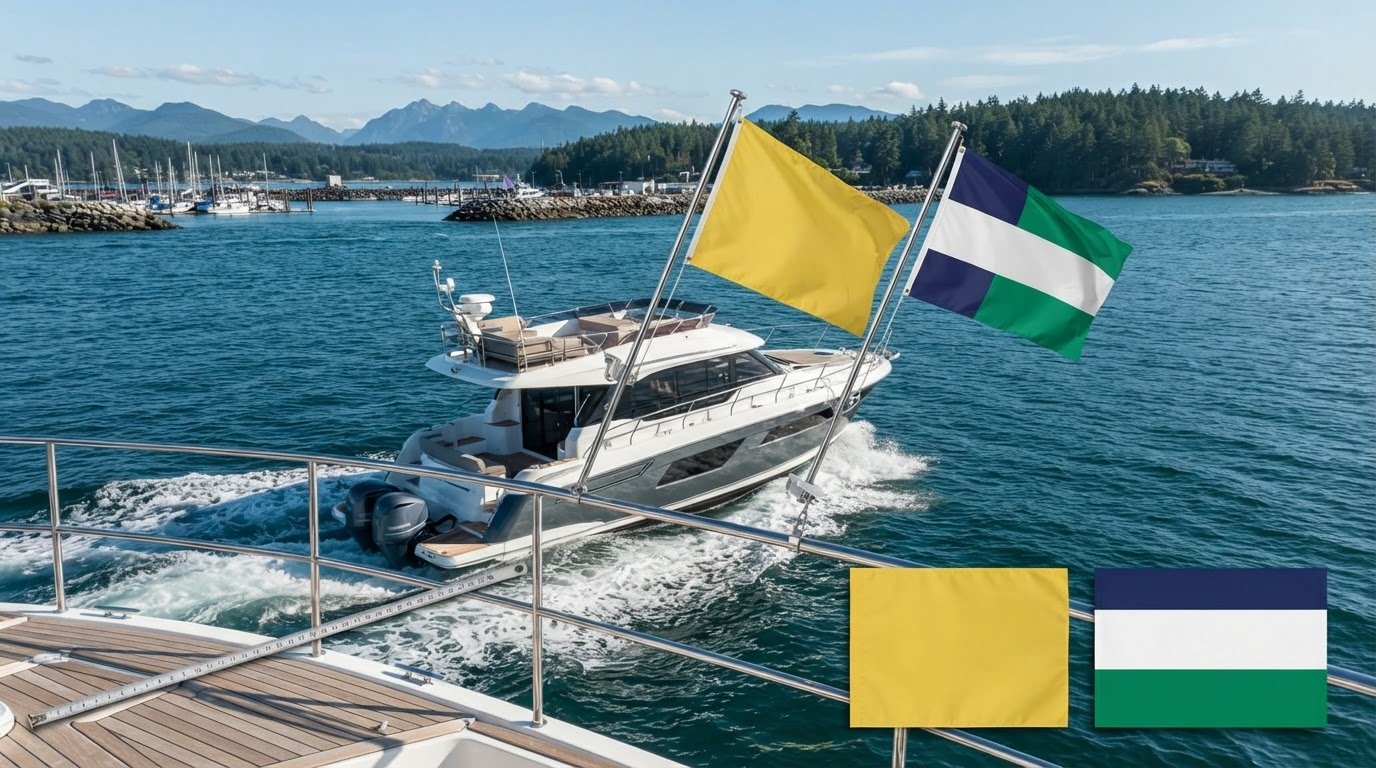
A flag display adds a personal detail to a boat’s profile, and flags have long helped identify vessels and communicate at sea. The history of International maritime signal flags shows how a display can carry meaning beyond decoration. On a pontoon, a well-fitted Flag Pole Bracket helps make that display feel intentional and suited to the vessel.
The Evolution of Pontoon Utility
Modern pontoons combine generous deck space with engines capable of bringing the boat onto the water at speed. Accessories need to suit that use. A bracket that shifts, rattles, or looks mismatched can undermine the comfort and finish of a carefully outfitted boat. That’s why buyers are looking beyond “good enough” hardware to custom-fabricated solutions designed around the vessel, its rail shape, and operating conditions.
This shift changes how owners evaluate an upgrade. Don’t ask only whether an accessory can be attached. Consider whether it stays composed underway, complements the boat’s trim, and suits repeated exposure to sun and water. A pontoon boat flag pole mount is a small component, but its placement and stability can affect the look and usability of the rail area.
Identifying Quality in Marine Hardware
Material is one useful quality consideration. Marine hardware commonly uses materials such as 316 stainless steel and aluminum, selected for strength and suitability in demanding environments. The right material depends on the component’s job and construction. Fit matters just as much: clean edges, consistent finishing, and contact surfaces shaped for the rail suggest deliberate engineering rather than a bracket made to approximate several rail profiles.
Plastic can be appropriate for some applications, but prolonged UV exposure can weaken lower-grade plastics and make them more prone to brittleness over time. Inspect mounting points for solid construction and a finish that sits neatly against the boat. A loose or poorly matched bracket may vibrate and mark the rail. Custom-engineered Flag Pole Brackets are designed around precise fit to help reduce movement and preserve a clean installation.
Quality-focused upgrades aren’t about adding accessories for their own sake. They’re about choosing pieces that suit the boat’s use and appearance. For owners who value durable, precision-made hardware, Flag Poles and brackets designed for marine conditions offer a considered alternative to generic parts. The aim is a cohesive setup, with each accessory earning its place aboard.
The Engineering Behind a Secure Pontoon Boat Flag Pole Mount
A pontoon’s rail is part of the mounting system, not just a convenient place to attach hardware. Many pontoons use square tubing, while standard marine sockets and adjustable clamps are often shaped for round rails or broad compatibility. That mismatch can leave a bracket supported at a few contact points instead of seated firmly against the rail. A secure pontoon boat flag pole mount accounts for the rail’s shape, the forces on the flag and pole, and the repeated movement of a boat underway.
A precision-engineered mount is designed to match the rail’s geometry and reduce vibration through stable, well-distributed contact. That fit is the key mechanical difference between custom-made Flag Pole Brackets and generic clamp-on hardware. The National Marine Manufacturers Association represents recreational boating and marine manufacturers, reflecting the breadth of the industry in which fit-for-purpose hardware matters.
Square Rail vs. Round Rail Mounting
A round clamp on 1.25-inch square pontoon tubing may touch the rail at narrow edges instead of resting flush along its sides. This creates point loading: clamping force concentrates in a small area, increasing pressure on the finish and making the bracket more likely to shift. A bracket shaped for the square profile can distribute pressure across more of the rail surface, helping it sit steadily without relying on a few high-pressure contact points.
Adjustable clamps can be convenient, but adjustability alone doesn’t guarantee a stable fit. Check how the bracket’s mounting surfaces meet the rail. Does it follow the rail’s flat faces, or bridge over them? Does tightening secure the assembly evenly, or pull the bracket into a position where it can rock? These observations help reveal whether the hardware is designed for the rail or merely adaptable to it.
Vibration Dampening and Metal Fatigue
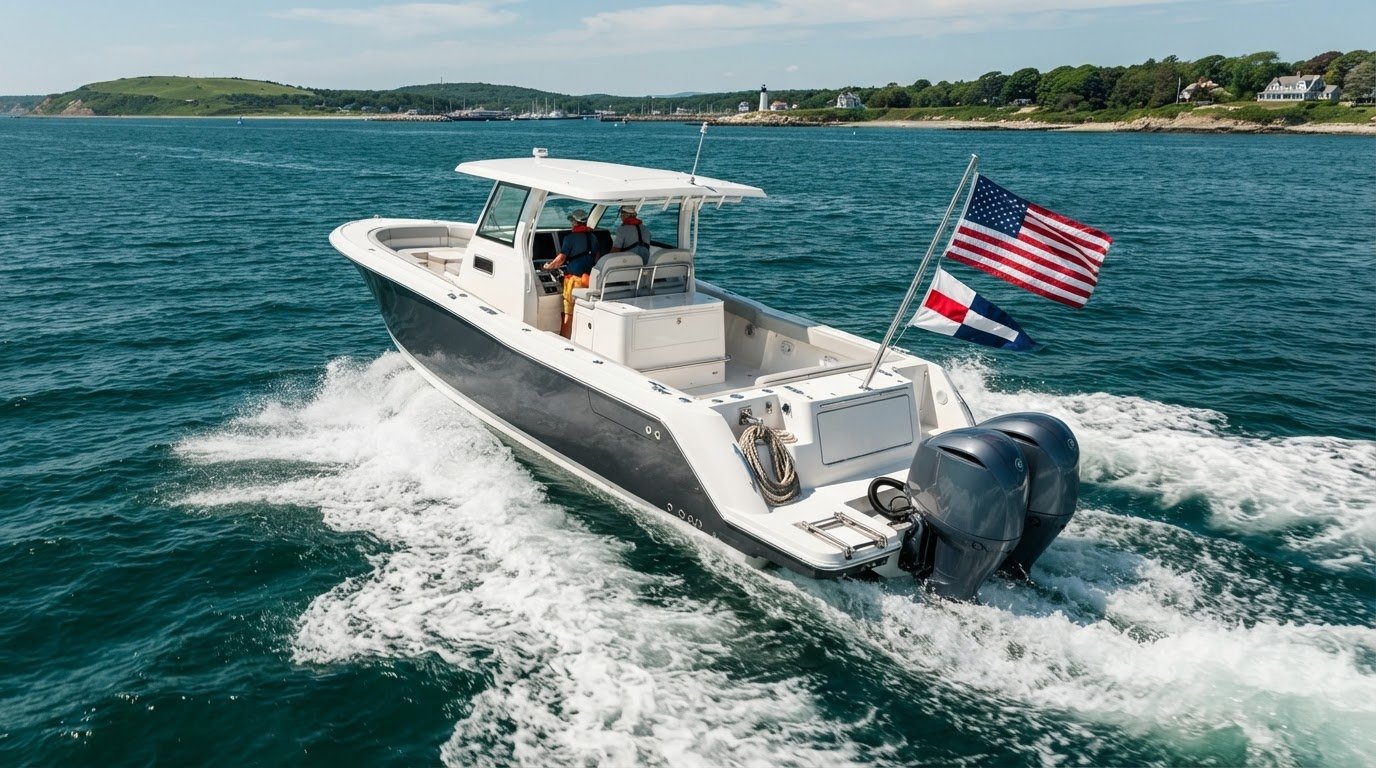
At cruising speed, airflow and movement can make a flag and pole oscillate. If the bracket has play, repeated vibration can loosen it or cause it to “walk” along the rail. A precise fit helps limit that movement by keeping the bracket seated as intended. A stable connection also helps reduce repeated flexing that can contribute to fatigue in the hardware over time.
Thickness and overall bracket geometry matter, too. A thin or poorly supported section may flex under repeated loading; a well-designed bracket balances material and shape to resist unnecessary movement. Material thickness can’t be judged in isolation, so consider how the bracket supports the pole and transfers force to the rail. Tower Flags’ custom-engineered Flag Pole Brackets focus on fit and high-speed mounting performance. Explore custom Flag Pole Brackets as you compare designs for your pontoon.
For additional marine-industry context, the National Marine Manufacturers Association provides information about recreational boating and the manufacturers that serve it. For your own setup, start with the rail profile and how the bracket bears against it. A purpose-built connection is less dependent on over-tightening and better positioned to keep the flag display composed as conditions change.
High-Speed Performance: Why Generic Mounts Fail
A flag in the wind puts a load on the pole and its mounting point. As boat speed rises, wind resistance increases rapidly, so a bracket that feels secure at idle may move, loosen, or flex underway. The available research reports that a standard 3-by-5-foot marine flag can generate more than 50 pounds of continuous lateral drag at 45 mph. That figure illustrates why speed and flag area matter, but it shouldn’t be treated as a precise load rating for every boat, flag, or mounting setup.
Drag Forces and Flag Size
Wind resistance rises approximately with the square of relative airspeed under ordinary aerodynamic conditions. In practical terms, doubling the relative speed can mean roughly four times the drag, though the actual force depends on factors such as flag shape, fabric, and how it flutters. A 3-by-5-foot flag presents far more area to the wind than a small pennant, so its bracket must manage a greater load. Don’t assume a mount suitable for a small flag is automatically suitable for a larger one.
Pole length adds leverage. A four-foot pole gives wind force more distance from the bracket, increasing the turning force at its base. That makes a stable connection and a well-supported pole important, especially in turbulent air or during changes in heading and speed. Marine flag poles are part of the system: the pole, bracket, and rail must work together to support the display.
Material alone doesn’t determine performance. Aluminum and plastic behave differently under load, and design, thickness, geometry, and UV exposure all affect durability. Plastic components may become brittle with prolonged sun exposure, while a metal bracket can still flex or fail if its shape or fit is inadequate. Assess the complete assembly, not just its material label.
Securing Your Investment
A loose clamp can tilt as vibration and wind load work against it. In a simple comparison, one clamp makes uneven contact with a rail and gradually shifts; a precision-fit bracket sits flush and spreads its load across the mounting surface. A better fit can reduce unnecessary movement, but it does not guarantee against failure. Custom boat flag brackets are designed around specific mounting geometry rather than a broad, adjustable fit.
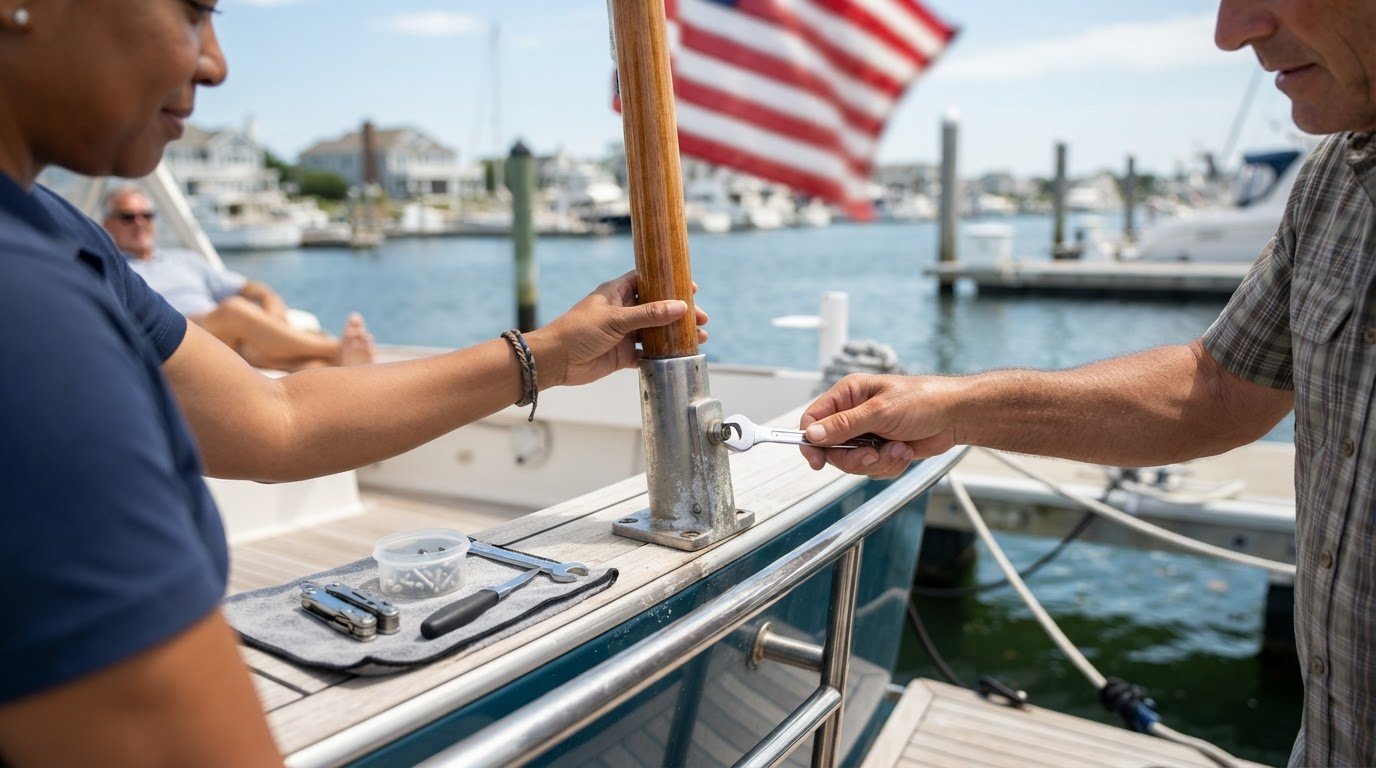
Bracket failure can send a pole and flag into the water, turning a display into lost gear and a recovery problem. Before heading out, check that the assembly is seated securely, the pole is held firmly, and there’s no visible looseness or damage. Recheck after handling or repositioning the hardware. Choose a pontoon boat flag pole mount for the flag and pole it supports, the boat’s rail, and the intended operating conditions.
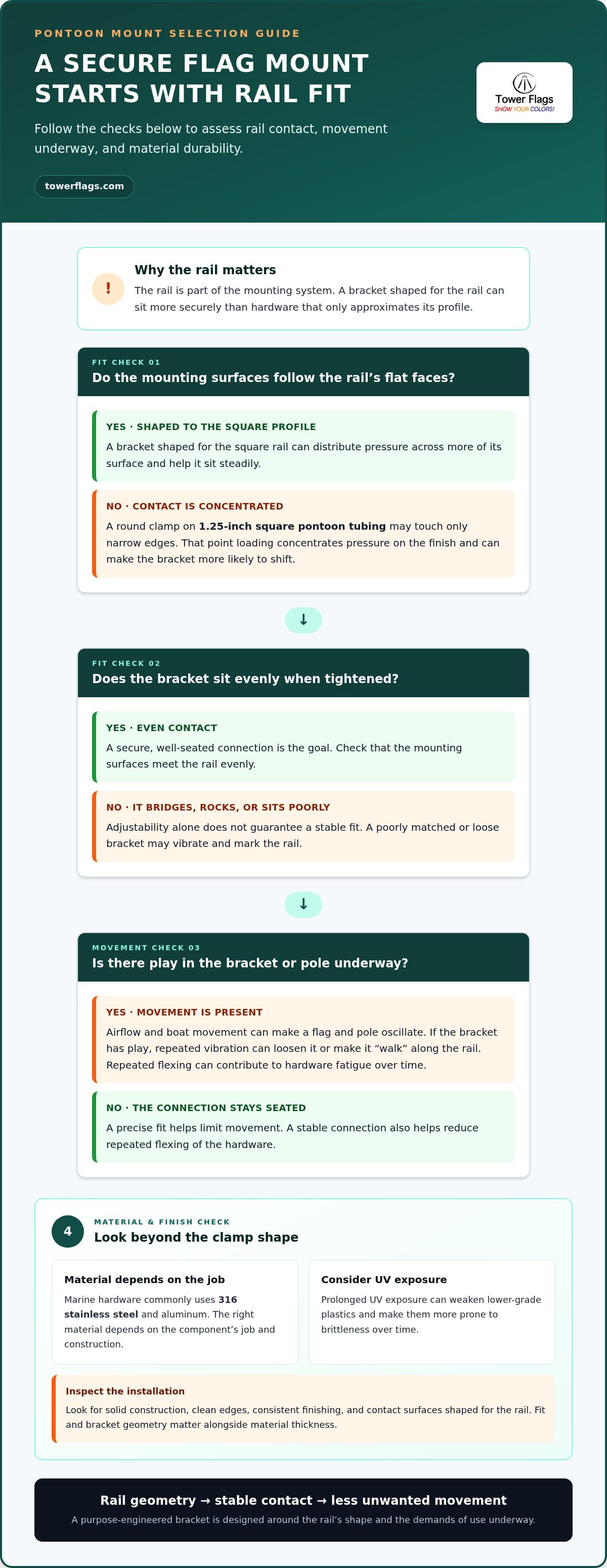
Selection Guide: Choosing Pontoon Hardware
The right Flag Pole Bracket starts with the rail, but fit is only part of the decision. Consider where the flag will sit, how it looks beside the boat’s trim, and whether you need to remove the Flag Pole regularly. A few checks before choosing hardware can prevent awkward placement and help the complete setup work as intended.
Measuring for a Precision Fit
Measure the rail itself rather than relying on a general “standard” size. Some pontoons use 1.25-inch square tubing, while others have different dimensions or profiles. Record the measurements and note nearby fittings so the bracket can be matched to the actual mounting location.
Use a ruler or caliper to measure the rail’s width and height across its flat faces. Don’t measure diagonally across the corners.
Check the rail’s shape and note rounded edges, seams, or changes in profile where the bracket would sit.
Measure the available straight section, including the space around rails, corners, and existing hardware.
Look for possible interference from bimini tops, docking lights, gates, and other accessories. Consider how moving parts travel when opened, closed, or adjusted.
Record the measurements and intended pole position so the bracket’s fit and orientation can be evaluated together.
Exact dimensions are the foundation of durable boat flag hardware. A bracket chosen from a rough estimate may not sit flat or provide the intended support. Measure twice, and keep the figures with a photo of the rail area for reference.
Style and Finish Considerations
A polished finish can complement bright metal details, while a matte finish may blend more quietly with darker trim. Choose based on the boat’s existing finishes and the look you want, but don’t make appearance the only consideration. In a marine environment, dissimilar metals in contact can contribute to galvanic corrosion. Favor compatible materials and follow the hardware maker’s guidance for isolating different metals where needed.
Placement affects both appearance and use. Choose a visible position that doesn’t obstruct the operator’s sightlines, boarding paths, or access to controls. Check the flag’s position relative to a bimini, cover, or enclosure, including how fabric moves and where supports sit. A location that looks clear with the boat open may interfere when the cover is deployed.
Removal needs also shape the choice. A frequently removed Flag Pole calls for a setup that can be handled conveniently while keeping the bracket securely mounted. A more permanent arrangement may prioritize a fixed, stable position. Decide how often you’ll take the pole out and assess the mounting method accordingly. Convenience shouldn’t come at the expense of a secure fit.
For a pontoon boat flag pole mount tailored to your rail and intended placement, explore custom Flag Pole Brackets from Tower Flags.
The Tower Flags Difference: Precision-Engineered Marine Solutions
Pontoon owners shouldn’t have to settle for a bracket that almost fits. Tower Flags designs and manufactures custom Flag Pole Brackets and Flag Poles for boat owners, with mounting solutions tailored to specific boat and rail geometries. This approach addresses familiar frustrations: hardware that rattles underway, brackets that don’t seat cleanly on square tubing, and generic designs that can compromise the boat’s finish.
Mass-produced hardware is designed for broad applications. A pontoon rail has its own profile and dimensions, so broad compatibility can mean a less exact connection. Tower Flags focuses on custom engineering, fit, and marine durability. Explore the principles behind high speed boat flag mounts to understand why the bracket, pole, and mounting surface need to work as one system.
Craftsmanship Over Mass Production
A specialist’s attention to detail includes how the bracket meets the rail, supports the pole, and complements the boat. Tower Flags designs and manufactures custom hardware with a focus on exact fit and durability in marine environments. That approach distinguishes precision fabrication from a one-size-fits-most design without relying on a promise that any component will last forever.
For pontoon owners, the benefit is practical. A bracket designed for the intended geometry can sit more securely and help reduce unwanted vibration, while a carefully finished design can look integrated rather than added as an afterthought. Custom Flag Pole Brackets address fit and stability at their source: the connection between hardware and boat.
Ready to Upgrade Your Pontoon?
Start with the rail measurements and mounting location you identified earlier. Consider the pole and flag you plan to display, nearby fittings, and the boat’s trim. Then browse Flag Pole Brackets and Flag Poles with those details in mind. Choosing hardware around the actual boat, rather than relying on a generic clamp, helps you focus on fit and a cohesive finish.
A pontoon boat flag pole mount should feel like a deliberate part of the vessel, not a compromise bolted onto the rail. Tower Flags brings custom-engineered mounting and marine-focused craftsmanship to that decision. Explore custom Flag Pole Brackets and Flag Poles from Tower Flags.
Make Your Next Upgrade Count
Your next upgrade can be more than an accessory swap. Choose a flag display that feels at home on your pontoon, from its placement and finish to the way it performs underway. A pontoon boat flag pole mount selected around the vessel’s needs can make the display a purposeful part of your time on the water.
Start by considering what matters most for your boat: a precise fit, performance at speed, or hardware suited to marine conditions. Tower Flags designs and manufactures custom-fabricated Flag Pole Brackets and Flag Poles for boat owners. The focus on fit and marine environments makes custom hardware an alternative to generic mounting solutions.
When you’re ready to choose hardware for your setup, shop Tower Flags’ custom Flag Pole Brackets and Flag Poles for a fit tailored to your boat.
Frequently Asked Questions
Will a pontoon boat flag pole mount fit on square rails?
Yes, if the bracket is designed for the rail’s dimensions and profile. A clamp intended for round tubing may not sit correctly on a square rail, even if its adjustment range seems broad enough. Measure the rail’s width and height, then compare those dimensions with the bracket’s specified fit. For a pontoon boat flag pole mount, a close match helps avoid rocking or uneven contact during use.
What is the best material for a marine flag pole bracket in 2026?
The best material depends on the bracket’s design, the boat’s environment, and how the hardware will be used. 316 stainless steel and aluminum are common marine hardware choices, but material alone doesn’t establish strength or corrosion resistance for a finished assembly. Consider the complete bracket’s construction and compatibility with the rail and pole. Keep dissimilar metals from making direct contact where possible, and follow the manufacturer’s care instructions.
Can I leave my flag up while cruising at high speeds?
Only if the Flag Pole and bracket are designed for the speed and flag size you intend to use. There’s no single safe speed for every combination of flag, pole, mount, and boat. Follow the hardware maker’s operating guidance, and take the flag down if the setup’s limits are unknown or conditions become rough. After a run, inspect the hardware for looseness, bending, or other signs of stress.
Do I need to drill holes in my pontoon rails to mount a flag pole?
Not necessarily. Some mounting designs attach to existing rail surfaces, while others may require a different installation method. Don’t drill into a rail based only on a generic accessory’s instructions. First determine how the specific bracket attaches, and consider the boat manufacturer’s guidance before making any permanent change. If you want to avoid altering the rail, choose a mounting design intended for attachment without drilling.
How do I prevent my flag pole mount from scratching the boat’s finish?
Keep the rail and bracket’s contact surfaces clean before fitting or adjusting the hardware. Trapped grit can act like an abrasive as the mount moves. Avoid overtightening, which can increase pressure on the finish, and use only a protective interface that’s compatible with the bracket and rail materials. Check the contact area after initial use and periodically afterward, especially if the hardware has shifted or been repositioned.
What size flag is recommended for a standard pontoon boat pole?
There isn’t one universal flag size for every pontoon or pole. A commonly cited boating guideline recommends about one inch of flag length for each foot of boat length. Treat that as a general sizing reference, not a guarantee that a particular pole and mount can support the flag. Check the pole and bracket guidance, and consider how the flag’s area affects wind load while underway.
Is there a difference between a wakeboard tower mount and a pontoon rail mount?
Yes. A wakeboard tower mount attaches to tower tubing, while a pontoon rail mount must match the rail’s shape, dimensions, and available mounting space. The hardware may also encounter different clearances and movement depending on its position aboard the boat. Don’t assume a bracket designed for one structure will transfer safely to another. Match the mount to the actual attachment point and intended use.
How do I maintain my marine flag hardware to prevent corrosion?
Rinse hardware with fresh water after exposure to salt or spray, then dry it before storage when practical. Inspect joints, fasteners, and surfaces for discoloration, pitting, or buildup, and clean them using methods suitable for the specific materials. If the bracket combines different metals, check their contact areas for corrosion. Follow the manufacturer’s care guidance, since cleaners or coatings suitable for one material may damage another.
Comments