

Boat Flag Size Guide: Perfect Marine Display for 2026
Could the flag that looks perfectly sized at the dock put extra strain on its hardware underway? Flag size affects wind load, and the wrong proportions can make a boat’s display look out of place. This boat flag size guide explains how to balance appearance with a practical setup.
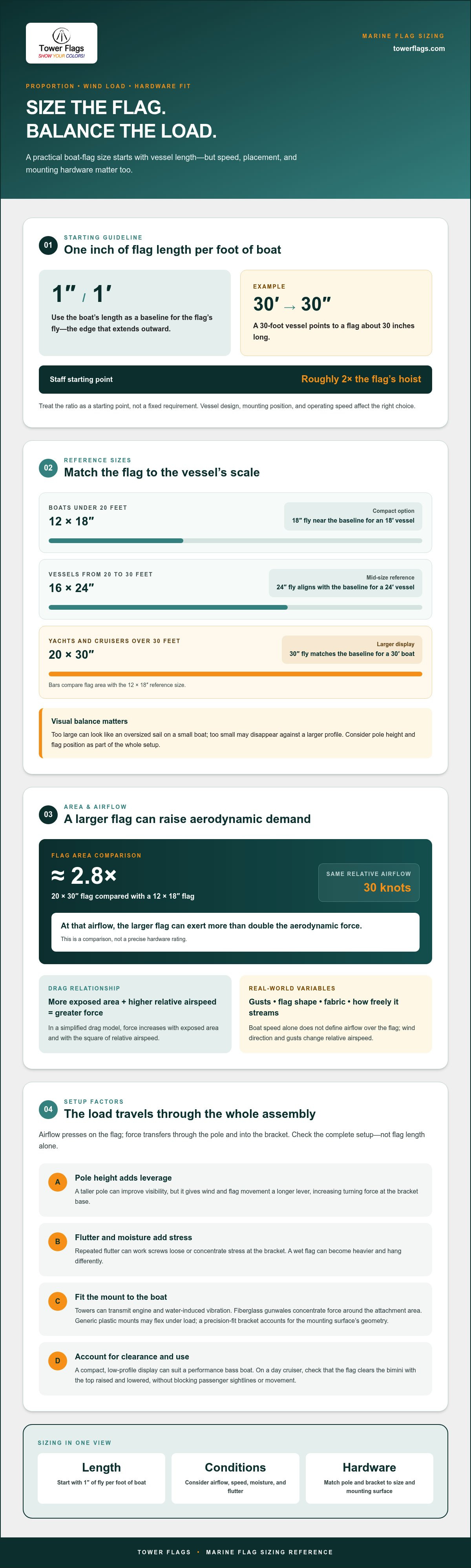
A common guideline for a boat’s national ensign is one inch of flag length for every foot of boat length. That gives a 30-foot vessel a flag about 30 inches long, with a staff roughly twice the flag’s hoist. It’s a useful starting point, but speed, mounting position, and hardware fit matter too. If a flag shreds or a bracket vibrates loose, review the size and setup together.
Here, you’ll find the basic marine sizing rule, ways to assess visual proportion and aerodynamic load, and reasons larger flags call for well-matched hardware. Tower Flags designs and manufactures custom flag poles and brackets for marine environments, helping boaters build a display that suits their vessel and its conditions.
Table of Contents
Determining the Correct Flag Size for Your Boat Length
A well-proportioned flag should be easy to see without dominating the boat or placing unnecessary strain on its mount. The one-inch-per-foot rule is a baseline for marine proportion: choose a flag length of about one inch for each foot of vessel length. For example, a 30-foot boat points to a flag about 30 inches long. Treat this as a starting point, not a fixed requirement, because vessel design, mounting location, and operating speed also affect the right choice.
Flag dimensions are commonly written as hoist by fly: the hoist is the edge attached to the pole, and the fly is the edge that extends outward. The sizing rule refers to the flag’s length along the fly. Maritime flags also serve different purposes and follow established display traditions. The overview of Maritime Flag Etiquette and History provides useful context when choosing what to fly and where.
Standard Boat Length to Flag Size Ratios
Use these dimensions as reference points, then assess how they look and perform on your vessel:
Boats under 20 feet: A 12 x 18-inch flag is a compact option for smaller boats. Its 18-inch fly is close to the one-inch-per-foot baseline for an 18-foot vessel, while keeping the display from looking oversized on a shorter hull.
Vessels from 20 to 30 feet: A 16 x 24-inch flag suits a range of mid-size boats. Its 24-inch fly aligns with the baseline for a 24-foot vessel and offers more visibility than a smaller flag.
Yachts and cruisers over 30 feet: A 20 x 30-inch flag provides a larger display, with a 30-inch fly matching the baseline for a 30-foot boat. Larger vessels may call for a larger flag, but increased dimensions also place more demand on the pole and bracket.
Visual balance matters. On a small boat, a flag that is too large can look like an oversized sail and compete with the vessel’s lines. A flag that’s too small may disappear against a larger profile. Consider the whole setup, including pole height and flag position, rather than judging the flag alone.
Exceptions to the Sizing Rule
Speed and clearance can matter more than matching a traditional ratio exactly. A performance bass boat may benefit from a compact, low-profile display: a smaller flag presents less surface area to the wind, reducing aerodynamic load on the pole and mounting point. At higher speeds, a well-fitted bracket is especially important because vibration and wind force can test the connection.
Day cruisers have a different constraint. A flag and pole should clear the bimini top without catching the canvas or interfering with its movement. Check the flag’s position with the top raised and lowered, and keep passenger sightlines and movement clear. Choose a size that stays visible, suits the boat’s proportions, and works with its operating conditions.
Aerodynamics and Wind Load: The Physics of Flag Sizing
A flag is a small sail attached to a fixed point. As airflow presses against it, the force travels through the pole and into the bracket, so increasing flag area can raise the load on the entire assembly. In a simplified drag model, force increases with exposed area and with the square of relative airspeed. A modest increase in speed can therefore matter as much as a larger flag.
For comparison, a 20 x 30-inch flag has about 2.8 times the area of a 12 x 18-inch flag. At the same 30-knot relative airflow and with comparable orientation, it can exert more than double the aerodynamic force. Actual load also depends on gusts, flag shape, fabric, and how freely the flag streams, so treat this as a comparison, not a precise hardware rating.
Calculating Drag on Marine Hardware
Flag area is only part of the calculation. A boat’s speed through the water isn’t always the same as airflow over the flag, because wind direction and gusts change the relative airspeed. Higher speed increases drag sharply, while a larger flag presents more material to the airflow. Choosing a flag by length alone can therefore overlook the mechanical demands of high-speed use.
Nylon and heavy-duty polyester don’t have one universal drag coefficient each. Weave, weight, cut, and how the fabric fills with air all affect its behavior. A wet flag can also become heavier and hang differently, adding weight to the pole and repeated stress as it snaps or flutters. Consider the flag’s condition and expected speed together rather than assuming fabric choice alone will control the load.
Leverage, Flutter, and Mounting Integrity
Pole height matters because it increases leverage: the farther the flag’s force acts from the bracket, the greater the turning force, or torque, at its base. A tall pole can improve visibility, but it also gives wind and flag movement a longer lever. Repeated flutter adds vibration, which can work mounting screws loose or concentrate stress at the bracket connection over time.
Mounting surfaces respond differently. A wakeboard tower can transmit engine and water-induced vibration through its structure, so a bracket must fit securely and resist movement. A fiberglass gunwale presents another concern: force is concentrated around the attachment area, making a stable, well-matched installation important. Generic plastic mounts may flex under load, and repeated bending can contribute to loosening or failure. A precision-fit marine bracket accounts for the mounting surface’s geometry instead of relying on a one-size-fits-all clamp.
For a closer look at the connection between speed, fit, and hardware design, explore this guide to high-speed boat flag mounts. When applying this boat flag size guide, match the flag’s exposed area and pole height to the conditions you actually run in. Tower Flags designs and manufactures custom marine flag poles and brackets for a precise fit in marine environments.
Sizing by Vessel Type: Towers, Pontoons, and Cruisers
A flag that works well on a low rail may be poorly suited to a wakeboard tower. Each mounting position has different demands: tower height and vibration, pontoon traffic and visibility, or cruiser layout and display tradition. Use the vessel’s structure and how you use it to refine the size, pole height, and placement you identified with the boat flag size guide.
Wakeboard Tower Sizing Constraints
Wakeboard towers sit high and are exposed to airflow, so adding pole height or flag area can increase movement at the mount. A compact flag and shorter pole can help limit leverage, particularly on a boat that travels at speed. Choose a position with clearance from speakers, tow ropes, and other tower equipment. Check the flag’s path through its full range of movement so it can’t snag during towing or interfere with equipment use.
Tower geometry varies, so a generic clamp may not sit securely or align cleanly with the tubing. A precision-fit bracket is designed around the mounting surface rather than relying on a broad, one-size approach. For a closer look at selecting hardware for this location, see the guide to the best wakeboard tower flag mount for high speeds.
Pontoon and Deck Boat Considerations
Pontoons offer rail space, but placement still matters. A 12 x 18-inch flag can provide a visible display without overwhelming a compact mounting area. Some pontoon rails use 1.25-inch square tubing; a mount must match the rail’s shape and dimensions to sit securely. Don’t assume every rail has the same profile. Position the flag where it’s visible from outside the boat but clear of boarding gates, handholds, and passenger pathways.
Let speed guide the setup. A low-and-slow outing may allow a more prominent display than faster cruising, where airflow puts greater demand on the pole and bracket. If the boat’s use changes, reassess whether the flag’s size and mounting position remain suitable.
Center Consoles and Offshore Cruisers
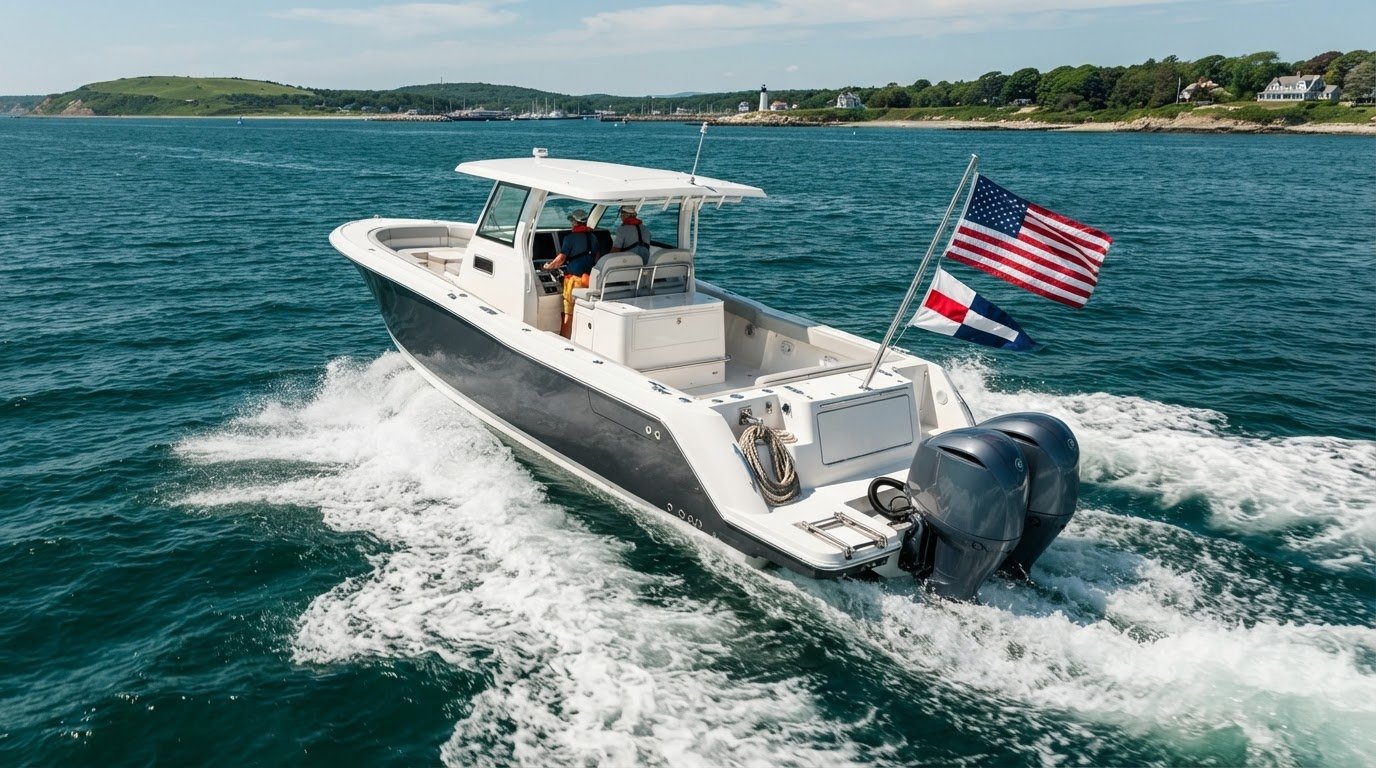
On a center console, a T-top can provide an elevated mounting point for a flag that’s visible from multiple directions. Keep it clear of antennas, navigation equipment, and canvas, and make sure the pole doesn’t obstruct movement around the helm. A well-chosen position supports visibility without crowding working space.
Offshore cruisers have more room for a traditional display, but a larger vessel doesn’t make every flag size or mounting point suitable. Consider proportion, pole support, and exposure at the intended location. For a national ensign or other traditional display, placement and etiquette matter alongside dimensions. Choose a setup that respects the vessel’s layout while keeping the flag and hardware secure in marine conditions. Tower Flags makes custom marine flag poles and brackets for boat owners seeking a fit suited to their vessel.
Selecting Mounting Hardware Based on Flag Dimensions
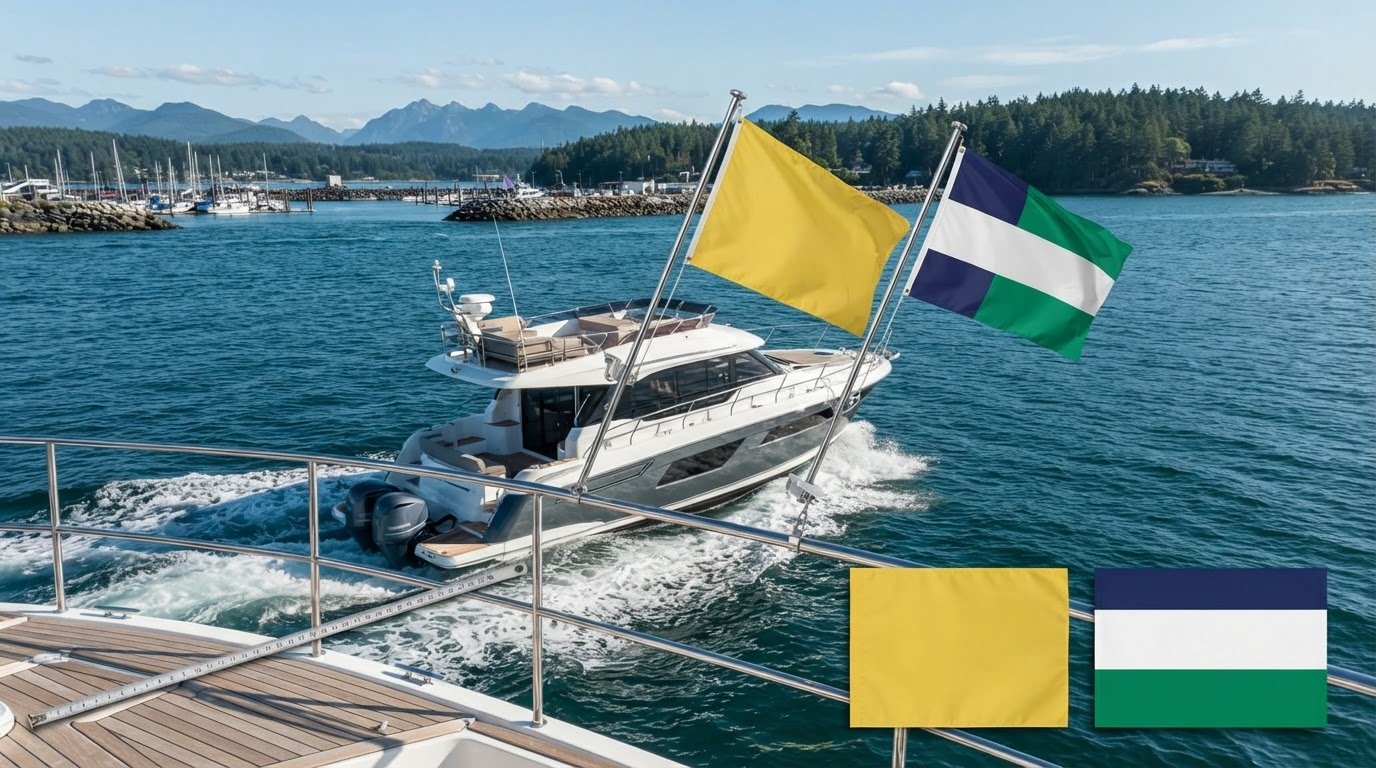
Flag dimensions determine more than appearance. A larger flag catches more airflow, transferring greater force through the pole to the bracket and its mounting surface. The boat flag size guide calculation is only useful if the hardware suits the flag’s area, pole height, and operating conditions. Match the complete assembly, not just the flag to a pole that happens to fit.
Pole diameter affects stiffness and compatibility with the bracket. A 1/2-inch pole and a 1-inch pole aren’t interchangeable simply because both hold a flag. The thicker pole may resist bending differently, but it must fit the bracket’s socket. Neither diameter is automatically right for every flag. Consider the pole’s length, material, and wall thickness, then match it to the bracket and intended use.
Heavy-Duty Pole Specifications
Wall thickness is a key detail that an outside diameter alone won’t reveal. Two poles with the same diameter can behave differently if their walls differ in thickness or construction. A longer pole also has more leverage at its base, so assess the complete assembly rather than selecting by diameter alone. For an overview of design considerations, explore marine flag poles.
Material involves trade-offs. Stainless steel is known for strength and corrosion resistance, while carbon fiber is commonly selected where low weight is important. Actual performance depends on construction and design, so a material name alone doesn’t establish load capacity. Engineered alloys, including marine-use aluminum, can offer a practical balance of strength and weight. Choose based on the conditions and the pole’s fit with the bracket.
Precision-Engineered Brackets
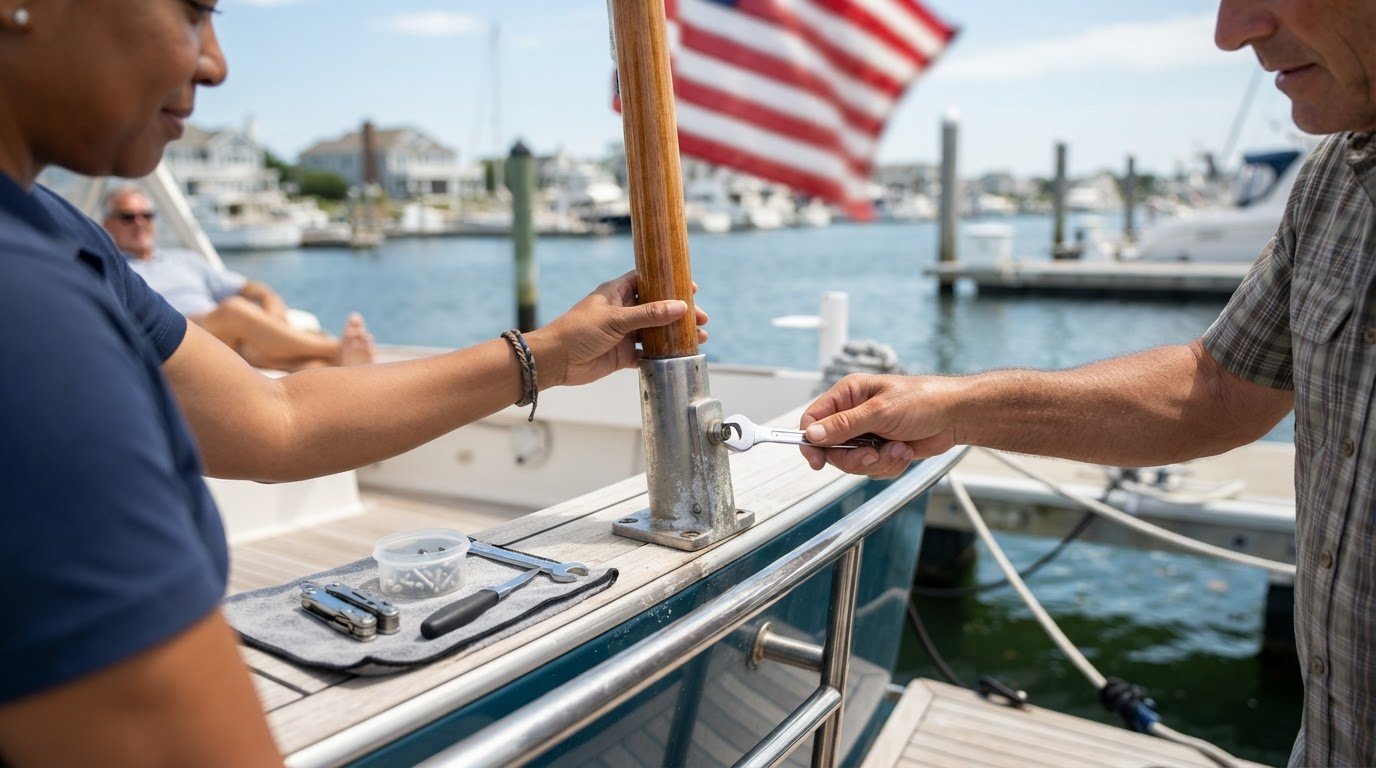
A bracket should match the shape and dimensions of its mounting point. If it shifts or has excess play, repeated vibration can work against the connection and concentrate stress at fasteners. Precise fit is particularly important with larger flags and high-speed use. Custom fabrication can be a more considered solution than a generic plastic mount made to fit many different surfaces. Learn how custom boat flag brackets address fit and mounting demands.
Check socket depth as well as diameter. The pole needs to seat securely according to the bracket’s design; shallow engagement can leave it more prone to movement in gusts. Don’t force a mismatched pole into a socket or rely on a loose fit. If the system uses a set screw or locking mechanism, use it as intended and inspect the connection periodically for movement or loosening.
Stainless hardware can be suitable in marine settings, while engineered alloys can reduce weight without overlooking strength. Material compatibility, saltwater exposure, and the mounting surface all matter. Tower Flags specializes in custom-engineered marine brackets and poles designed around fit and durability. Explore custom marine flag hardware to match your setup to your vessel.
The Tower Flags Difference: Engineered for Performance
A marine flag setup depends on more than choosing a flag that looks right. Pole length, mounting point, and vessel geometry all affect how the hardware fits and performs. Tower Flags designs and manufactures custom brackets and poles for marine environments, where salt water, speed, and vibration put mounting hardware to the test. A precision-fit approach helps boaters avoid mounts that wobble, loosen, or sit awkwardly on a tower.
Universal brackets are designed to accommodate a range of surfaces, but a broad fit can leave unwanted movement on a particular boat. Shimming a bracket to make it fit may create uneven contact rather than a stable connection. With a larger flag or a high-speed setup, fit matters: the bracket should suit the mounting surface and work with the pole and flag dimensions as a complete assembly.
Why Custom-Fit Matters
Custom fabrication starts with the actual mounting geometry rather than assuming every tower or rail has the same shape. That reduces the need to force a generic clamp into place or compensate for gaps with improvised shims. Tower Flags makes custom brackets for marine environments, with fit and durability in mind for the movement and vibration that can challenge a mount.
Before selecting hardware, gather the details that define your setup:
Mounting location: Identify the tower, rail, or other surface where the bracket will sit.
Surface shape and dimensions: Note the profile and measurements needed for a precise fit.
Flag and pole dimensions: Match the bracket to the pole and the load the flag can create in use.
Operating conditions: Consider the vessel’s typical speed and exposure when choosing the setup.
These details help match bracket fit to the display you’re building. They also make the boat flag size guide more useful: sizing is only one part of a setup that needs to work together.
Securing Your 2026 Flag Display
Follow the hardware’s intended mounting method and the vessel’s requirements during installation. Secure attachment and correct fit matter, so don’t rely on a forced fit or improvised spacers to compensate for mismatched hardware.
Durability matters for equipment exposed to salt water and changing conditions. Focus on a sound match and quality construction, and check regularly for movement, corrosion, or loosening. These checks can help you spot wear before it affects the display.
For a flag setup tailored to your boat, explore custom boat flag brackets at Tower Flags. Matching the bracket and pole to your vessel’s mounting point and flag dimensions brings together a clean appearance, precise fit, and marine-focused design.
Set Up Your Boat for a Better Flag Display
Treat the flag, pole, and mounting point as one system. Before choosing hardware, note where it will attach, the space available, and how you use your boat. Those details help turn this boat flag size guide into a setup that fits your vessel instead of forcing a generic mount into place.
Tower Flags makes custom-fit hardware for marine environments. A well-matched bracket and pole provide a considered foundation for a flag display that suits your boat’s layout and conditions.
Explore custom boat flag brackets and poles at Tower Flags to choose hardware designed around your vessel’s mounting point and flag dimensions.
Frequently Asked Questions
What is the most common boat flag size for a 24-foot boat?
A 16 x 24-inch flag is a practical starting point for a 24-foot boat, with the 24-inch fly matching the common one-inch-per-foot guideline. Treat it as a proportion reference, not a mandatory size. The flag’s position, visibility, and exposure to airflow also matter. If it will sit high on a tower or the boat regularly runs fast, a smaller flag may put less demand on the mounting setup.
Can I fly a 3x5 foot flag on my boat tower?
A 3 x 5-foot flag is large for a boat tower and can catch substantial wind, so don’t assume a standard tower mount or pole can support it safely. Consider the tower’s structure, mounting point, pole height, and vessel speed. A large flag should be paired with hardware designed for its dimensions and use. If the setup moves, flexes, or interferes with equipment, reduce the load.
Does flag size affect my boat's top speed?
It can contribute to aerodynamic drag, but the effect on top speed depends on the boat, airflow, flag position, and operating conditions. A flag isn’t usually the only factor affecting performance, and there’s no reliable single speed reduction to apply to every vessel. If you’re assessing performance, compare runs under similar conditions with and without the flag, and prioritize secure mounting over testing at unsafe speeds.
What is the best material for high-speed marine flags?
There isn’t one best fabric for every boat. Heavy-duty polyester and nylon are both used for marine flags, and construction matters as much as the material name. Look for fabric suited to outdoor exposure and reinforced stitching at stress points. Consider how often and how fast you’ll run the boat, since repeated flapping can wear fabric over time. Inspect seams and edges for fraying before each outing.
How do I measure my boat tower for a custom flag bracket?
Measure the exact section where the bracket will attach, not a nearby part of the tower. For round tubing, record the outside diameter; for square tubing, measure each outside face. Also note the available mounting space, nearby equipment, and the direction you want the pole to point. Keep measurements in consistent units and take clear photos of the location. Accurate details help match a custom bracket to the tower.
Is there a legal requirement for boat flag size?
There isn’t one general flag-size rule that applies to every recreational boat and flag. Requirements can depend on the flag’s purpose and local jurisdiction. For example, Florida has a specific rule for airboats: the mast must reach at least 10 feet above the boat’s lowest part, and the international-orange flag must be at least 10 by 12 inches and visible from any direction. Check the rules that apply to your activity and location.
Can a large flag damage my boat's fiberglass?
It can contribute to damage if wind force transfers through a poorly supported bracket into a small area of fiberglass. Repeated movement may stress the mounting point, particularly if fasteners loosen or the surface flexes. Use a secure, appropriately fitted mount and follow the boat manufacturer’s guidance for attaching hardware to fiberglass. Inspect the surrounding area for movement, cracks, or other signs of stress, and address them before continuing to fly the flag.
How often should I replace my boat flag and hardware?
There’s no universal replacement interval. Replace a flag when it’s torn, badly frayed, or no longer displays reliably; replace hardware when corrosion, cracks, deformation, or persistent looseness compromise its condition. Saltwater exposure, sun, storage, and frequency of use all affect wear. Rinse and dry components as appropriate for their materials, and inspect the flag, pole, bracket, and fasteners regularly, especially after extended use or rough conditions.
Comments