

Boat Tower Flag Pole: How to Choose the Right Fit in 2026
A secure flag setup depends on more than the pole. A boat tower flag pole also needs a bracket designed to fit the tower and a connection that joins the parts properly. If they don’t work together, a generic mount may fit poorly or shift during use.
It’s tempting to focus first on pole length or material, but compatibility starts at the mounting point. Before comparing options, note your tower’s shape and dimensions, where you want the flag positioned, and how you plan to use the boat. These details help you evaluate the fit as a whole, not just the pole on its own.
This guide explains how the tower, bracket, and pole work together, and what to check before choosing. You’ll learn how tower-specific brackets differ from generic designs, how a threaded pole connects to its bracket, and what information to gather when selecting a setup. Tower Flags designs brackets to tower specifications and pairs them with threaded poles that screw directly into the bracket, providing a practical starting point for choosing boat flag hardware.
Table of Contents
Boat Tower Flag Poles: Why the Fit Matters More Than the Pole Alone
A boat tower flag pole is a pole paired with mounting hardware suited to a boat tower. It’s not simply a pole placed wherever there’s room. The tower’s shape, the mounting location, and the way the bracket accepts the pole all affect whether the parts work together.
A flag pole is only as well fitted as the bracket connecting it to the tower. Choosing a pole based on length or appearance alone leaves an important question unanswered: does the bracket fit the tower, and does the pole connect properly to the bracket? Treat the tower, bracket, and pole as linked components. A mismatch at any connection can make the setup less secure or less practical to use.
What Makes a Boat Tower Flag Pole Different?
A tower mount is designed for the structure it attaches to. That differs from hardware intended for another boat location, such as a rail or dedicated socket. Those mounting points have different shapes and positions, so a bracket suited to one may not align or attach properly to another.
Tower geometry matters. A curved tube, the orientation of a crossbar, and nearby components can affect where a bracket sits and how it meets the tower. Placement matters, too: a convenient-looking spot may leave too little clearance for the pole or flag. The bracket must suit the tower interface, and the pole’s base must be compatible with the bracket. Tower Flags designs and fabricates brackets to tower specifications, making the mounting fit a central part of the setup.
The flag’s purpose can help you decide where to position it. A flag flown for identification or personal display may call for a different placement from one used to communicate a particular message. For background on maritime flag etiquette and types, consider the flag’s role alongside the hardware needed to mount it.
Which Boat Owners Should Consider a Tower-Mounted Flag?
Owners with a wakeboard or other boat tower who want to fly a flag from it may consider a tower-mounted setup. The key is to work with the structure on the boat rather than assume a bracket made for a different mounting point will fit.
Think about how you’ll use the flag before settling on a position. Consider what it’s for, where it should be visible, and whether the chosen spot leaves enough room around nearby tower components. A flag used occasionally may have different practical needs from one you plan to attach and remove regularly. Your boat’s layout guides the decision; no single mounting position suits every tower.
Start by identifying the tower and the location you’re considering. This gives you a useful basis for comparing brackets and poles, with the focus on a complete, compatible setup.
How a Boat Tower Flag Pole Connects to Its Bracket
A complete mounting setup has two separate connections. First, the bracket attaches to the boat tower. Then the flag pole attaches to the bracket. Each connection has a different job, so checking both helps you compare hardware as a system instead of judging the pole alone.
The bracket connects to the tower; the pole screws into the bracket. The first interface is shaped around the tower, while the second depends on a compatible threaded connection. A pole that looks suitable may still be the wrong match if its connection doesn’t correspond to the bracket.
How a Threaded Pole and Bracket Work Together
With Tower Flags’ threaded design, the pole screws directly into the bracket. The threads on the two parts must correspond so the pole can engage with the bracket as intended. To attach or remove the pole, screw it into place or unscrew it. Tower Flags states that this process takes seconds.
This removable connection can be useful if you don’t want the pole in place all the time. It also makes the pole and bracket pairing important: don’t assume two parts will connect simply because they look similar. Compare them as a matched set, without assuming thread dimensions, locking mechanisms, or tools that aren’t part of the stated design.
Why the Bracket Is Central to a Secure Setup
The bracket links the pole to the tower. Its tower-facing side must suit the tower’s structure, while its pole-facing side must accept the threaded pole. If either interface is mismatched, the components may not come together as intended. The bracket isn’t just a small accessory; it determines how the rest of the assembly meets the boat.
Tower-specific bracket design accounts for differences in tower geometry instead of assuming every mounting point is alike. Tower Flags designs and fabricates brackets to tower specifications, then pairs them with poles that screw directly into the bracket. Each part has a defined role: the bracket is tailored to the tower, and the pole connects to the bracket through its threads.
Before choosing a setup, identify which part of the assembly you’re evaluating. First, consider whether the bracket is designed for the tower interface. Then check whether the pole’s threaded base is compatible with that bracket. For a closer look at how bracket design affects the mounting interface, explore this custom boat flag bracket guide.
Considering both connections makes choosing a boat tower flag pole a practical fit decision, not a guess based on appearance. For a tower-specific pole-and-bracket setup, browse Tower Flags’ flag pole and bracket options.
Custom-Fit or Generic Boat Tower Flag Pole: What Should You Compare?
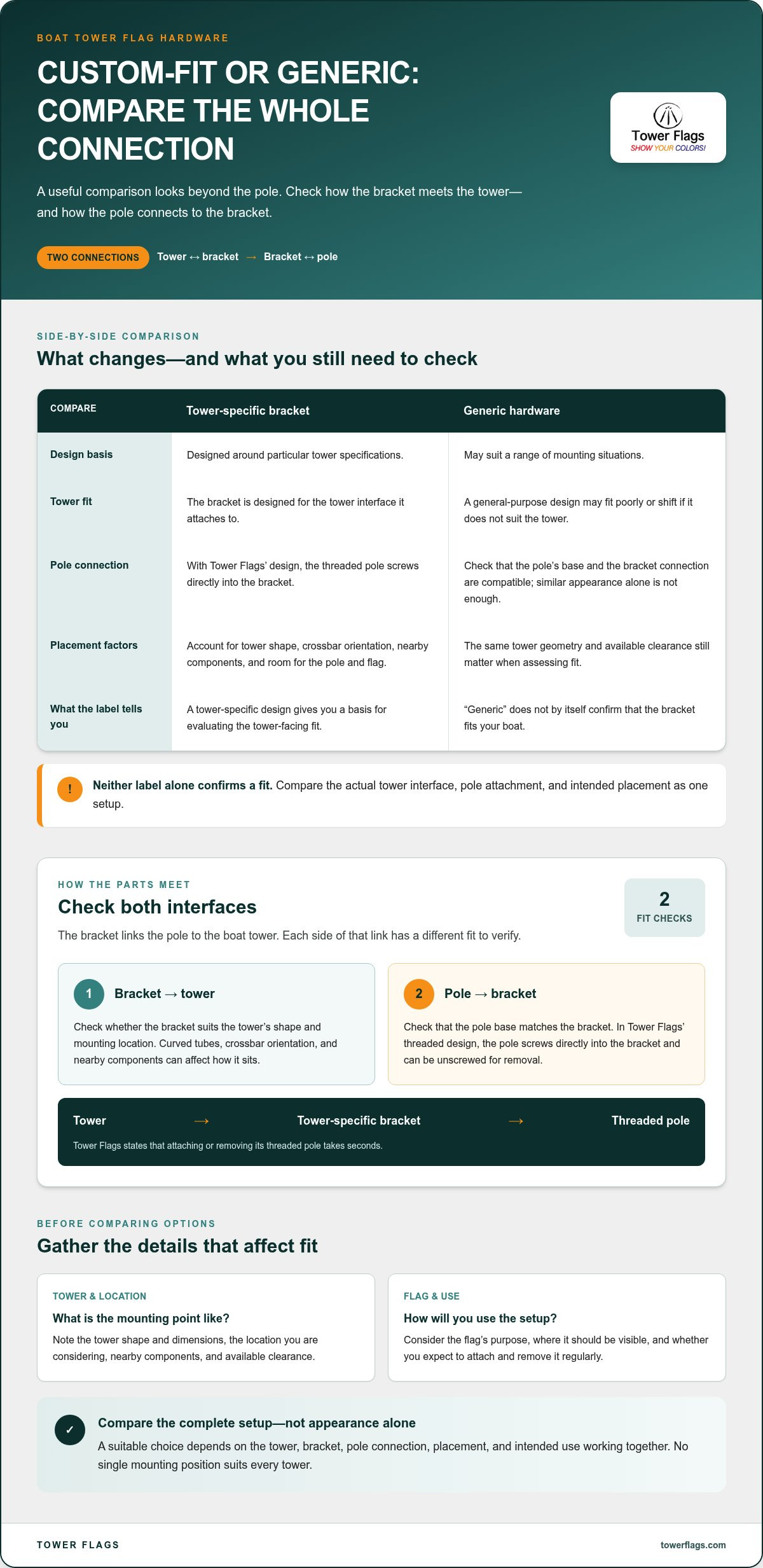
Generic hardware may suit a range of mounting situations, while a tower-specific bracket is designed around particular tower specifications. Neither label alone tells you whether a setup will fit your boat. Compare the tower interface, the connection between pole and bracket, and how you plan to display the flag. These details help show whether the parts are suited to work together.
Assess fit as a system: the bracket must suit the tower, and the pole must suit the bracket. Use the comparison below to see what each setup is designed for. Don’t assume a broad-fit design works with every tower or that a custom design automatically suits every use.
Compare Fit, Attachment, and Intended Use
Begin with your boat’s actual tower, not a general product label. Note its shape, the mounting area you’re considering, and any nearby structure that could affect placement. Then identify the bracket’s fit basis: is it designed around tower specifications, or intended for a broader range of mounting situations?
Next, examine the pole-to-bracket connection. Don’t infer compatibility from appearance. Tower Flags’ threaded poles screw directly into their brackets, so check that the pole and bracket are designed as a compatible pair. Finally, consider where and how you intend to fly the flag. The setup should suit both your tower configuration and the intended display.
When Tower-Specific Hardware Is the Better Match
A tower-specific bracket can be a considered option when the mounting point’s geometry calls for a design based on that tower’s specifications. Tower Flags makes brackets to those specifications and pairs them with poles that screw into the bracket. This gives you a defined connection from tower to bracket to pole instead of leaving you to assess two unrelated parts.
For related considerations around wake-tower use, consult the high-speed tower flag mount guide. Compare a boat tower flag pole setup by fit, attachment, and intended use. Explore Tower Flags’ custom flag poles and brackets for a tower-specific option.
Boat Tower Flag Pole Selection Checklist: Details to Gather Before You Choose
A useful selection starts with information about your boat, not a guess about what bracket might fit. Clear notes and photos can help describe the mounting point, available space, and how you plan to fly a flag. Gather these details before comparing options so your choice reflects the actual tower and intended use.
Record the Tower and Mounting Details
Start with the boat and tower configuration. Record the make, model, and year when known, then identify the area where you’re considering mounting the bracket. Take clear, well-lit photos of the tower and proposed mounting point from more than one angle.
Identify the boat and tower. Write down the boat make, model, and year, along with any known tower details. This establishes which structure the bracket needs to suit.
Choose a proposed mounting location. Describe where on the tower you’d like the flag pole to sit. Note its position relative to crossbars, curves, and nearby components.
Record relevant measurements. Measure the area around the proposed mount and any tower features relevant to bracket fit. Note where each measurement was taken, and don’t assume one standard dimension applies to every tower.
Take clear photos. Capture the tower overall, the mounting area close up, and the surrounding structure. Include different angles so the shape and available space are easy to assess.
Check Clearance and Flag-Use Requirements
Once you’ve documented the mounting area, consider what the pole and flag will need to do there. Look at nearby structures, the space around the proposed position, and anything that could interfere with movement or storage. Describe the flag’s purpose and how you expect to use it. These details help you choose a setup around practical needs, not just a mounting point that looks convenient.
Check nearby clearance. Note crossbars, accessories, or other structures near the proposed pole position. Consider the space the flag may occupy as well as the bracket itself.
Think through movement and storage. Consider how you use and store the boat, and whether you may need to remove the pole. Tower Flags’ threaded poles screw into their brackets and can be put up or taken down in seconds.
Describe the flag’s purpose. Explain what you want to display and where you want it to be visible. The intended use can help inform the mounting position and pole setup.
Keep the information together. Save your tower details, measurements, photos, and use notes in one place. This gives you a practical reference when comparing fitted hardware.
Material choice also matters for equipment used in a marine environment. The durable boat flag hardware guide provides related context. With your tower details prepared, you’ll be better positioned to choose a boat tower flag pole and bracket suited to your setup. Explore Tower Flags’ custom boat flag poles and brackets.
Choose a Tower-Specific Boat Flag Pole and Bracket from Tower Flags
Once you’ve recorded your tower configuration, proposed mounting point, clearance, and flag-display needs, use those details to evaluate a fitted setup. Tower Flags designs and fabricates brackets to tower specifications, aligning the bracket design with the structure it will mount on. Choose the pole and bracket as complementary parts rather than selecting them separately without considering how they connect.
What to Expect from Tower Flags’ Custom Hardware
The bracket is designed around tower specifications, while the pole connects directly to it through threads. Screw the pole into place to attach it, then unscrew it to remove it. Tower Flags states that the pole can be put up or taken down in seconds. This direct connection defines how the pole and bracket work together as you assess your setup.
The product page describes the pole material as a high-strength carbon-fiber composite. Consider that material alongside the practical requirements you’ve identified, such as the mounting location and how you plan to use the flag.
Tower-specific fabrication addresses an important selection question: whether the bracket is designed for the tower’s specifications. Your photos and notes can help describe the tower shape, proposed position, and relevant measurements. The threaded pole connection addresses the next interface, between bracket and pole. Both matter to a complete boat tower flag pole setup.
Move from Fit Questions to a Tailored Setup
Before choosing, keep your selection notes together. They should cover:
The boat and tower make, model, and year, where known
Clear images of the tower and the proposed bracket location
Relevant measurements and the available clearance around the mounting area
The flag’s purpose and how you expect to use the pole
This information gives you a practical basis for choosing tower-specific hardware. It shifts the question from “Will this pole fit?” to a more complete assessment of the tower, bracket, pole connection, and intended display. Tower Flags brings those components together with brackets made to tower specifications and threaded poles that screw directly into them.
For a setup built around your tower, explore boat flag poles and brackets.
Make Your Next Fit Decision with Confidence
Use the details you’ve gathered to move from browsing to a clear setup choice. A well-matched boat tower flag pole should suit your tower, the space available at your preferred mounting point, and how you want to display a flag. Keeping those priorities together makes it easier to choose hardware as a complete arrangement rather than treating each component as a separate purchase.
Tower Flags pairs brackets designed and fabricated to tower specifications with poles made from the high-strength carbon-fiber composite described on its product page. The threaded poles screw directly into their brackets. Consider these design details as you decide whether a tower-specific setup suits your needs.
Ready to take the next step? Explore custom boat flag poles and brackets and choose a setup designed around your tower.
Frequently Asked Questions
Can I use any flag pole with a wakeboard tower?
No. A pole needs a mounting arrangement suited to the tower and a connection that matches its bracket. Some general-purpose hardware may suit a particular mounting situation, but the label alone doesn’t establish compatibility. For example, a pole designed for a rail or socket may not connect to a tower bracket. Assess the pole, bracket, and tower together rather than assuming a pole will work because it fits another boat location.
How do I know whether a boat tower flag pole will fit my tower?
Check that the bracket is designed for your tower configuration and that the pole’s attachment matches the bracket. To make the comparison concrete, photograph the proposed mounting area from the side and front, and note nearby crossbars or accessories that could affect placement. Include the boat and tower make, model, and year if known. This information helps distinguish the tower itself from add-on parts that might otherwise be mistaken for the mounting surface.
What is the difference between a tower flag pole and its bracket?
The pole holds the flag, while the bracket connects it to the boat tower. They perform different jobs and meet at a separate attachment point. In Tower Flags’ setup, the pole screws directly into the bracket through a threaded connection. The bracket is designed around tower specifications, and the pole must pair with that bracket. Thinking of them as separate components clarifies which part needs to match the tower and which needs to attach to the bracket.
Can a threaded boat flag pole be removed when it is not in use?
Yes. A threaded pole can be unscrewed from its bracket when you want to take it down. Tower Flags states that its poles can be put up or taken down in seconds. This can be useful if you prefer to remove the pole between flag displays or before storing the boat. The bracket remains attached to the tower, while the pole is the removable part of this design.
What details should I gather before choosing a custom boat tower flag pole?
Gather your boat and tower identification, clear photos of the tower and intended mounting area, and relevant measurements of that area. Also note nearby structures, available space, and how you plan to display the flag. For example, if an accessory sits close to the proposed bracket location, include it in the photos. Useful notes describe both the mounting surface and the space around it, not just the boat model.
Will a boat tower flag pole affect clearance when the boat is stored or trailered?
It can, depending on the pole’s position and whether it remains attached during storage or trailering. Before choosing a location, consider overhead space, the boat’s storage arrangement, and any nearby structures that could intersect the pole or flag. If clearance is limited, a removable design may be relevant: Tower Flags’ threaded pole can be unscrewed from its bracket. Evaluate the actual stored configuration rather than assuming the pole will always stay in place.


Comments