

Heavy Duty Marine Flag Pole: How to Choose a Secure, Reliable Setup
What makes a heavy duty marine flag pole dependable: a thick shaft, or a setup that fits your boat? The pole can still move, strain its bracket, or make the flag display unreliable if the pole, mount, flag, and mounting location aren’t suited to the vessel. A broad “marine-grade” label alone won’t tell you whether the parts fit together.
A dependable setup needs to suit the demands of boating and stay secure where it’s mounted. Look beyond strength claims to the forces on the pole, the support available at the mounting point, and how you plan to display and stow the flag.
This guide explains what “heavy duty” means in practical terms and how pole design, flag size, vessel layout, and mounting interface affect your choice. Use the comparisons and checklist to identify what to measure and what to look for in a pole-and-bracket setup designed around marine mounting needs.
Table of Contents
What Makes a Heavy Duty Marine Flag Pole Worth Choosing?
Product listings may call a pole “heavy duty” without explaining what that label measures. A thick-looking shaft or a named material may sound reassuring, but neither tells you whether the mount fits your boat or whether the complete setup suits the flag you plan to fly.
A heavy duty marine flag pole is part of a pole-and-mount setup suited to the vessel, flag, mounting location, and intended use. The phrase is descriptive, not a verified performance specification. To assess a product, look for details about the pole and bracket configuration, how it attaches to your boat, and any documented limits. For general background on flagstaff forms and materials, see this overview of the Flagstaff (pole). Material descriptions alone, however, can’t establish marine performance.
Why boat use changes the demands on a flag pole
A boat is a moving platform. Wind exposure changes as the vessel moves or changes direction, while motion and vibration repeatedly act on the pole, bracket, and mounting surface. A flag that catches the wind adds resistance to the setup. A product label doesn’t account for these conditions by itself.
A yard display usually stands in one place on a relatively stable base. A boat installation must work with the vessel’s movement, layout, and mounting structure. A setup that appears sturdy on land may behave differently aboard, especially if the bracket allows movement or the mounting location offers limited support. Consider where the flag will fly and how exposed it will be during ordinary use.
Why a heavy-duty label alone cannot establish suitability
Assess the components together: pole, bracket, flag dimensions, and vessel interface. A larger flag presents more area to the wind, so consider the pole and mount in relation to the flag, not just to each other. A robust pole can’t compensate for a bracket that doesn’t match the mounting surface or a location that doesn’t support it properly.
Generic “marine” or “heavy duty” wording doesn’t prove compatibility with a particular boat. Rail, transom, and other mounting locations differ in shape, clearance, and structural support. Fit depends on the actual interface, not simply the boat category named in a listing. A mismatch can allow movement, interfere with nearby equipment, or make the display unreliable.
Material is one consideration, not a complete quality assessment. A listing may state what a pole is made from, but that doesn’t establish how it is designed, how it connects to the mount, or whether the combination fits your vessel. Check relevant specifications where available and compare them with your flag and mounting location. Give more weight to a design that suits the whole installation than to a bold strength claim.
How the Flag, Pole, and Mount Work Together on a Boat
A flagpole assembly works as a connected system. The flag catches the wind, the pole transfers that force to the bracket, and the bracket transfers it to the boat’s structure. If any connection is poorly matched or inadequately supported, a stronger pole alone won’t make the display secure.
Assess the flag, pole, mount, and vessel interface as one system, because each part affects the demands and stability of the others. When choosing a heavy duty marine flag pole, start with the flag you’ll fly and where the assembly will attach, not just the pole in isolation.
Match the pole and flag to the intended display
Record the flag’s dimensions and the amount of fabric you intend to fly. A larger exposed flag can catch more wind than a smaller one, increasing demands on the pole and bracket. The effect also depends on the flag’s position and how exposed it is while the boat is underway or at rest.
Consider the display you want. A compact flag and a broad flag don’t present the same area to the wind, even if they use similar hardware. Compare the flag dimensions with the pole and mount details. Look for relevant performance specifications rather than assuming that a general “heavy duty” description establishes a suitable combination.
Match the mounting interface to the boat
Choose a mounting location by examining its supporting structure, available clearance, and access for fitting and handling. A rail, transom, or another boat structure presents a different interface. Shapes, support, and surrounding space vary, so mounting styles aren’t interchangeable by default.
A convenient location may leave the pole close to nearby equipment or limit the flag’s movement. Another spot may offer more clearance but have a different attachment surface. Check how the bracket connects to the structure and whether the position supports the intended display. A secure connection depends on that fit as much as on the pole itself.
Consider the full path of force: from the flag, through the pole and bracket, into the boat. If the bracket doesn’t match the mounting surface or the structure can’t support the setup, the assembly may shift or become unreliable. A purpose-built match addresses the interface rather than asking the pole to compensate for it.
For broader context on design considerations that affect pole performance, see Tower Flags’ marine flag pole engineering guide. When comparing custom marine flag poles and brackets, use the same system-based approach: start with the flag and vessel, then match the hardware to the actual mounting location.
Which Marine Flag Pole and Mount Configuration Fits Your Use?
Configuration is a fit question, not a ranking of mount styles. A rail mount may suit one boat’s layout, while a transom or another interface may better match a different vessel. Compare where the bracket attaches, what structure supports it, how much clearance the pole and flag need, and the display you want. Choose a heavy duty marine flag pole as part of that complete arrangement, not by style name alone.
Rail, transom, and other mounting approaches
Start with the structure you can use. A rail’s position and shape differ from a transom’s mounting surface, and other boat structures bring their own fit considerations. Compare visibility from the intended viewing angle, clearance for the flag and pole, and possible interference with normal boat activity. The custom boat flag bracket guide offers more bracket-focused selection context.
Fixed and adjustable configurations also suit different preferences. A fixed arrangement holds the pole in its designed position, while an adjustable one allows the position or angle to change, depending on its design. Adjustment may offer flexibility in how the flag is presented, but the mechanism and range of movement matter. Compare the actual configuration and mounting fit rather than assuming either type is inherently stronger.
When the intended use changes the comparison
For occasional display, convenience and a clear, unobstructed position may guide your choice. Frequent use calls for closer attention to how the assembly fits, is handled, and will be exposed during boating. These are practical distinctions, not performance ratings. The right comparison depends on your routine, flag, and vessel, rather than a blanket claim about one mounting style.
Use at speed deserves separate consideration. Conditions and forces can differ from those of a routine display, so don’t treat general “heavy-duty” wording as evidence of suitability for high-speed use. Review the design factors in this high-speed boat flag mounting guide before comparing options for that purpose.
Once you’ve identified the mounting location and display needs, compare purpose-built marine flag poles and brackets with the vessel’s actual interface. This keeps the decision grounded in fit, clearance, and intended use.
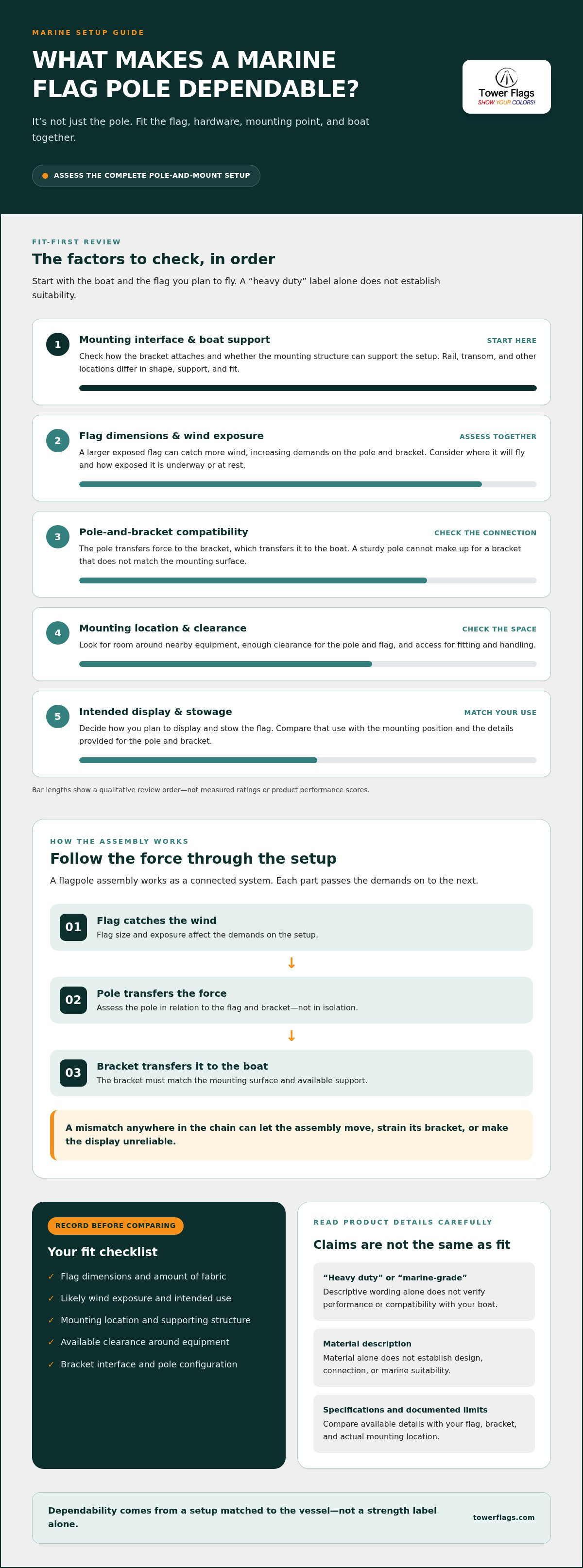
A Practical Checklist for Choosing a Heavy Duty Marine Flag Pole
A deliberate selection process turns broad product claims into a setup you can evaluate against your boat. Work through these checks in order and record the details as you go. Your notes will make it easier to compare a pole and bracket with the intended flag display.
Five checks to complete before selecting a pole
Map the vessel layout. Identify possible mounting locations and the boat structure available to support a bracket. Note whether the location is on a rail, transom, or another part of the vessel. Match the mounting interface to the actual structure, not just to a general boat type.
Measure clearance and access. Check the space the pole and flag will occupy, including nearby covers, lines, fittings, and moving parts. Consider whether the flag could obstruct access or interfere with ordinary boat use. Record available space and any limits that may affect pole position.
Record the flag and use. Write down the flag’s dimensions and how often you expect to fly it. Include likely exposure, such as whether the display is usually sheltered or more open to wind. Occasional display and frequent use can call for different priorities in convenience and hardware fit.
Compare relevant specifications. Look for published details related to your planned setup, such as mounting interface, pole dimensions, and stated use context. Compare like with like. A material description or general durability claim doesn’t establish compatibility or a particular operating capability.
Verify the fit. Compare the listed configuration with your notes on boat structure, flag dimensions, exposure, and clearance. Confirm that the bracket interface and pole arrangement correspond to the intended mounting location. If a key detail is absent, don’t treat that gap as proof of suitability.
How to recognize a mismatched setup
Be cautious of vague descriptions that say “heavy duty” without dimensions, mount-interface details, or context for intended use. Those words may describe a product category, but they don’t tell you whether the hardware fits your vessel. Treat “universal fit” language carefully, too. A broad claim doesn’t explain how a bracket matches your boat’s specific structure and geometry.
Don’t infer speed or load capability from a heavy-duty label. Those performance claims require relevant specifications. If your intended use involves conditions beyond routine display, compare details that address that use rather than assuming a general strength description covers it.
Follow the hardware maker’s fitting and care instructions, and inspect the setup as directed. Tower Flags designs and manufactures custom marine flag poles and brackets for boat owners. Explore custom marine flag poles and brackets for a purpose-built option suited to your vessel’s mounting needs.
Custom Marine Flag Poles and Brackets from Tower Flags
A reliable flag display starts with the boat, not a generic “heavy duty” label. Tower Flags designs and manufactures custom marine flag poles and mounting brackets for boat owners, with vessel-specific mounting needs at the center of the design. This connects the pole and bracket to the actual mounting location rather than leaving fit to guesswork.
A heavy duty marine flag pole is only part of the assembly. Its usefulness depends on how the bracket meets the boat’s structure, whether the flag has room to fly, and whether the setup suits the intended display. A purpose-built approach brings those considerations together. A broad durability claim can’t answer the practical question: will this arrangement work for the vessel and the way its owner plans to use it?
Why custom fit matters in marine flag hardware
Boat layouts vary. A mounting point has a particular shape and position, with a specific amount of surrounding clearance. A generic listing may describe a broad mount style without addressing those vessel-specific details. If the interface doesn’t match the boat’s structure, the pole may be difficult to position securely or could interfere with nearby equipment and normal boat use.
Custom-engineered marine hardware puts the mounting interface into the decision. The pole and bracket are considered in relation to the vessel’s needs, supporting a practical route to a well-matched display. This doesn’t mean every generic product is unsuitable. It means fit deserves more weight than a general label when the boat’s layout calls for a specific mounting solution.
Turn the selection checklist into a purpose-built setup
Bring together the details you’ve gathered before comparing options: boat layout, potential mounting location, supporting structure, surrounding clearance, flag dimensions, and intended frequency of use. These notes give you a clearer picture of the installation. For example, limited room near a cover or other hardware may affect what pole position is practical.
Assess the pole-and-bracket arrangement as a connected setup. The mounting interface should suit the boat, the pole should work with the bracket, and the flag should have appropriate room to fly. If an option’s description leaves those relationships unclear, don’t let a broad strength claim substitute for fit information. A considered match reduces avoidable guesswork and supports a practical display.
Tower Flags makes custom poles and brackets designed for boat owners’ marine mounting needs. Explore custom marine flag poles and brackets to find a purpose-built direction for your vessel and flag display.
Make Your Next Flag Display a Better Fit
Before choosing a heavy duty marine flag pole, make a clear plan for your setup: note the mounting area, the space around it, and how you want the flag displayed. That planning can help you focus on a solution suited to your boat instead of relying on a broad product label.
Tower Flags designs and manufactures custom flag poles and brackets for boat owners, specializing in marine flag mounting hardware tailored to vessel needs. If your boat’s layout calls for a considered fit, use those details to guide your choice. A well-matched setup starts with clear information about the vessel and intended display.
Explore custom marine flag poles and brackets to find hardware designed around your boat.
Frequently Asked Questions
Can a heavy duty marine flag pole be used on any boat?
No. A pole and bracket need to suit the boat’s mounting surface, available support, and surrounding clearance. For example, a bracket designed for a rail may not attach properly to a transom. Check the hardware’s stated interface against your vessel’s actual structure. Consider the boat’s layout, too: a location that fits physically may still put the flag near covers, lines, or equipment.
How do I know whether a boat flag pole is strong enough?
Use published performance specifications that match your intended flag, mount, and conditions rather than relying on “heavy duty” wording. Check whether the manufacturer provides relevant limits for the pole and mounting arrangement, and whether those details apply to your planned use. If the listing provides no supporting specifications, don’t infer a load or speed capability from appearance, material, or pole thickness alone.
Does a heavier flag pole always make a better marine flag setup?
No. Weight alone doesn’t show whether a pole suits the boat or flag. A heavier pole can place additional demand on its bracket and supporting structure, so consider the mounting arrangement alongside pole construction. Compare the pole’s stated specifications and intended use with the flag and mounting interface. A lighter option isn’t automatically better either; suitability depends on the complete configuration.
Can I leave a boat flag pole installed when the boat is underway?
Only if the pole-and-mount setup is intended for the conditions and use involved. A rating or instruction for display while stationary doesn’t necessarily establish suitability underway. Check the maker’s operating guidance and any stated limitations for the pole, bracket, and flag combination. If the setup isn’t specified for your planned conditions, remove or stow the pole before departure rather than assuming it’s secure.
How often should I inspect marine flag pole hardware?
Follow the hardware maker’s inspection and care guidance, and make a visual check before using the setup. Look for movement at the mount, loose fasteners, cracks, distortion, or visible wear. Inspect it again after unusually rough conditions or if the pole or bracket has taken an impact. If you notice damage or looseness, stop using the display until the hardware is assessed and secured appropriately.
What information should I have before choosing a custom boat flag pole?
Have the boat’s make and model available if known, along with clear details or photos of the intended mounting area. Record the mounting surface, nearby equipment, available clearance, flag dimensions, and whether you plan to display the flag occasionally or frequently. Note any specific positioning needs as well. These details help guide selection of a custom pole-and-bracket arrangement around the vessel’s layout and intended display.


Comments