

Choosing the Best Transom Mount Flag Pole for High-Performance Boating in 2026
A universal bracket is a compromise your high-performance boat shouldn't have to make. Most off-the-shelf hardware is designed for the lowest common denominator, not the rigorous demands of a 50 mph cruise through salt spray. You've likely dealt with the frustration of a transom mount flag pole that sits at an awkward angle or snaps under the pressure of a heavy headwind. It's exhausting to constantly tighten screws that won't stay put or watch inferior metals corrode after a single season on the water.
We understand that your boat's aesthetic and structural integrity are paramount. This guide will show you how to select and install a transom mount flag pole engineered to withstand the specific stresses of high-speed boating in 2026. You'll discover how precision-machined hardware eliminates the vibration and drag that destroy generic alternatives.
We'll break down the technical requirements for vertical stability, the importance of custom-fit angles, and the exact steps to achieve a permanent, professional installation on your transom. By the end, you'll have the confidence to run at full throttle without looking back to see if your flag is still there.
Table of Contents
The Engineering Challenges of Transom-Mounted Flag Poles
The transom is the structural backbone of your boat's stern, serving as the primary mounting point for engines that deliver immense torque and constant vibration. Installing a transom mount flag pole in this location introduces unique mechanical stresses that standard hardware isn't built to handle. Unlike a mount on a static surface, a transom bracket lives in a high-turbulence zone where engine harmonics and wake impact create a punishing environment. Generic, mass-produced brackets often fail because they don't account for the relentless oscillation that can back out screws and fatigue metal over time.
Understanding Aerodynamic Load at High Speeds
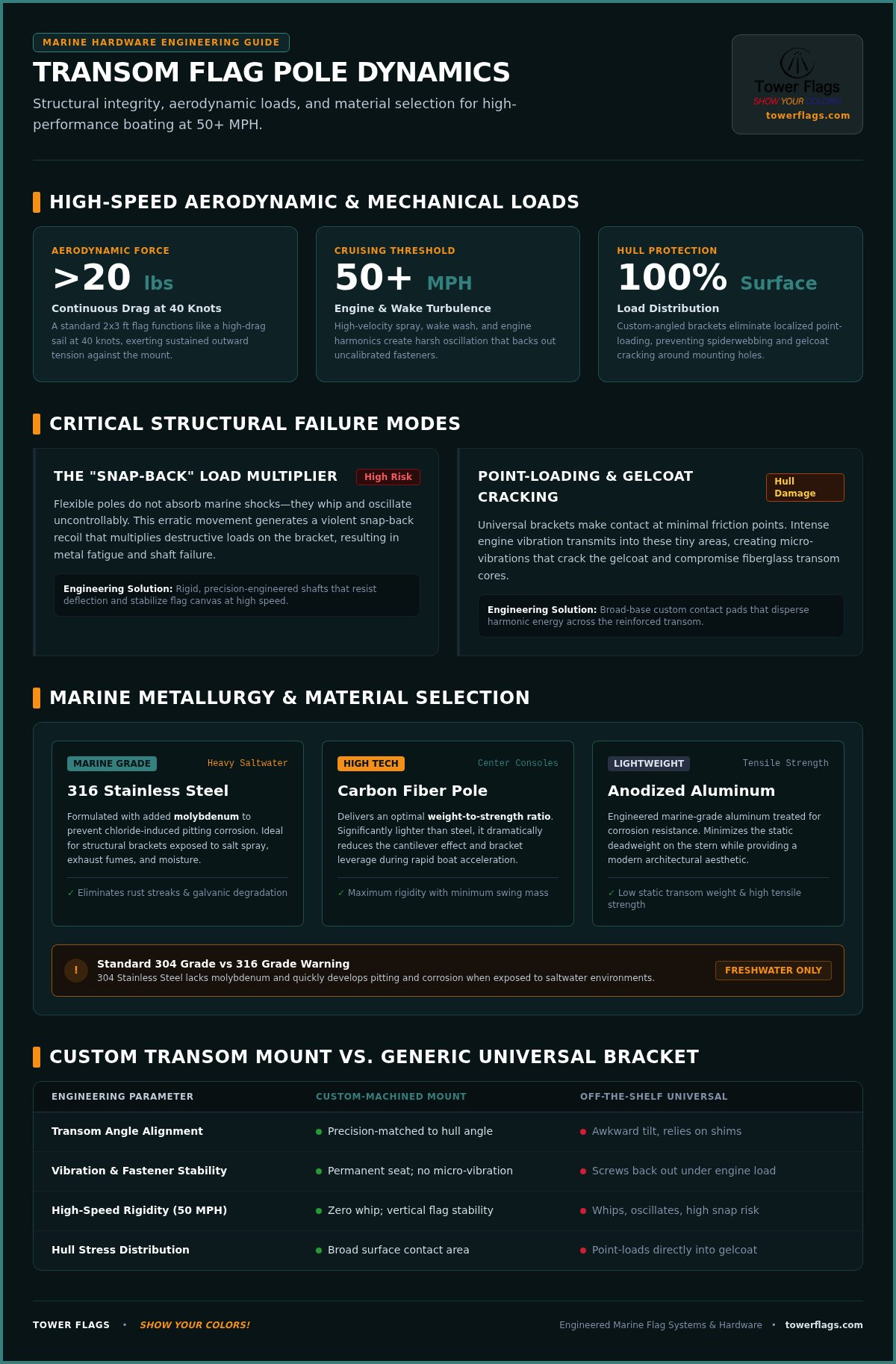
When you're running at 40 knots, a standard 2x3 foot flag transforms into a high-drag sail. At these speeds, the flag can exert over 20 pounds of continuous force on the pole. Many boaters mistakenly opt for flexible poles, believing they'll absorb the shock. In reality, a flexible pole allows the flag to whip and oscillate, which creates a snap-back effect that multiplies the load on your bracket. This erratic movement leads to material fatigue and eventual snapping. Hydrodynamic drag occurs when the mounting hardware interacts with heavy spray or wake wash, creating a resistive force that pulls against the vessel's forward motion. A rigid, precision-engineered system is the only way to manage these forces without compromising the pole's integrity.
Vibration Dampening and Structural Integrity
Structural failure often begins with poor load distribution. A universal-fit bracket typically makes contact with the transom at only a few points, leading to a dangerous condition known as point-loading. This concentrates all the aerodynamic and vibrational stress onto a tiny area of your fiberglass hull. Custom-engineered brackets solve this by maximizing the contact surface, spreading the energy across the transom's reinforced structure. Without this precision fit, the mount will micro-vibrate against the hull. These tiny movements are what cause gelcoat cracking and unsightly spiderwebbing around your mounting holes. A high-performance transom mount flag pole requires a bracket that matches the specific angle of your boat to ensure the hardware stays seated and the hull remains pristine.
Selecting the Right Materials for High-Speed Marine Hardware
Material selection is the deciding factor between a permanent marine fixture and a temporary accessory. For a transom mount flag pole, the environment is particularly hostile. It sits in the direct path of engine exhaust, salt spray, and constant moisture. While 304 stainless steel is common in freshwater applications, it doesn't have the molybdenum content required to survive a saltwater environment. We prioritize 316-grade stainless steel because it offers superior resistance to chloride-induced pitting. This ensures your hardware remains structurally sound and visually pristine even after years of exposure to the ocean.
Anodized aluminum serves as a lightweight alternative for owners who want to minimize the static load on their transom. When properly treated, marine-grade aluminum provides excellent tensile strength and a clean, modern aesthetic. However, the durability of the mounting hardware itself is just as critical as the pole. Using inferior bolts or thin-walled brackets creates a weak link that will eventually fail under the high-speed drag forces discussed previously. Every component in the assembly must be rated for the same level of environmental stress to prevent premature failure.
Carbon Fiber vs. Stainless Steel Poles
Carbon fiber has emerged as the premier choice for high-performance vessels in 2026 due to its exceptional weight-to-strength ratio. A carbon fiber pole is significantly lighter than its stainless steel counterpart, which reduces the cantilever effect on your bracket during rapid acceleration. This rigidity ensures the flag remains stable rather than whipping, which protects both the hardware and the flag fabric. While stainless steel offers a classic, polished look that matches traditional boat brightwork, carbon fiber provides a sleek, technical appearance that complements modern offshore center consoles.
Corrosion Resistance in Harsh Environments
Rust streaks are more than just an eyesore; they indicate a structural compromise in your mounting system. Investing in durable boat flag hardware is essential to prevent the galvanic corrosion that occurs when dissimilar metals meet in a saltwater environment. Many retail options rely on thin powder coatings that eventually crack, allowing salt to trap moisture against the metal. To maintain your hardware, we recommend a simple freshwater rinse after every outing and a seasonal application of high-quality marine wax. If you want a solution that eliminates these common maintenance headaches, explore the custom-engineered hardware from Tower Flags, where every component is built for longevity.
Custom vs. Universal: Why Transom Mounts Require Precision Fit
A universal bracket is a compromise that often results in mechanical failure. While "one-size-fits-all" hardware is cheaper to manufacture, it rarely aligns with the unique geometry of a modern boat. When a bracket doesn't sit flush against the hull, it creates a fulcrum point. This misalignment forces boaters to use rubber shims or plastic spacers, which eventually compress or degrade under pressure. Once a shim fails, the entire transom mount flag pole assembly begins to rattle. This vibration doesn't just make noise; it physically wears down the mounting bolts and can lead to the bracket bending under the heavy wind loads discussed earlier.
Custom-fabricated mounts eliminate these variables entirely. By engineering the bracket to match the exact degree of your transom, the load is distributed across the entire footprint of the hardware. This secure fit ensures your flag remains perfectly vertical and visible, rather than sagging or leaning at an awkward angle. A precise fit also protects your vessel's resale value by preventing the elongated bolt holes and fiberglass stress marks associated with loose, generic hardware. When the hardware matches the boat's lines, the installation looks like an integrated factory feature rather than an aftermarket addition.
The Problem with Rod-Holder Flag Mounts
Many boaters attempt to use rod-holder inserts as a shortcut for flag display. While convenient, rod holders are designed for vertical tension and the downward pressure of a hooked fish. They aren't built to withstand the constant lateral wind load produced by a flag at cruising speeds. In choppy water, the upward bounce of the boat combined with the leverage of a tall pole can easily launch the entire assembly out of the socket. A dedicated transom bracket provides a permanent, bolted solution that won't vibrate loose when conditions get rough, ensuring you don't lose your investment to the wake.
Engineering for Your Specific Vessel
Every hull design features different transom curvatures and rake angles. A high-quality installation requires marine flag poles that are paired with brackets engineered for these specific dimensions. This level of precision ensures the flag clears outboard engine cowlings and swim platforms during tight turns or docking maneuvers. When the mounting angle is calculated correctly, the flag sits in clean air. This maximizes visibility and prevents the fabric from tangling in the vessel's rigging or engine hardware. Specialized workshops prioritize this exactness, ensuring the final result is both functional and aesthetically superior.
Measuring and Installing Your Transom Flag Pole Bracket
A successful installation begins with technical preparation rather than a drill. To ensure your transom mount flag pole performs at high speeds, you must first identify the optimal mounting location. This spot should be on a reinforced section of the transom, well away from the engine's range of motion and clear of any swim ladders. Avoid areas directly above exhaust ports, as heat and soot will quickly degrade both the flag fabric and the hardware's finish. Once you've found the location, check the interior of the hull to ensure you have clear access for backing plates or washers.
Achieving a perfectly vertical flag requires an accurate measurement of your transom's rake. Use a digital protractor or a smartphone leveling app to determine the exact angle of the mounting surface while the boat is on its trailer or level in the water. This data is vital for selecting a bracket that compensates for the slope. For the installation itself, use 316 stainless steel bolts that are long enough to pass through the transom with at least three threads visible beyond the nut. Always apply a generous bead of marine-grade sealant to the fastener holes and the back of the bracket to prevent water from reaching the transom's core.
Avoiding Common Installation Mistakes
Precision prevents long-term hull damage. Ensure the pole's height and angle don't interfere with the operation of trim tabs or steering cylinders during a full tilt. Always drill a pilot hole and countersink the gelcoat to prevent spider cracking before driving fasteners into a fiberglass transom. These small technical steps differentiate a professional installation from a rushed DIY project that could lead to costly fiberglass repairs later.
Testing for High-Speed Stability
Before leaving the dock, perform a manual shake test by applying firm lateral pressure to the pole. There should be zero movement or "play" between the bracket and the hull. If the assembly rattles, you likely have a gap that will widen under the stress of a 40-knot cruise. After your first few outings, inspect the fasteners for any signs of loosening due to engine harmonics. Periodic cleaning with freshwater will prevent salt buildup in the mounting tracks, ensuring the stability of your transom mount flag pole remains uncompromised. If you are ready to upgrade your vessel with a precision-fit solution, explore our range of American-made flag pole brackets designed for high-performance environments.
Tower Flags: Engineered Solutions for Secure Transom Flag Display
Generic retail hardware is a gamble that high-performance boaters can't afford to take. Most off-the-shelf brackets are the product of mass manufacturing, where cost reduction takes precedence over structural integrity. At Tower Flags, we've replaced this "close enough" mentality with a dedicated workshop approach. Every transom mount flag pole we offer is part of a system designed to survive the specific aerodynamic loads and engine vibrations unique to the stern of a vessel. We prioritize American-made quality because it allows us to control the exactness of every weld and the purity of every alloy.
Our custom-engineered brackets outperform generic alternatives by eliminating the mechanical play that leads to hardware fatigue. When you choose a solution tailored to your vessel's geometry, you're investing in more than just a mounting point. You're securing the peace of mind that comes with knowing your equipment won't fail when you push the throttle. We focus on high-performance marine fabrication so you can focus on the water ahead, confident that your flag will remain vertical and secure regardless of the conditions.
A Legacy of Marine Engineering
Our manufacturing process is rooted in an obsession with fine details. We understand that a fraction of a degree in transom rake can be the difference between a stable flag and a vibrating distraction. This is why we firmly reject mass-produced, universal-fit alternatives. Every bracket is machined to provide a seamless fit and finish that matches the high-end aesthetic of modern offshore boats. For a deeper look at the technical specifications and design philosophy behind our hardware, consult our Ultimate Guide to Custom Boat Flag Brackets 2026. We believe that professional-grade results require professional-grade tools, and our workshop is dedicated to providing exactly that.
Ready for the Water
Efficiency is the hallmark of a well-engineered marine product. Our streamlined designs maximize mechanical efficiency by reducing unnecessary weight while increasing the bracket's footprint for better load distribution. This balance ensures that your transom mount flag pole stays seated during rapid acceleration and heavy chop. Selecting the right combination of pole material and bracket angle is a straightforward process when you have access to specialized expertise. Don't settle for hardware that rattles or bends under pressure. You can shop custom transom mount flag poles at Tower Flags today and experience the difference that precision engineering makes on the open water.
Elevate Your Vessel with Precision Engineering
Selecting a transom mount flag pole shouldn't involve compromises that risk your vessel's integrity or the security of your flag. You've seen why generic, universal-fit hardware fails under the aerodynamic drag and engine harmonics of high-speed cruising. By prioritizing 316-grade stainless steel and custom-fit angles, you eliminate the rattling and material fatigue that plague mass-produced alternatives. These precision-engineered solutions distribute loads across the transom, protecting your gelcoat while ensuring a perfectly vertical presentation at any throttle position.
Our American-made marine hardware is specifically designed for the demands of performance vessels, offering the durability required for the 2026 boating season and beyond. Don't let inferior brackets detract from your boat's aesthetic or structural health. It's time to invest in a mounting system that matches the caliber of your boat. Upgrade your boat with an engineered transom mount flag pole from Tower Flags and enjoy the confidence of hardware built to last. We look forward to seeing you on the water with a flag that stands tall.
Frequently Asked Questions
Can I use a standard flag pole for my boat transom?
Standard residential poles lack the structural integrity to handle the aerodynamic load of a moving vessel. A light-duty pole will likely bend or snap under the pressure of a 40-knot cruise. You need a dedicated transom mount flag pole engineered from high-grade materials like 316 stainless steel. These specialized poles are built to withstand both the physical force of the wind and the corrosive nature of the marine environment without failing.
Will a transom mount flag pole work on a fiberglass boat?
Fiberglass boats are excellent candidates for transom mounts provided the hardware is installed correctly. You must use a bracket that distributes the load across a wide surface area to prevent point-loading and gelcoat cracking. We recommend using stainless steel backing plates on the interior of the transom to provide additional structural support. Properly sealing the drill holes with marine-grade sealant is also essential to protect the transom's core from moisture.
What is the best material for a marine flag pole in 2026?
In 2026, the gold standard for marine flag poles remains 316-grade stainless steel or high-modulus carbon fiber. 316 stainless offers the best resistance to saltwater pitting and corrosion compared to cheaper 304 alternatives. Carbon fiber is increasingly popular for performance boats because its exceptional weight-to-strength ratio reduces the cantilever stress on your mounting bracket. Both materials provide the longevity and aesthetic appeal required for high-end vessels while maintaining structural rigidity at speed.
How do I prevent my flag pole from rattling at high speeds?
Rattling is almost always a symptom of a poor fit between the pole and the bracket. To stop this, replace universal-fit hardware with a custom-engineered transom mount flag pole system. Universal brackets often rely on shims or plastic spacers that compress over time, creating gaps. A precision-machined mount ensures a metal-to-metal fit with tight tolerances. This eliminates the vibration caused by engine harmonics and prevents the hardware from loosening during high-speed runs.
Do I need to remove my flag pole when trailering the boat?
Removing your flag and pole before trailering is a critical safety step. Highway speeds often exceed 70 mph, which generates significantly more wind load than typical marine cruising. This extra force can fatigue the mounting hardware or cause the flag fabric to shred. Additionally, a tall pole creates clearance issues with low-hanging trees or power lines. Storing the pole in a dedicated locker during transport protects your investment and ensures the hardware stays secure.
What is the ideal angle for a transom-mounted flag pole?
The ideal angle for a transom mount is one that allows the flag to fly clear of the engine cowling and swim platform. Most boaters prefer a vertical orientation or a slight 10 to 15-degree rearward tilt for optimal visibility. This angle ensures that the flag catches clean air and doesn't get tangled in the vessel's rigging or outboard motors. A custom bracket is the most reliable way to achieve this specific geometry on a sloped transom.
How do I measure my transom angle for a custom bracket?
You can measure your transom rake using a digital protractor or a smartphone leveling app. First, ensure your boat is perfectly level on its trailer or in the water. Place your measuring device against the flat surface of the transom at the exact spot where you plan to install the bracket. This measurement allows a specialized workshop to fabricate a mount that compensates for the hull's slope, resulting in a flag pole that stands perfectly vertical.
Is a carbon fiber flag pole worth the investment for a transom mount?
Carbon fiber is a worthwhile investment for owners of performance boats who prioritize mechanical efficiency. Because carbon fiber is significantly lighter than stainless steel, it puts much less strain on the transom bracket during rapid acceleration. It's also extremely rigid, meaning it won't whip or oscillate at high speeds. This stability protects your flag from unnecessary wear and provides a sleek, modern look that complements the finish of high-performance offshore vessels.


Comments