

Flag Mount for Ski Pylon: A 2026 Buyer’s Guide
What if a clamp that looks secure at the dock starts shifting once the boat is underway? Choosing a flag mount for ski pylon means looking beyond a product photo. The pylon’s shape and dimensions, available mounting space, flag exposure to wind, and fastening method all affect fit and stability.
A generic clamp may seem convenient, but it won’t necessarily suit every pylon or intended use. Tower Flags designs and manufactures custom boat flag brackets and poles for marine use, with mounting fit and durability in mind.
This guide covers which pylon measurements to take, how to compare mount designs, and what to consider about flag loads and fastening. Use these criteria to narrow your options and describe the setup you need.
Table of Contents
Why a Ski-Pylon Flag Mount Needs More Than a Generic Clamp
A ski-pylon flag mount secures a flag pole to a boat’s ski pylon. Unlike a general-purpose boat flag holder, a pylon mount needs to suit the shape, dimensions, mounting area, and intended use of the pylon. A clamp designed for a different surface may sit unevenly, provide poor contact, or fail to fasten as intended.
Pylons vary in shape and diameter, and the usable space around them varies by boat. Measure the proposed mounting zone rather than relying only on the pylon’s widest point. Curves, tapers, nearby fittings, and limited clearance can affect bracket placement and fastening. The flag and pole matter too: a setup for occasional display may have different demands from one used while the boat is moving.
Because a ski pylon is associated with towing, consider the tow-line path and activity around the mounting area before choosing a location. The basics of Water skiing help explain why these are practical considerations, not afterthoughts.
What makes a ski pylon different from a wakeboard tower?
A ski pylon is typically a post that rises from the boat’s structure near the cockpit. A wakeboard tower is a larger elevated frame spanning part of the boat. Their mounting surfaces and available space can differ: a tower clamp may be designed for tubing, while a pylon may have another diameter, profile, or contact area. One design shouldn’t be assumed to fit the other.
Compatibility depends on the actual pylon and bracket design. A clamp that looks close in size may still contact the pylon unevenly or conflict with nearby components. Treat “fits boat” or “adjustable” language as a starting point, not proof of pylon fit. Compare the bracket’s intended mounting surface with the boat’s hardware.
What should the mount accomplish?
The mount should hold the flag pole securely for its intended use while keeping clear of the tow-line path, passengers, and nearby equipment. Assess fit and fastening directly rather than assuming them from a product description or a clamp’s appearance.
Stable contact: The bracket should meet the pylon in a way that suits its shape and mounting area.
Practical placement: The pole should not obstruct tow-line movement or interfere with people and equipment nearby.
Suitable fastening: The attachment method should suit the pylon and the intended use.
These checks are more useful than choosing a generic clamp by appearance alone. Tower Flags designs custom marine flag brackets and poles around boat owners’ mounting requirements and intended use.
How Pylon Shape, Flag Load, and Boat Movement Affect Mount Performance
A flag mount experiences more than the weight of the pole and flag. Wind pushes against the flag, and boat movement can add repeated motion at the attachment point. Those forces pass through the pole and bracket to the pylon. Their effect depends on the flag and pole dimensions, mounting geometry, and conditions of use.
A larger flag area and a longer pole can increase the demands on the mount. This is a comparison, not a force rating. Actual loading changes with conditions, so no single flag size or pole length is automatically suitable for every boat or mount.
How do flag and pole dimensions change the demands on a mount?
A larger flag presents more surface to the wind. A longer pole can increase leverage, applying more turning force at the bracket as the flag moves. Together, these dimensions affect how force reaches the mount, even if the pole and flag feel light when handled at rest.
Consider the complete setup rather than choosing each component in isolation. A flag displayed while the boat is stationary may face different conditions from one exposed while the boat is moving. Wind, boat movement, and the way the flag is used all matter. Avoid relying on a universal safe-size rule or an unsupported speed rating. Evaluate the intended setup and its expected conditions.
Why do vibration and contact points matter?
Repeated movement can reveal a loose fastener or a bracket that doesn’t sit evenly against the pylon. A narrow or uneven contact area may allow movement. Pylon diameter is only part of the fit: a round, oval, tapered, or otherwise shaped section can affect how the bracket contacts the surface and where its fasteners can sit.
Mounting location matters as well. Restricted clearance or nearby fittings can affect how the bracket seats, how the pole moves, and whether the assembly interferes with other equipment. Assess both the attachment surface and the surrounding space.
Before use, inspect the bracket and fasteners for visible movement, looseness, or changes in how the mount contacts the pylon. Recheck them after use as appropriate for the boat and setup. This is general inspection guidance, not a performance guarantee for any particular mount. The commercial Towing vessel safety standards concern towing vessels, not recreational ski-pylon flag mounts, but offer a broader reference for equipment reliability in towing contexts.
Choose a flag mount for ski pylon as part of a complete assembly, considering the bracket, pole, and flag together. Tower Flags designs custom marine flag brackets and poles around boat owners’ mounting requirements and intended use.
How to Compare Flag Mounts for a Ski Pylon Before You Buy
Compare a mount with your boat, not just a product photo or a broad fit claim. A “universal” label may describe a range of applications, but it doesn’t establish whether a particular bracket fits your pylon, sits securely, or leaves enough clearance. Use the criteria below to compare options.
Which fit and construction details should buyers compare?
Start with measurements and observations from your installation: pylon diameter, cross-section or profile, proposed mounting location, and available clearance. A round surface and a shaped or tapered one can require different contact geometry. Note nearby fittings and moving equipment that could restrict access or interfere with the pole.
Then check how the bracket secures to both the pylon and the pole. Look for product information that explains the attachment method and pole compatibility instead of inferring them from appearance. Compare material and finish when specifications identify them. A polished image or a general durability claim doesn’t establish what the mount is made from.
When does custom fabrication make sense?
Consider custom fabrication when the pylon’s shape, mounting zone, or clearance doesn’t align with the fit details of standard hardware. Custom hardware isn’t automatically the right choice. Its value depends on whether its design matches your boat’s geometry, flag-and-pole setup, and intended use.
To describe your requirements, measure the exact mounting zone, note the pylon’s profile, and identify the space available around it. Include the pole and flag you plan to use, how the boat will be used, and nearby components that limit placement. These details provide a practical basis for designing the bracket and its fastening.
Standard hardware can suit a pylon when its specified fit, contact area, fastening method, and pole compatibility align with the installation. If they don’t, a general fit claim won’t resolve the mismatch. Tower Flags designs custom-engineered marine flag brackets and poles around boat owners’ mounting requirements. The right flag mount for ski pylon is the one suited to the actual mounting conditions, not the one with the broadest claim.
How to Measure and Prepare a Ski Pylon for a Flag Mount
Accurate measurements help you compare a mount with the pylon you actually have. Before ordering or fitting a flag mount for ski pylon, document the mounting area, the pole and flag you plan to use, and the space around the proposed location. This record makes it easier to evaluate fit and spot placement conflicts.
What pylon measurements should you record?
Measure where the bracket is expected to sit. A measurement taken higher or lower on a tapered pylon may describe a different fit. Record the diameter if the pylon is round. For another profile, note its shape and the dimensions needed to describe the contact surfaces. Also record the usable mounting length and any nearby fittings, edges, or obstructions.
Photograph the area from several angles. Include a close view of the intended contact zone and wider views that show surrounding clearance. Photos can reveal a curve, taper, or nearby component that a single measurement may miss.
Prepare in this order:
1. Choose the proposed mounting zone. Identify a section where a bracket could sit, then look for changes in shape or diameter along that area.
2. Measure and describe the pylon. Record its diameter or relevant profile dimensions, usable mounting length, and the location of each measurement. Note whether the surface is round, oval, tapered, or another shape.
3. Document clearance. Measure or describe the open space around the proposed mount. Record nearby hardware and anything that may limit bracket placement or pole movement.
4. Record the flag and pole details. Note the pole dimensions and flag size you intend to use. These are part of the mount requirements, not details to consider only after choosing a bracket.
5. Describe the boat’s intended use. Consider when and how the flag will be displayed, along with operating conditions that may affect the setup. Keep notes and photos together so you can compare them consistently with mounting information.
How should you check the intended installation area?
Check more than whether the bracket can physically occupy the space. Consider the tow-line path through its expected movement, nearby seating, passenger access, and adjacent equipment. Think about whether the pole could obstruct normal boat operation or interfere with anything that moves. If the proposed location creates a conflict, reassess the placement before fitting the mount.
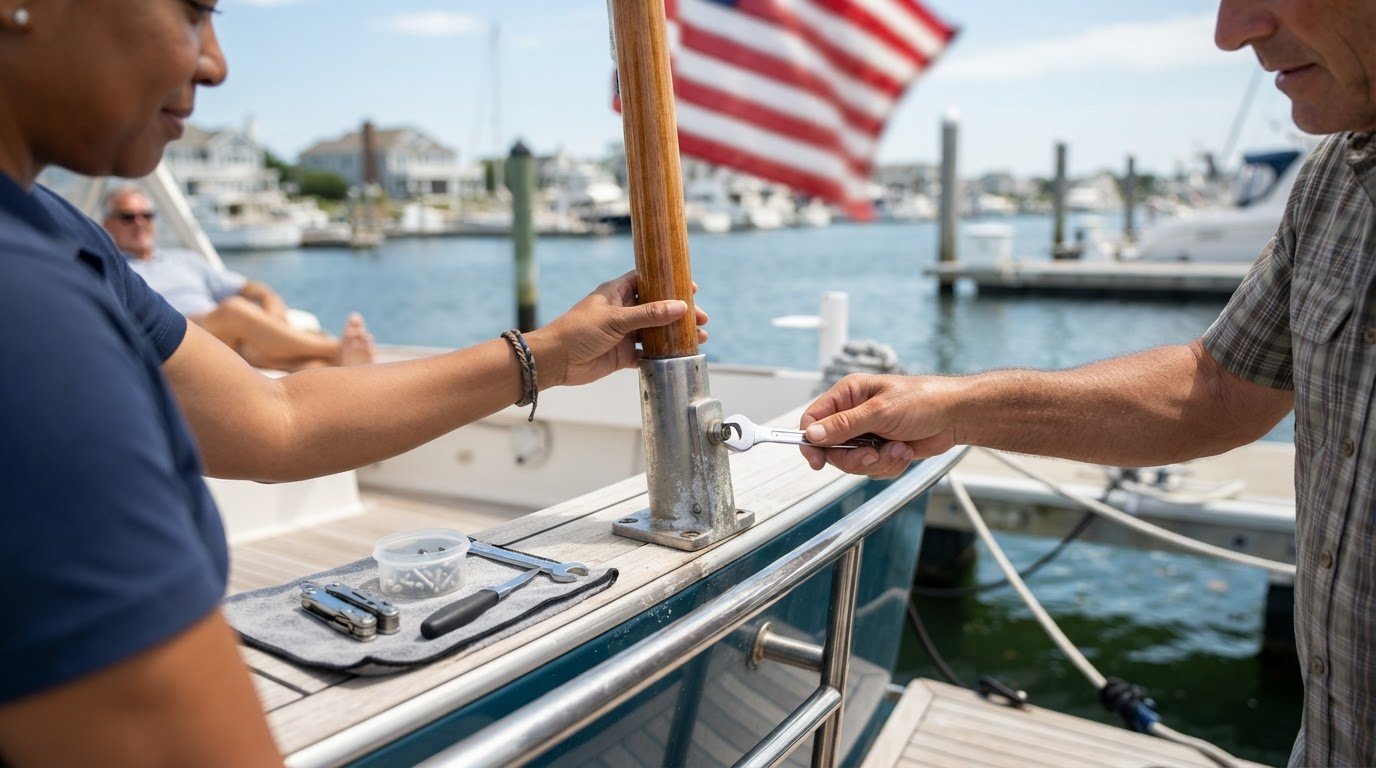
Follow the boat and hardware instructions for fitting and use. Before each outing, inspect the mount and fasteners for looseness, shifting, or visible damage. Address any concern before using the setup.
For a tailored option based on your documented pylon and use requirements, explore custom marine flag brackets and poles.
Choose a Custom Ski-Pylon Flag Mount Built Around Your Requirements
A suitable mount matches several parts of the setup: the pylon’s geometry, the bracket’s fastening method, the pole and flag, and the boat’s intended use. A general fit claim can’t replace those details. If standard hardware doesn’t correspond to your pylon or available space, a custom-engineered solution offers a way to address the specific fit requirements.
What information helps define a custom mounting solution?
Gather the details before settling on a design. Measurements describe the mounting surface, while photographs show its profile and surroundings. Include the planned mounting position, nearby equipment, and any clearance limits. Then describe the pole and flag you expect to use, along with the boat’s operating conditions. Taken together, these details help define the setup as a complete assembly.
Pylon: Record its dimensions and profile at the intended mounting point.
Photos: Capture close and wider views that show the mounting area from different angles.
Placement: Note available clearance and nearby hardware that could affect the bracket or pole.
Flag and pole: Include their dimensions so the mount can be considered alongside the components it supports.
Use: Explain when the flag will be displayed and the conditions the boat typically encounters.
These specifics help distinguish a fit requirement from a preference. For example, a pylon with a non-round profile or limited space around the mounting zone may need a different bracket approach from an open, straightforward mounting area.
What should buyers expect from a specialist approach?
A specialist approach starts with the actual boat and its requirements, rather than assuming one clamp works everywhere. Fit, fastening, pole compatibility, and marine use all deserve consideration. Custom hardware still needs to match the pylon, flag setup, and intended use.
Tower Flags designs and manufactures custom boat flag brackets and poles for marine environments. This custom-engineered approach provides an alternative when standard hardware doesn’t align with your pylon’s geometry or mounting constraints. It keeps the decision focused on the details that define fit rather than a broad compatibility label.
Before choosing a flag mount for ski pylon, bring together your measurements, photos, clearance notes, and use requirements. They provide a more useful basis for selecting a tailored marine mounting solution than a product image alone.
Explore custom flag-mounting hardware from Tower Flags to find flag brackets and poles designed around specific marine mounting needs.
Make Your Mounting Requirements the Starting Point
Turn what you’ve learned into a clear description of the setup you want. Decide what matters most in everyday use, such as a close fit at the mounting point, unobstructed space around the pylon, or a particular flag-and-pole combination. A suitable mount should work with how you use your boat, rather than requiring you to rely on a generic clamp that doesn’t fit.
With your measurements and intended use in hand, you can evaluate a flag mount for ski pylon against your actual requirements. Tower Flags offers custom marine flag brackets and poles, with custom-engineered flag accessories available through its online store.
Explore custom marine flag brackets and poles and take the next step toward a flag setup designed around your boat.
Frequently Asked Questions
Will a wakeboard tower flag mount fit a ski pylon?
Only if the bracket’s design matches the specific pylon and its mounting area. Tower tubing and ski pylons can have different profiles, diameters, and clearance, so don’t assume a clamp advertised for a tower will fit a pylon. Compare the mount’s stated compatibility with your boat’s hardware. If the bracket rocks, sits unevenly, or blocks nearby equipment during a test fit, it isn’t a suitable match.
How do I measure a ski pylon for a flag mount?
Measure at the exact spot where you plan to attach the bracket. For a round pylon, record its diameter; for a shaped profile, note the cross-section and relevant dimensions. Also record the usable mounting length and the space around it. A nearby fitting, for example, may limit bracket placement even if the pylon’s diameter matches. Clear photos from close and wider angles can show details a measurement alone won’t capture.
Can I use a ski-pylon flag mount while towing?
Use a mount and flag-pole setup while towing only if its instructions support those operating conditions. Don’t assume a mount suitable for displaying a flag while stationary is also appropriate during towing. Check whether the pole or flag could interfere with the tow line, passengers, or the operator’s view. If the hardware instructions don’t address your intended use, avoid towing with that setup until you have suitable guidance.
What flag size should I use on a ski pylon?
There isn’t one flag size that’s right for every ski pylon, pole, and purpose. Consider the flag’s intended use, the pole it will attach to, and operating conditions, then follow the hardware maker’s guidance. If you’re displaying a skier-down flag, check the boating rules that apply where you’re operating, since requirements can vary by state. Don’t choose a larger flag just because it fits the pole; its area can affect the demands on the mount.
How can I keep a boat flag mount from loosening?
Start with a bracket designed to contact your pylon correctly, then install it using the supplied hardware and instructions. Avoid improvised shims or extra fasteners unless the manufacturer specifies them; they can change how the bracket sits or secures. After fitting, check for movement by hand without forcing the assembly. Recheck the fasteners if the mount shifts or rattles, and follow the manufacturer’s tightening directions rather than guessing at torque.
Can a custom flag bracket be made for a non-standard pylon?
Yes. A custom bracket can be designed around a pylon whose profile, mounting space, or nearby equipment doesn’t suit standard hardware. For a useful design brief, provide measurements at the intended attachment point, photos from several angles, and notes about clearance. Include the pole and flag dimensions and explain how you plan to use the boat. Tower Flags designs custom boat flag brackets and poles for marine mounting requirements.
How often should I inspect a ski-pylon flag mount?
Inspect it before each outing, and check it again if you notice rattling, shifting, or a change in how the pole sits. Look for loose fasteners, visible damage, and signs that the bracket has moved against the pylon. Inspect it after an impact or unusually rough conditions before using the setup again. Follow the mount’s care instructions, since they take precedence over a general inspection schedule.
Comments