

How to Identify Marine Grade Stainless Steel: A Practical Guide
A magnet can stick to genuine stainless steel and still tell you very little about whether it’s suitable for saltwater. If you’re identifying marine grade stainless steel, that quick check can be tempting, but it won’t confirm the alloy or its corrosion resistance. Labels may be missing or unclear, and a polished surface can’t reveal the metal’s composition.
Before choosing hardware for a marine environment, look for evidence you can connect to the part. This guide explains how to assess a grade using markings, material documentation, and appropriate testing, and what each check can and can’t prove. You’ll also learn why “marine grade” commonly refers to 316 stainless steel, even though it isn’t an official metallurgical classification, and why 316 can still corrode in certain conditions. These distinctions matter when selecting boat hardware, including flag poles and mounting brackets, where material choice and fit both play a role. By the end, you’ll have a clearer basis for judging grade claims and choosing hardware for your vessel.
Table of Contents
What Does Marine Grade Stainless Steel Mean?
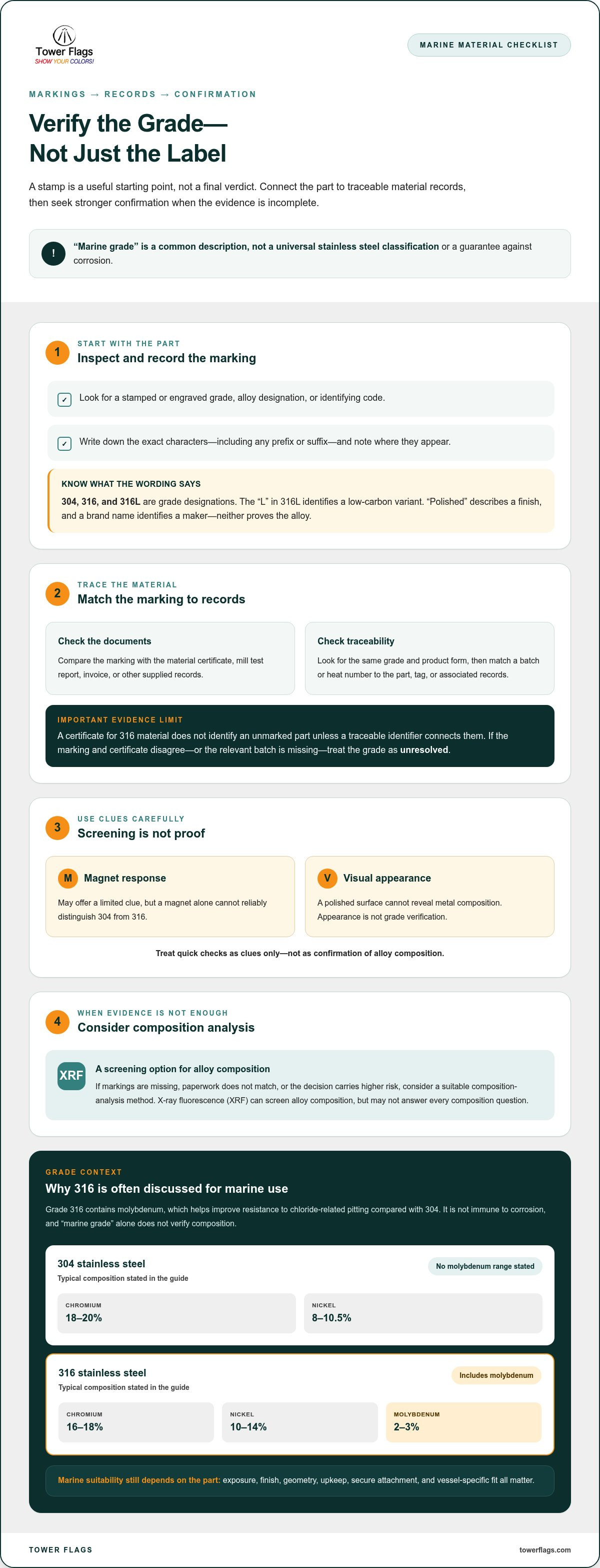
“Marine grade” is a common industry description, not one universal stainless steel grade or a guarantee against corrosion. It usually refers to alloys selected for better performance in chloride-rich environments, but the description alone doesn’t verify a material’s composition. To identify marine grade stainless steel reliably, look for a specific alloy designation supported by records or testing. Then consider whether that alloy suits the part’s actual exposure and design.
Grade 316 is frequently associated with marine use because it contains molybdenum, which improves resistance to chloride-related pitting compared with 304. The SAE 316 marine grade stainless steel reference describes this relationship, but the label “marine grade” still shouldn’t replace a verified grade designation. Even 316 can corrode when conditions promote deposits or trap moisture.
Which Stainless Steel Grades Are Commonly Discussed for Marine Use?
Grades 304 and 316 are austenitic stainless steels, but their typical compositions differ. Grade 304 contains about 18-20% chromium and 8-10.5% nickel. Grade 316 typically contains 16-18% chromium, 10-14% nickel, and 2-3% molybdenum. That added molybdenum helps 316 resist pitting in chloride exposure, but it doesn’t make the alloy immune.
Duplex stainless steels belong to a separate alloy family, with a different structure and performance profile. They may suit particular demanding applications, but the name alone doesn’t make a grade right for every marine component. Choose based on the service conditions and the component’s requirements.
Why Does Marine Exposure Change the Material Question?
Saltwater carries chlorides that can attack stainless steel’s protective surface, especially when salt deposits remain after spray or splashing. Moisture that lingers in tight joints, under deposits, or in stagnant crevices can create conditions for localized corrosion. A fastener or mount that drains and dries freely may face a different risk from one with a sheltered gap that stays wet.
Corrosion resistance is not corrosion immunity. Fabrication and finish matter too: rough or contaminated surfaces can be harder to clean, while poor geometry can hold salt and moisture. Regular rinsing and inspection help remove deposits and reveal early damage, but care can’t compensate for an unsuitable alloy or design.
For marine flag poles and brackets, material is only part of the decision. The mount also needs to fit the vessel, attach securely, and suit the conditions at its location. A verified alloy designation is a sound starting point; exposure, finish, geometry, and upkeep help determine whether it’s a practical choice.
How to Identify Stainless Steel: Start with Markings and Records
A stamp is a useful starting point, not a final verdict. When identifying marine grade stainless steel, connect the marking on the part to documentation for that specific material. Then decide whether the evidence is strong enough for the application. Traceable documentation is stronger evidence than appearance alone because it can link an alloy designation to reported material composition and a production batch.
Use this sequence:
Inspect the part. Look for a stamped or engraved grade, alloy designation, or identifying code. Record it exactly, including any suffix or prefix.
Match the records. Compare the marking with the material certificate, invoice, or other supplied records. Check for the same grade and traceability details, such as a batch or heat number.
Screen cautiously. A magnet or visual check may offer limited clues, but neither establishes alloy composition. Don’t treat a quick screening result as proof.
Seek stronger confirmation if needed. If the marking is missing, the paperwork doesn’t match, or the decision carries higher risk, consider a suitable composition-analysis method.
What Do Stainless Steel Stamps and Grade Markings Tell You?
Markings such as 304, 316, and 316L indicate alloy-grade designations. The “L” in 316L identifies a low-carbon variant. Marking conventions can vary by manufacturer and product, and small components may have limited space for stamps. Write down the exact characters and where they appear before comparing them with records.
Separate the grade from other wording. “Polished” describes a finish, while a brand name identifies a maker; neither proves the alloy. Broad claims such as “stainless” or “marine grade” are less specific than a recognized grade designation. Even a clear grade stamp remains a claim until it can be tied to reliable records.
How Can Material Certificates Help Verify a Grade?
A mill test certificate, sometimes called a material test report, records reported chemical composition and material traceability. Check that it identifies the grade and product form, then compare its batch or heat number with the number on the item, tag, or associated records. A certificate for 316 material doesn’t identify an unmarked part unless a traceable identifier connects the two.
If the item’s marking and certificate disagree, or the certificate doesn’t identify the relevant batch, treat the grade as unresolved rather than choosing the more favorable claim. For boat flag hardware, accurate material identification is one part of a sound selection. Vessel-specific fit and mounting requirements matter too. Explore custom boat flag brackets as you consider how a properly fitted mount supports the application.
Can a Magnet or Visual Check Identify Marine Grade Stainless Steel?
A magnet and a quick look can help screen a stainless steel part, but neither can verify its exact alloy. When identifying marine grade stainless steel, treat these observations as prompts for closer checking, not proof of composition. A strong or weak response may reflect processing or the way a component is built, while finish and color reveal little about the metal’s elements.
What Can a Magnet Test Actually Tell You?
A magnet test is a rough screening check, not a grade-identification method. Grades 304 and 316 are generally non-magnetic in their annealed condition, but cold working, such as bending or forming, can make some austenitic stainless steel more magnetic. Welds or other materials in an assembly can also affect the response. A weak pull doesn’t prove the part is 316, and a noticeable pull doesn’t by itself rule it out.
If you use a magnet, test more than one area and record what you observe. Interpret the result in light of the part’s processing and construction. The check can raise a question for follow-up, but it can’t settle the grade.
Why Appearance and Rust Spots Do Not Prove the Grade
A bright polish, smooth surface, or particular shade of silver does not reveal an alloy’s full composition. Different stainless grades can have a similar finish, and surface treatment can change how a part looks without changing its grade. Visual inspection is useful for noting condition, not identifying 304 versus 316.
Rust-colored spots also need context. Surface contamination, salt deposits, damage, or moisture trapped in a crevice can contribute to discoloration or corrosion on stainless steel. A spot alone doesn’t establish the grade or prove that the material is counterfeit. These observations can guide the next check, but only traceable records or suitable composition analysis can provide stronger evidence of the alloy itself.
How to Confirm a Stainless Steel Grade More Reliably
Once markings and records point to a grade, decide whether the evidence is adequate for the decision at hand. A material certificate that identifies the grade and matches the part through batch or heat traceability may be enough for a routine selection when the documentation is complete and the specification is clear. If records are missing, inconsistent, or too general, composition analysis can provide stronger evidence.
Keep two questions separate: material identification tells you which alloy a part appears to contain, while performance prediction depends on the alloy plus exposure, fabrication, finish, geometry, and maintenance in the actual installation. Confirming a grade cannot guarantee corrosion-free service in every marine condition.
What Can X-Ray Fluorescence Testing Establish?
X-ray fluorescence (XRF) is an alloy-screening method that can measure many elements used to distinguish stainless grades, including chromium, nickel, and molybdenum. Because 316 contains molybdenum and 304 generally does not, an appropriate XRF reading can help distinguish between these common grades.
Results depend on the instrument’s capabilities, calibration, sample condition, and correct interpretation. A coating, surface contamination, or lack of access to a clean, representative area can affect the reading. XRF also may not measure carbon reliably, so it can’t answer every grade question. Treat a result as useful screening evidence, not universal confirmation of every compositional requirement.
When Are Laboratory Methods or Traceable Records Needed?
Use traceable material records when they clearly connect the reported grade and composition to the specific item. If the documentation cannot be matched to the part, or an exact grade has safety or specification consequences, seek qualified composition analysis. The method must suit the distinction being checked. Where carbon content matters, a basic handheld XRF may not provide the needed measurement, and another suitable analytical method may be required.
Before testing, define the question. Is the goal to screen for a likely 316 alloy, verify a specification, or distinguish grades whose compositions differ in elements the chosen instrument cannot measure well? Clear test objectives help prevent an inconclusive reading from being mistaken for proof.
For marine flag hardware, confirmed material identity is one factor in a dependable mounting decision. Fit and vessel-specific requirements also matter. Explore custom boat flag brackets designed around marine mounting needs.
Apply Grade Identification to Marine Hardware Decisions
Identifying marine grade stainless steel helps narrow a material choice, but a grade designation alone can’t predict how a finished assembly will perform. Consider the hardware’s actual location, how often it gets wet, whether salt deposits can collect, and how easily the area can be rinsed and inspected. A part exposed to spray and drying cycles faces different conditions from one that stays wet or sits in a sheltered gap.
What Else Matters Besides the Stainless Steel Grade?
Look at the complete installation, not just the label. Tight joints and overlapping surfaces can form crevices that hold moisture and restrict drainage. Contact between dissimilar metals may also contribute to corrosion, depending on the materials and conditions. Cleanability matters too: accessible, smooth surfaces are easier to rinse and inspect than rough or hard-to-reach areas.
Assess the finish, edges, attachment points, and surrounding materials as part of the same decision. A suitable alloy can still develop problems if the assembly traps saltwater, suffers surface damage, or doesn’t receive appropriate care. Match the material and design to the real exposure rather than relying on a generic “marine” claim.
Connect Material Knowledge to Boat Flag Mounting Hardware
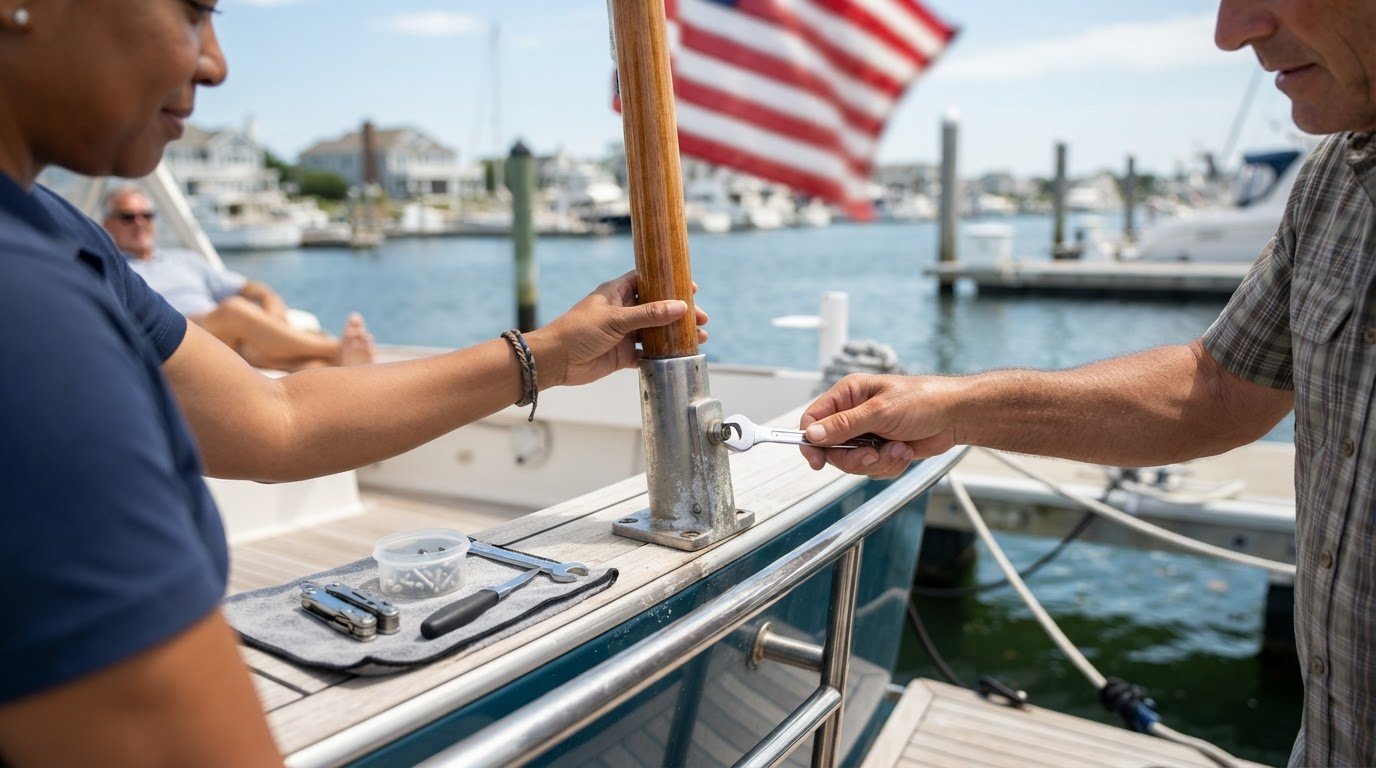
Flag brackets and poles face the conditions at their particular mounting location, along with the mechanical demands of supporting a flag. A bracket needs to fit the vessel and attach securely; a poorly matched mount can create issues that alloy selection alone won’t solve. Consider the installation geometry, drainage, access for cleaning, and how the hardware will be used.
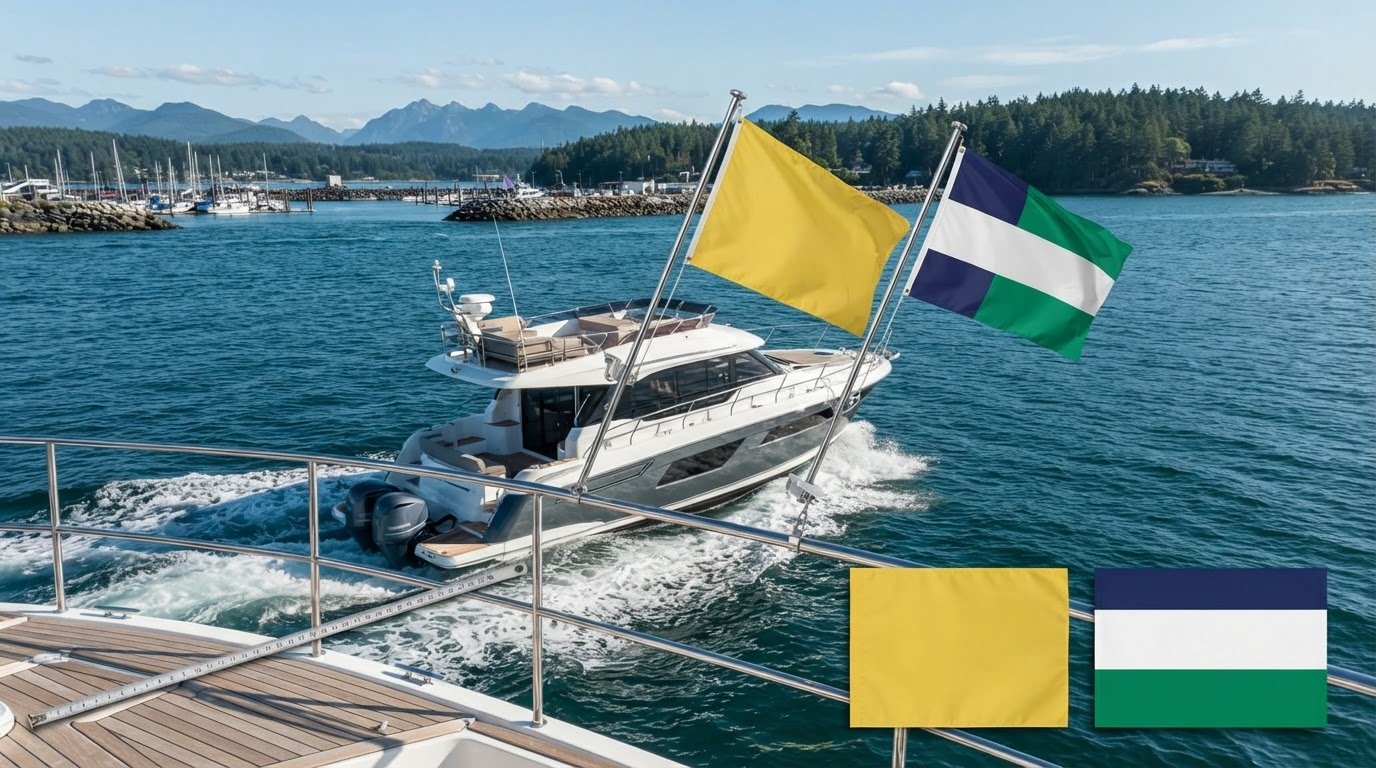
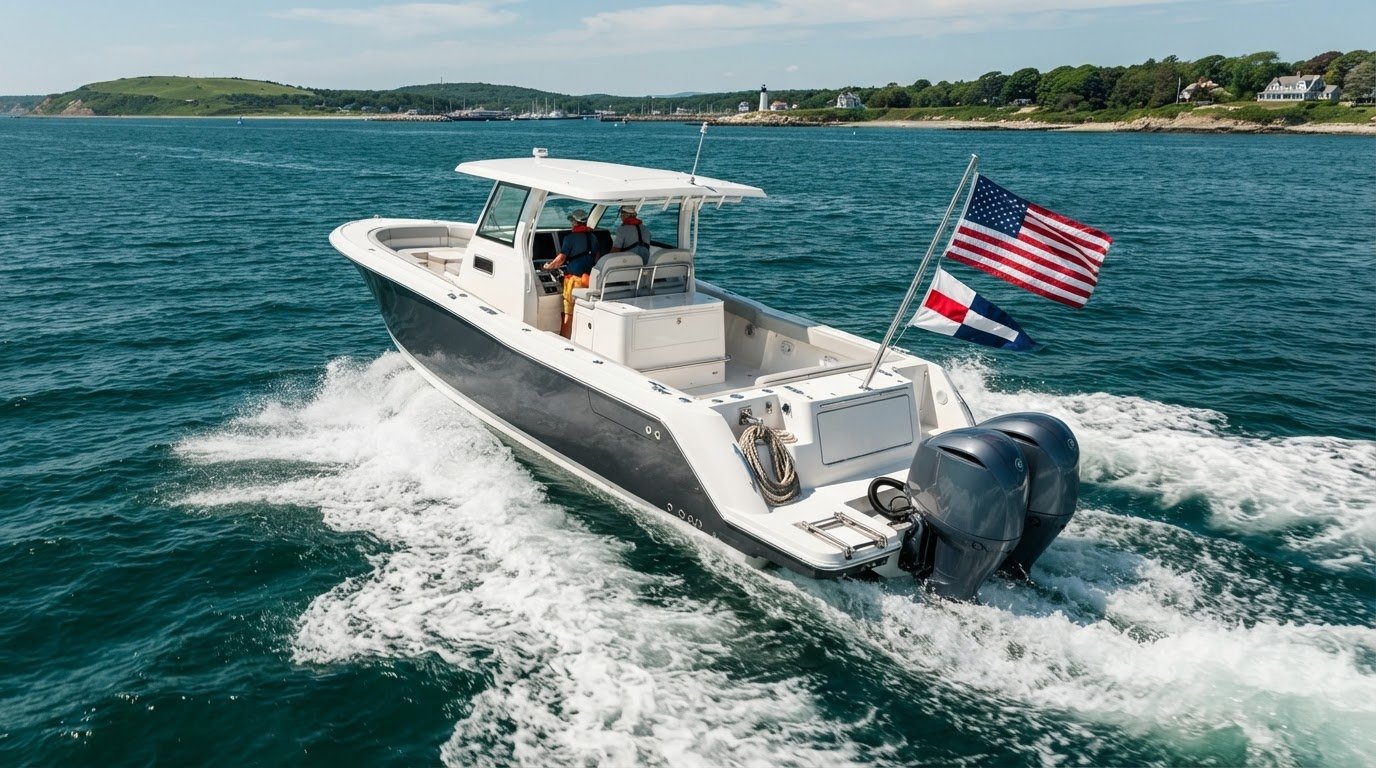
Tower Flags designs custom boat flag brackets and poles for marine environments, with custom-fit hardware for vessel-specific mounting requirements. Material knowledge can inform that choice without treating any single grade as a guarantee of service life. For related practical guidance, explore the guides to durable boat flag hardware and marine flag poles.
For a mounting solution tailored to your boat, explore custom marine flag hardware from Tower Flags.
Make a More Confident Marine Hardware Choice
Identifying marine grade stainless steel starts with evidence, not shine or a magnet. Match markings to traceable material records, and use composition testing when documentation doesn’t settle the grade. Then consider the full installation: salt exposure, crevices, finish, drainage, fit, and upkeep all affect how hardware performs.
A verified alloy designation is a useful part of the decision, but it isn’t a promise of corrosion-free service. Assess each component for the conditions and mounting demands it will actually face. Tower Flags designs and manufactures custom boat flag brackets and poles, with mounting solutions tailored to marine applications. Explore custom marine flag brackets and poles to find a mounting solution suited to your boat. With sound material evidence and a well-matched fit, you can move forward with greater confidence.
Frequently Asked Questions
How can you tell if stainless steel is marine grade?
Check for a specific alloy designation, then match it to traceable material documentation for the item. “Marine grade” is a common description, often associated with 316 stainless steel, but it isn’t a universal grade or proof of composition. A magnet test, polished finish, or stamp alone can’t establish the alloy. For stronger confirmation, use suitable composition analysis, then consider exposure, design, drainage, finish, and maintenance.
Is 316 stainless steel always suitable for marine use?
No. Grade 316 contains molybdenum, which improves resistance to chloride-related pitting compared with 304, but it can still corrode. Salt deposits, trapped moisture, stagnant crevices, surface damage, and poor drainage can affect performance. Suitability depends on the component’s actual exposure and construction, as well as cleaning and upkeep. For severe or specialized conditions, the application may call for a different alloy or design approach.
Can a magnet identify 304 or 316 stainless steel?
No. A magnet response alone can’t reliably distinguish 304 from 316. Both are generally non-magnetic in their annealed condition, but cold working can make some austenitic stainless steel more magnetic. Welds or other materials in an assembly can also affect the result. Treat a magnet as a rough screening check, not a grade test. Use traceable documentation or appropriate composition analysis to establish the alloy more reliably.
Does stainless steel rust in saltwater?
Yes, stainless steel can corrode in saltwater conditions. Chlorides from seawater or salt deposits can damage the protective surface, particularly where moisture and debris remain trapped in crevices. Rust-colored spots may also result from contamination, deposits, or surface damage, so they don’t identify a specific grade by themselves. Rinsing, cleaning, inspection, suitable design, and alloy selection all help manage corrosion risk, but no grade is immune in every condition.
What is the difference between 304 and 316 stainless steel?
The main compositional difference is that 316 contains molybdenum, which improves resistance to chloride-related pitting. Typical 304 contains about 18-20% chromium and 8-10.5% nickel. Typical 316 contains about 16-18% chromium, 10-14% nickel, and 2-3% molybdenum. Both are austenitic stainless steels, but 316 is often selected where chloride exposure is a concern. Neither composition guarantees corrosion-free performance in every marine installation.
Can an XRF analyzer confirm stainless steel grade?
An X-ray fluorescence (XRF) analyzer can screen for many alloying elements, including chromium, nickel, and molybdenum, and may help distinguish common grades. Results depend on the instrument, calibration, sample condition, and interpretation. Surface coatings or contamination can affect readings, and basic handheld XRF may not measure carbon reliably. Since some grade distinctions depend on carbon content, XRF isn’t a universal confirmation method. Choose analysis suited to the specific question.
Does a stainless steel marking prove the material is genuine?
No. A marking such as 304, 316, or 316L is a useful clue, but it doesn’t independently prove the part’s composition. Record the exact marking and compare it with a material certificate and traceability details, such as a matching batch or heat number. A certificate supports identification only when it connects to the specific item. If the marking and records don’t align, suitable composition analysis can provide stronger evidence.
Comments