

Marine Flag Selection: Choose the Right Flag for Your Boat in 2026
Could a flag that looks right still be the wrong choice for your boat? Yes, if it doesn’t suit its purpose, your vessel’s proportions, or the mounting location. Good marine flag selection starts with those practical decisions, not just color or design.
A flag that’s too small may be hard to see, while an oversized one can look out of proportion or put extra strain on its mount. The flag, pole, and bracket also need to work as a compatible setup for the available space and marine environment.
This guide explains how to identify a flag’s purpose, assess its size and placement, and consider the pole and bracket before ordering. You’ll learn how common flag types serve different needs, what affects visibility, and why the mounting setup matters. Tower Flags offers flags, marine flag poles, and custom brackets, so you can consider the flag and its mounting needs as part of one selection process.
Table of Contents
Start Marine Flag Selection with the Flag’s Purpose
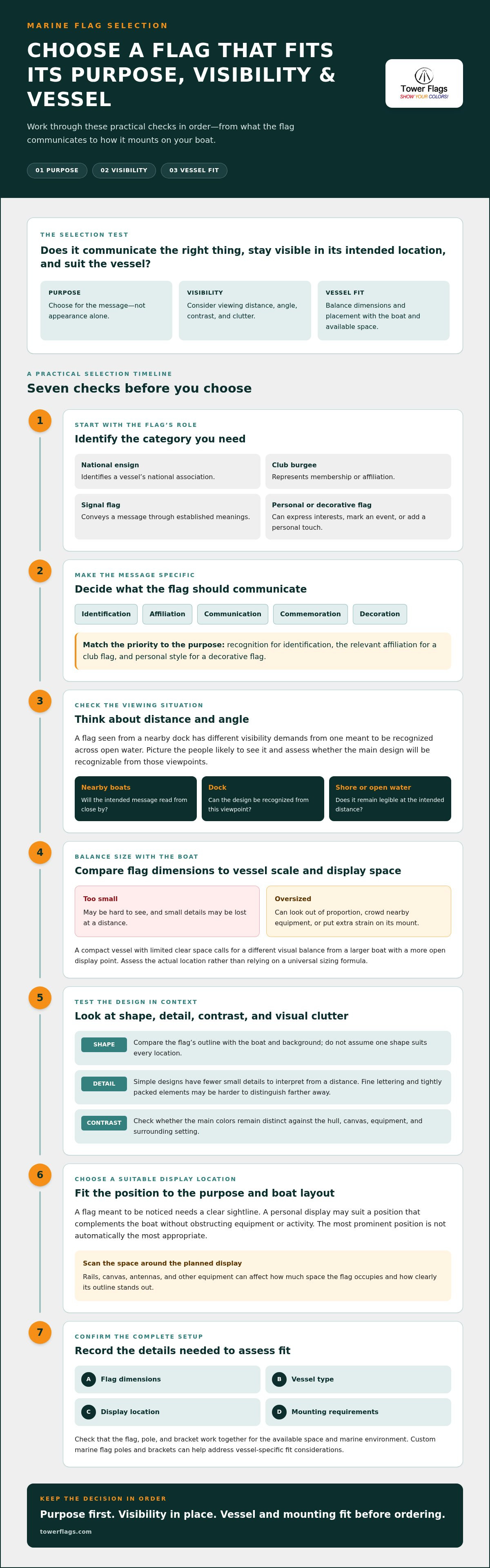
A flag can look right at the dock but still be wrong for the job. Before comparing colors or artwork, decide what you want it to communicate. Then consider your vessel and where the flag can be displayed. Marine flag selection means matching the flag’s purpose to the boat and display setup, rather than choosing on appearance alone and discovering later that it doesn’t send the intended message.
Work through the decision in order. First, define the flag’s role. Next, consider whether it will be visible from the distance and angle that matter. Finally, check that its size and display location suit your boat. An identifying flag has different requirements from one chosen for personal expression, even if both designs appeal to you.
A sound marine flag selection starts with three checks: purpose, visibility, and vessel fit.
What kind of marine flag are you choosing?
Common categories include national ensigns, club burgees, signal flags, and personal or decorative flags. Broadly, they serve different purposes: identification, affiliation, communication, or individual expression. Knowing which category you need helps narrow your choices before you compare designs and mounting options.
A national ensign identifies a vessel’s national association. A club burgee represents membership or affiliation. Signal flags convey messages through established meanings, while personal flags can mark an owner’s interests, commemorate an event, or add a personal touch. For a broader overview of maritime flag types and history, consult this reference. Display conventions are a separate consideration, so use a dedicated flag etiquette resource when you need guidance on how and where a particular flag should be flown.
What should the flag communicate?
Make the intended message specific. Is the flag for identification, affiliation, signaling, commemoration, or decoration? If it identifies something, recognition takes priority. A club flag should represent the affiliation, while a commemorative flag should clearly mark the occasion. A decorative flag can put more emphasis on personal style.
Purpose also helps you choose a display position. A flag meant to be noticed needs a clear sightline. A personal display may go where it complements the boat without obstructing equipment or activity. Consider how it will look from nearby boats, the dock, or shore, and how it fits the vessel’s layout. The most prominent position is not automatically the most appropriate. Formal conventions may apply to some flags, so treat visual preference as a separate consideration and consult an etiquette reference when needed.
Once the purpose is clear, use a practical test to compare designs: does the flag communicate the right thing, remain visible in its intended location, and suit the vessel? This turns a broad choice into a deliberate one and gives you a useful starting point for assessing dimensions and mounting compatibility.
Compare Marine Flag Size, Shape, and Visibility for Your Boat
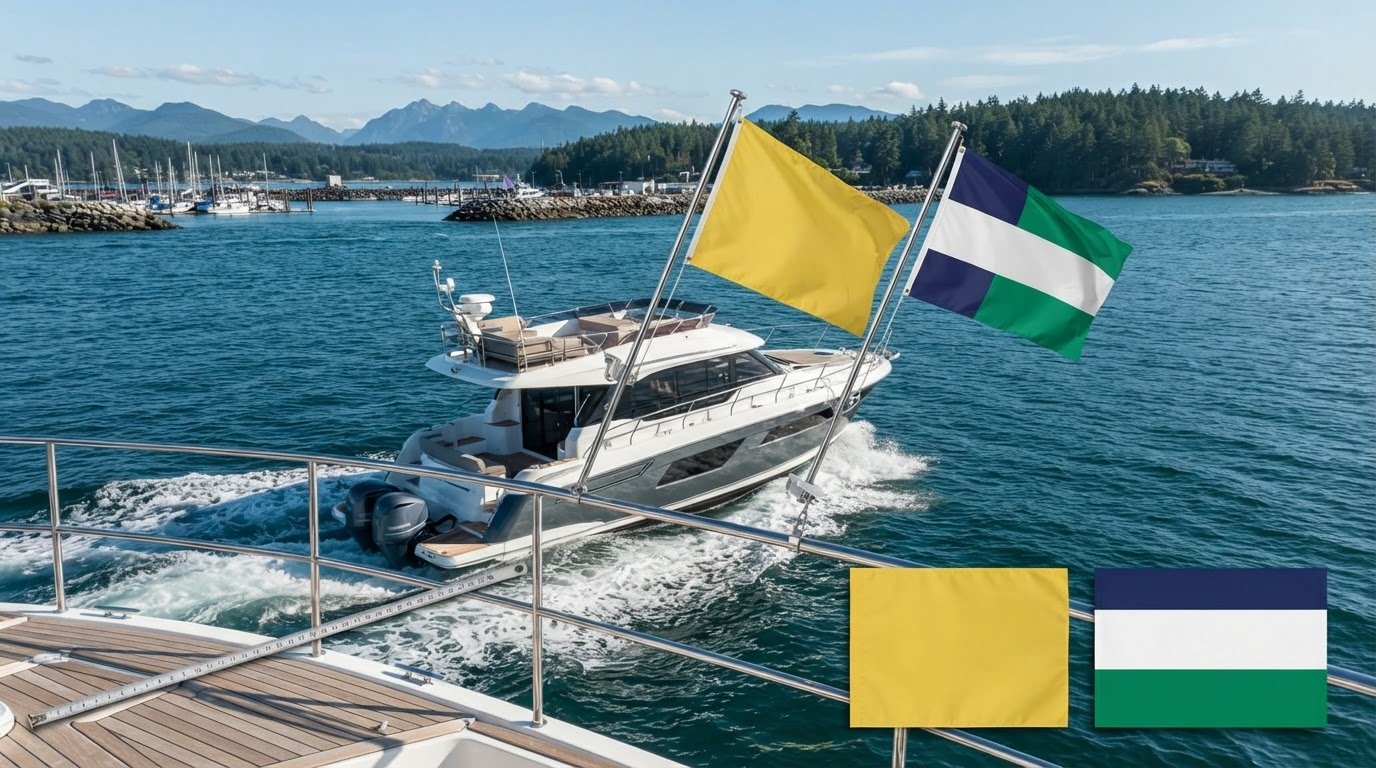
Once you know what a flag needs to communicate, consider whether its dimensions and design will work where you plan to display it. A flag viewed from a nearby dock has different visibility demands from one meant to be recognized across open water. Good marine flag selection balances readability with the boat’s scale and the space available.
A flag should remain legible at its intended viewing distance. Use that as your test instead of choosing a size just because it looks impressive up close. A very small flag may lose detail at a distance; an oversized one can dominate a compact display or crowd nearby equipment. There’s no single size for every vessel, so assess the actual location and viewing conditions.
How should flag size relate to the vessel?
Compare the flag’s dimensions with the boat’s overall scale and the available mounting area. A compact vessel with limited clear space calls for a different visual balance from a larger boat with a more open display point. Also look at what surrounds the flag. Rails, canvas, antennas, and other equipment can affect how much space it appears to occupy and how clearly its outline stands out.
Picture the flag from the viewpoint of someone likely to see it. If it disappears against the boat or background, another size or placement may work better. If it overwhelms the display, obscures equipment, or looks out of proportion, consider scaling it down. Use these observations as a practical comparison, not a universal sizing formula.
Which design details affect visibility?
Simple designs tend to have fewer small details to interpret from a distance. Intricate artwork can work well for a close-up personal display, but fine lettering or tightly packed elements may be harder to distinguish farther away. Shape matters, too. Compare the flag’s outline with the surrounding boat and background rather than assuming one shape suits every location.
Contrast is another useful check. Look at the colors together and ask whether the main elements remain distinct in the light and setting where the flag will be displayed. A design that looks clear on a screen may blend into nearby colors aboard the boat. Check it in context, including its position relative to the hull, canvas, and equipment. This can reveal visual clutter or a loss of distinction before you order.
Use these checks to narrow your options, then consider the flag alongside its mounting setup. Even a clear design needs a display position with enough room to show properly. Explore marine flags and mounting hardware as you compare the parts of a complete setup.
Match Flag Choices to Boat Type and Time on the Water
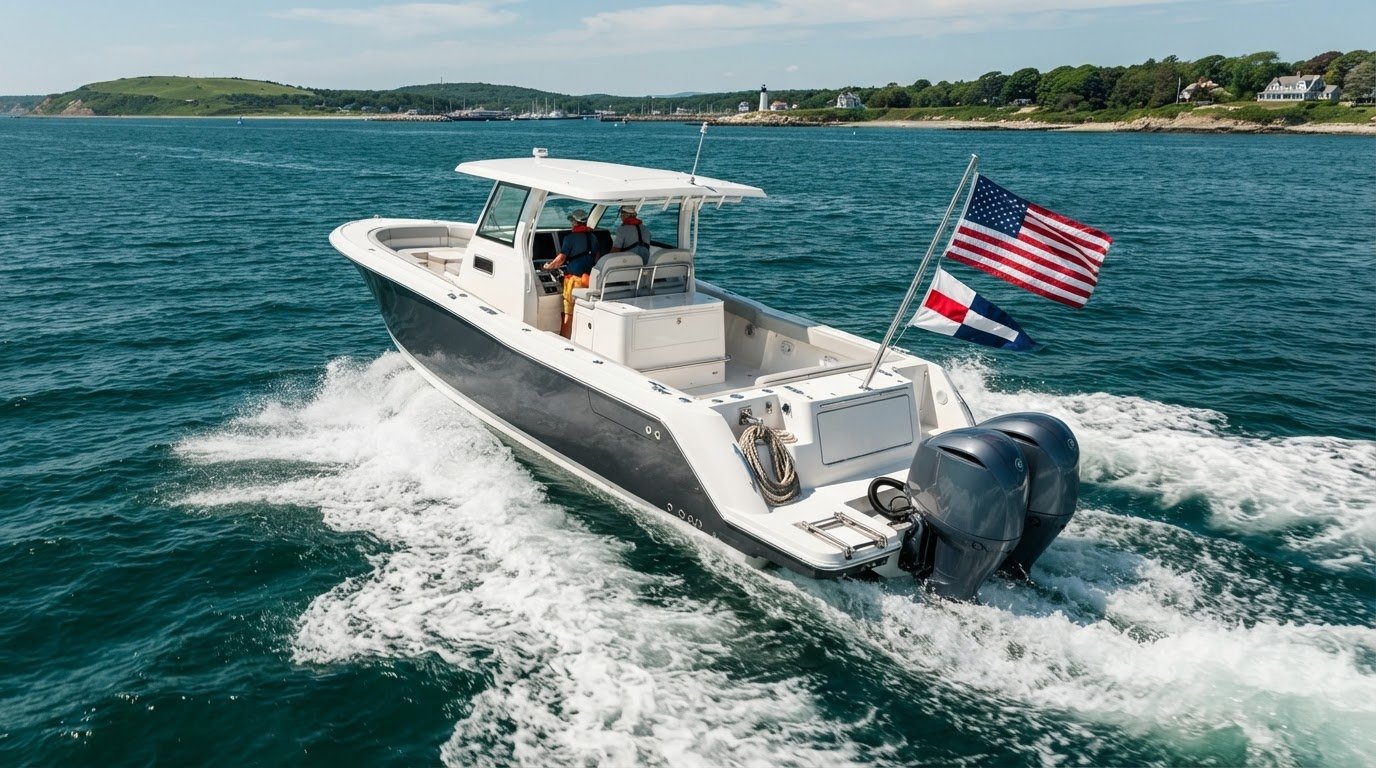
The same flag can work differently on two boats because their layouts and routines differ. An open deck, a pontoon’s broad seating area, and a wakeboard tower each present different display and clearance considerations. Strong marine flag selection accounts for how the vessel is arranged and how you use it, rather than treating boat type as a label that dictates one answer.
How do vessel layouts change the choice?
Look at the boat’s open space, existing equipment, and possible mounting positions. An open-deck boat may have several exposed areas but limited room around rails or other fittings. A pontoon’s broad deck and seating layout mean the flag needs to fit without interrupting movement or taking over passenger space. A boat with a wakeboard tower has an elevated structure to consider, along with nearby equipment and clearance.
These layout differences don’t automatically point to one mounting spot. Walk around the stationary boat and identify positions that offer a clear view without interfering with normal use. Note the structure around each location and whether a pole could extend into an area used by passengers or equipment. The available mounting surface can narrow your practical options before you settle on flag dimensions or hardware.
How should boating use influence selection?
Consider whether you mainly use your boat for cruising, watersports, or occasional outings. Cruising may make identification or personal display a regular part of the boat’s appearance. For watersports, keeping the setup compact and clear of active areas may be a priority. For occasional outings, a straightforward display that suits the available space may be enough. These are planning considerations, not claims about what a flag can withstand at a particular speed or in specific weather.
Separate the flag’s purpose from the activity. A club or national flag doesn’t become a different category because you use the boat for watersports. Instead, the activity affects where a display can fit and how unobstructed it needs to be. Keep applicable display conventions in mind, then assess clearance around the location you choose.
Use this comparison to identify your main constraint: purpose, clear visibility, or usable mounting space. Then assess candidate positions against how people move around the boat and the equipment already in place. This vessel-specific check carries your flag choice into the next step: confirming that the mounting setup suits the location.
Use This Marine Flag Selection Checklist Before Ordering
Before ordering, review the flag and its mounting setup together. A few notes about your boat can help prevent a mismatch between the flag dimensions, pole, bracket, and intended display position. Use this marine flag selection checklist to turn your preferences into details you can compare with product specifications.
What information should you record before buying?
Start with the flag’s purpose and design, then record its approximate dimensions and intended display location. Add the vessel type and details about the mounting area, such as the attachment surface and nearby equipment. These notes give you a consistent reference as you compare options.
Define the purpose. Note whether the flag is for identification, affiliation, signaling, commemoration, or personal display. This keeps the selection focused on what it needs to communicate.
Choose the design. Record the preferred artwork, colors, and shape. Consider whether the main design will remain clear in the planned location.
Estimate the dimensions. Write down the flag’s width and length, then compare them with the available display space. Treat the estimate as a planning reference, not a universal size rule.
Identify the vessel. Note whether you have an open-deck boat, pontoon, boat with a tower, or another layout. The structure affects which mounting positions are practical.
Describe the display location. Record the mounting surface, surrounding equipment, clearance, and the direction from which people are most likely to view the flag.
Compare the complete setup. Review the flag dimensions alongside the pole and bracket details. Check that the selected components suit the intended location instead of assuming every part will fit every boat.
How do you check flag and mounting compatibility?
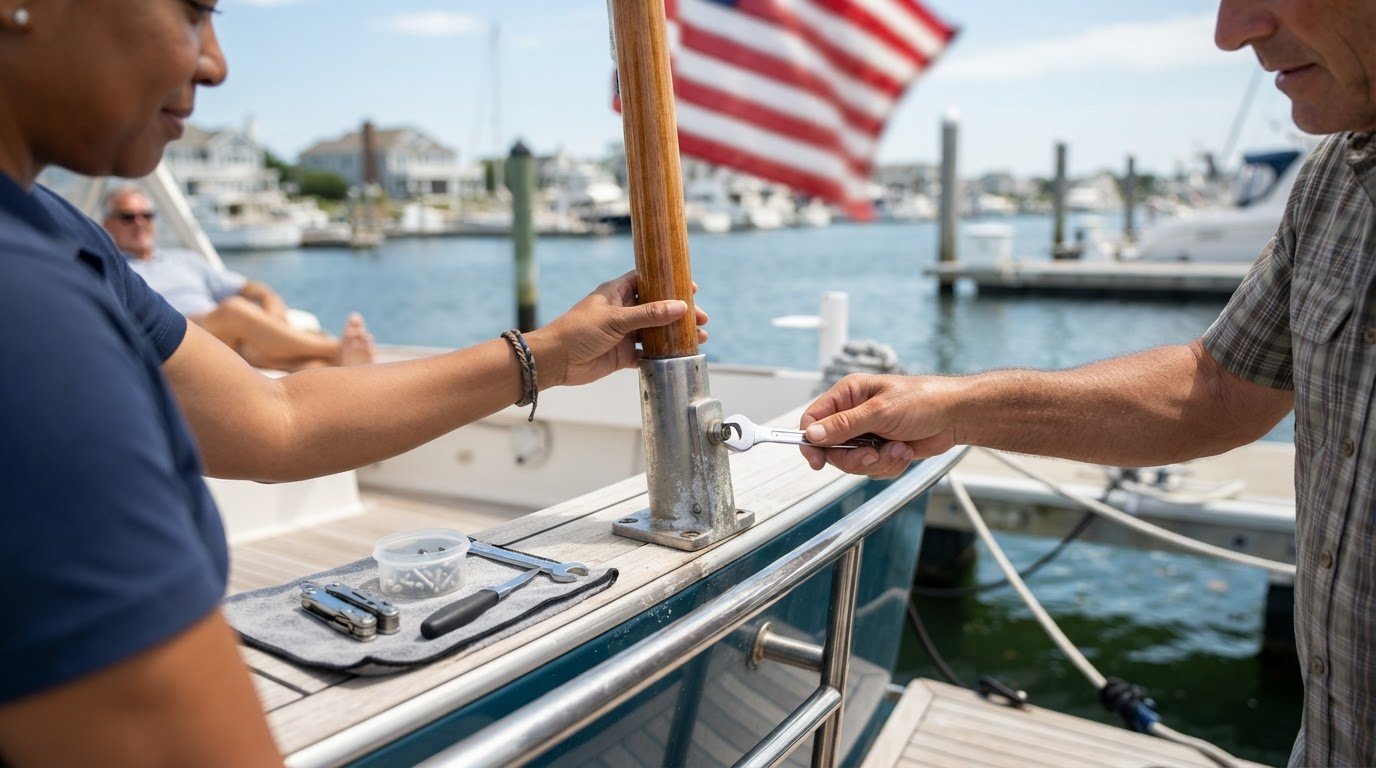
The flag attaches to a pole, the pole connects to a bracket, and the bracket must suit the boat’s mounting position. Each connection matters. A flag may match your purpose and proportions, but the pole and bracket still need to work together in the available space. Compare the relevant dimensions and fit details in the product specifications with your notes, including the attachment area and nearby clearance.
For a closer look at bracket considerations, the custom boat flag brackets guide explains why mounting location and vessel fit belong in the same decision. The marine flag poles guide provides additional context for comparing poles as part of a complete display setup. Tower Flags designs and manufactures custom marine brackets and poles, making fit part of the overall selection rather than an afterthought.
With your measurements and location details in hand, explore Tower Flags’ custom mounting solutions as you plan a setup for your vessel.
Choose Custom Marine Flag Hardware to Complete the Selection
A flag is only one part of the display. The pole needs to suit the flag’s dimensions, the bracket needs to suit the pole, and the mounting position needs to work with the boat’s layout. Considering these parts as a system can help prevent a choice that looks right on its own but doesn’t match the vessel. This fit check is the final step in practical marine flag selection.
Boat layouts vary. An open deck, a rail, or a tower can each present a different mounting surface, amount of clearance, and direction for display. A generic fit assumption may overlook those differences. Custom-engineered hardware is worth considering when the intended position or vessel configuration calls for a tailored solution. The goal is a setup that accounts for the actual boat, not the assumption that one bracket suits every mounting point.
When does custom-fit mounting hardware make sense?
Consider custom-fit hardware when the boat’s structure or chosen display location makes a standard arrangement difficult to match. The pole and bracket must work together at the intended mounting point, with enough room for the flag to display without conflicting with nearby equipment or normal boat use. Compare the location and component details before choosing a setup. Don’t assume a bracket will fit simply because it’s intended for marine use.
How does Tower Flags support a complete setup?
Tower Flags designs and manufactures custom marine flag brackets and poles, and offers flags. Its mounting solutions are designed for marine environments. This specialist focus connects the flag choice to the hardware needed to display it, while keeping the vessel and mounting position central to the decision. Review product specifications against your boat and selected flag to assess whether the components suit your planned setup.
Use this final review before ordering:
Compare the flag’s dimensions with the pole details.
Check how the pole connects to the bracket.
Match the bracket’s intended fit with the boat’s mounting surface.
Consider clearance around equipment and passenger areas.
Review the full setup together, rather than judging each component in isolation.
Custom hardware doesn’t remove the need to assess fit. It gives you a purpose-built option when vessel-specific mounting needs make a generic assumption unsuitable. A careful match between flag, pole, bracket, and location brings the selection process to a practical finish.
Browse custom marine flag hardware from Tower Flags to explore flag brackets and poles designed for boat owners.
Make Your Flag Display the Next Thoughtful Upgrade
A well-chosen flag can give your boat a clear point of identity and make its display feel intentional. As you plan your next upgrade, decide what you want people to notice and how the flag should complement the vessel. That perspective keeps marine flag selection tied to your boat, not just to a design you liked at first glance.
The mounting setup is part of that decision. Tower Flags specializes in custom boat flag brackets and poles, with mounting solutions tailored to marine environments. Consider this purpose-built approach as you move from choosing a flag to planning how it will be displayed.
Take the next step and explore custom marine flag hardware from Tower Flags. With a clear purpose and a thoughtful display plan, you’re ready to choose a setup for your boat.
Frequently Asked Questions
How do I choose the right marine flag for my boat?
Choose a flag that serves your intended purpose and suits how you use the boat. A club burgee, for example, identifies an affiliation, while a personal flag can mark an interest or occasion. Check whether formal display conventions apply. Then consider how the design will look in its planned location, including what may sit behind or beside it.
What size flag should I fly on my boat?
A commonly used rule of thumb for a national ensign is one inch of flag length for each foot of overall boat length. The research cited for this guide gives a 33-foot boat with a typical 36-inch flag as an example. Treat this as a guideline, not a fixed standard for every flag or boat. Compare the dimensions with the actual display space and intended viewing distance.
Can I fly any type of flag from a boat?
No. Flag types serve different purposes, and some have established meanings or display conventions. A signal flag, for example, communicates a specific message, so it shouldn’t be treated as interchangeable with a decorative flag. National flags and ensigns may also follow formal conventions. Before displaying a flag for identification or signaling, consult an authoritative nautical flag etiquette reference relevant to your boating context.
How do I choose a flag for a pontoon boat or wakeboard tower?
Choose based on the available display position, not just the vessel category. On a pontoon, consider whether the location interferes with passenger movement or existing fittings. On a boat with a wakeboard tower, account for the tower’s structure and nearby equipment, and consider whether the flag will have a clear sightline. In either case, assess the setup with the boat arranged for its usual activities.
Does a boat flag need a special pole or bracket?
Not every display requires the same pole and bracket, but the components should suit the flag and mounting location. The pole must accommodate the flag, and its connection to the bracket should match the intended setup. Marine-focused hardware can be a practical option for boat owners. Compare component specifications rather than assuming an ordinary pole or bracket will work for every vessel.
How do I know whether a flag mount will fit my boat?
Compare the mount’s stated fit details with the exact area where you plan to attach it. Note the mounting surface, available space, nearby obstructions, and the orientation the flag needs. Then check the bracket and pole specifications together. Don’t assume a mount is universal based on appearance alone. If the location or vessel layout is unusual, a custom-designed mounting solution can address those specific fit requirements.
Comments