

The Best Removable Boat Flag Poles for High-Speed Performance in 2026
Did you know that a standard 3x5 foot flag creates a force at 40 mph that is four times stronger than the force at 20 mph? Most boaters learn this the hard way when generic hardware starts to rattle or bend under the pressure of a high-speed run. It's frustrating to invest in a premium vessel only to have your display compromised by hardware that can't handle the pace. Finding a removable boat flag pole shouldn't mean choosing between convenience and structural integrity. You need a system that stays silent and secure at wide-open throttle but detaches in seconds when it's time to trailer the boat.
We recognize that "universal fit" often leads to salt-seized hardware and unsightly vibrations. This article will help you discover how to choose a removable boat flag pole that combines rapid deployment with the rock-solid stability required for high-speed cruising. We'll examine the technical benefits of custom-engineered mounts and high-performance materials like 6061-T6 aluminum. You can expect a breakdown of how precision manufacturing eliminates common pains like rattling and corrosion, ensuring your flag display finally matches the aesthetics and performance of your boat.
Table of Contents
Understanding Removable Boat Flag Pole Systems
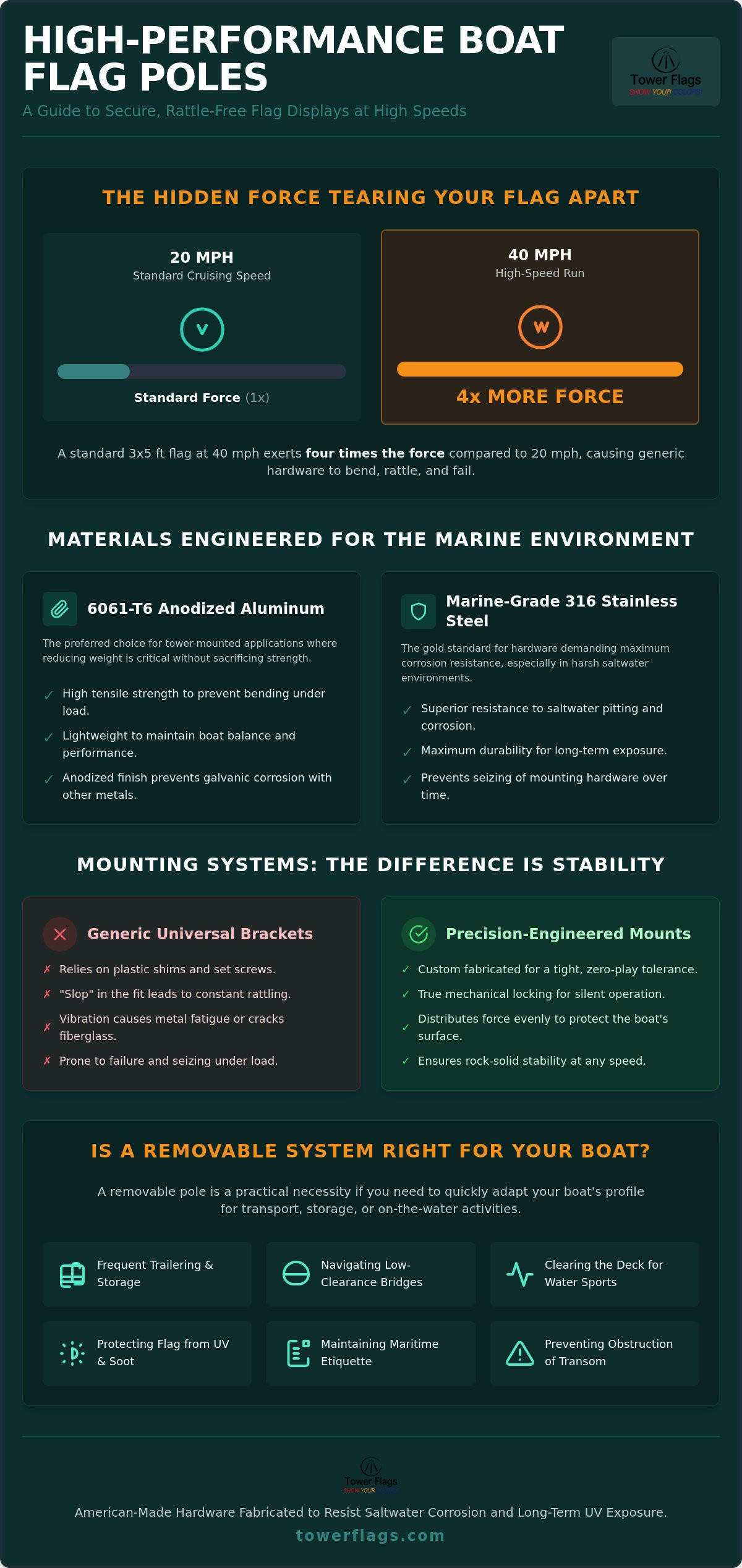
Modern vessel design prioritizes height for visibility and tower functionality, but this creates logistical challenges. A fixed mount might seem sturdy, but it becomes a liability when you encounter a low-clearance bridge or need to back the boat into a standard garage. High-speed transit adds another layer of complexity. At speeds exceeding 30 mph, the drag on a flag increases significantly. In fact, a 3x5 foot flag generates four times the force at 40 mph compared to 20 mph. Without a system designed to handle these loads, the mounting hardware becomes the weakest link in your boat's profile.
There's a fundamental difference between a simple friction fit and a true locking mount. Friction-based systems rely on tension or set screws to stay in place. While these are common in budget imports, they often fail under the rhythmic vibration of a hull hitting chop. A locking removable boat flag pole utilizes mechanical engagement, such as a spring-loaded pin or a precision-threaded collar. This ensures the pole remains part of the boat until you intentionally release it. Custom-fabricated brackets offer a tighter tolerance than universal alternatives, which typically use plastic shims to bridge the gap between the mount and the rail.
Convenience vs. Stability: The Performance Gap
Traditional removable sockets often suffer from "slop" or play within the fitting. At cruising speeds, this small gap allows the pole to vibrate. This movement eventually fatigues the metal or cracks the fiberglass mounting surface. Without a secondary locking feature, the upward lift generated by wind can actually eject the pole from its socket. A high-performance system shouldn't force you to choose between a secure display and easy removal. Precision engineering ensures the fit is tight enough to eliminate rattle while remaining simple enough for single-handed operation.
When to Choose a Removable System
Choosing a removable setup is a matter of practical necessity. Daily trailering requires a low profile to avoid power lines and tree limbs. Removing the flag when the boat is docked or in transit also protects the fabric from UV degradation and exhaust soot. Many owners of multi-purpose boats appreciate the ability to clear the deck for fishing or water sports. When considering placement, following maritime flag etiquette suggests the stern is the position of honor. A removable system allows you to maintain this tradition without permanently obstructing your transom access or swim platform.
Key Features of High-Performance Removable Poles
High-speed cruising demands hardware that does more than simply hold a flag. It must withstand significant aerodynamic drag and mechanical vibration simultaneously. A high-quality removable boat flag pole relies on precise geometry and superior materials to maintain its integrity at 40+ mph. While budget alternatives often use thin-walled tubing or plastic components, professional-grade systems prioritize mechanical efficiency to prevent failure.
Material Science in Marine Environments
Marine-grade 316 stainless steel is the gold standard for corrosion resistance, specifically against pitting in saltwater. However, anodized aluminum is a preferred choice for tower-mounted applications where weight reduction is critical. High-grade 6061-T6 aluminum provides the necessary tensile strength to carry a 3x5 foot flag without bending under load. Citing marine hardware safety standards ensures that these materials meet the rigorous demands of the open water. Choosing the right alloy prevents galvanic corrosion, which is a common cause of seized mounting hardware on high-end vessels.
Secure Locking Mechanisms for High Speeds
The method of attachment defines the performance of a removable boat flag pole. Spring-loaded detent pins offer the fastest removal, allowing for tool-free operation in seconds. Conversely, threaded compression collars provide a more rigid connection that completely eliminates "pole chatter" at high RPMs. This chatter isn't just an annoying noise; it's a sign of mechanical wear that can lead to structural fatigue. To prevent this, marine flag poles must feature specific wall thicknesses to resist the crushing force of the mount and the bending force of the wind. A flush-fit design is also essential to prevent water from entering the mounting base and causing interior corrosion.
Tapered base designs further enhance stability by creating a self-centering fit within the bracket. This removes the "slop" found in universal-fit sockets. Additionally, integrated swivel rings are a vital feature for any performance setup. These rings allow the flag to rotate 360 degrees, preventing it from wrapping around the pole during sudden wind shifts or while decelerating. For boaters seeking a permanent solution to rattling hardware, exploring precision-engineered flag poles is the logical next step. This focus on detail ensures your display remains proud and silent, regardless of the throttle position.
Selecting the Right Mount for Your Boat Type
Identifying your mounting surface is the critical first step in securing a removable boat flag pole. While mass-market hardware relies on plastic spacers and rubber shims to claim a "universal fit," these components are often the first to fail under the stress of high-speed transit. A precise fit is mandatory to prevent the vibration that eventually leads to fiberglass stress fractures or metal fatigue. Whether you're mounting to a wakeboard tower, a bow rail, or a gunwale, the hardware must be engineered to match the specific geometry of that surface. This level of detail is what separates custom boat flag brackets from generic imports that rattle loose after a single season.
Accuracy matters when measuring your mounting area. Don't rely on a tape measure for circular rails or towers; use a digital caliper to find the exact outer diameter. Even a difference of 1/8 of an inch can be the difference between a rock-solid display and a pole that chatters at cruising speed. Following established flag etiquette guidelines often dictates placing the national ensign at the stern, but your boat's specific layout might require a tower or rail mount to maintain visibility and safety.
Tower-Mounted Removable Solutions
Modern wakeboard towers often feature complex, non-standard diameters such as 2.375 or 2.5 inches. Custom-engineered clamps are designed to wrap around these specific profiles with 360-degree contact. This distribution of pressure is vital because tower-mounted poles experience significant leverage force. If the mount isn't perfectly flush, that leverage can cause the bracket to rotate or mar the tower's finish. It's also important to position the mount where it won't obstruct the sightlines of the driver or the spotter during water sports activities.
Rail and Cleat Mounting Options
Rail mounting presents unique challenges, especially when dealing with the square rails common on pontoon boats versus the round rails of center consoles. A removable boat flag pole designed for a rail must feature a non-slip interior surface to prevent it from sliding along the metal during a gust of wind. Some boaters utilize existing rod holders for a temporary display, which is a convenient short-term solution. However, for a permanent performance setup, ensure the mount is positioned so it doesn't interfere with docking lines or the deployment of fenders. Precision-machined brackets provide the clearance needed to keep your deck functional while maintaining a professional appearance.
Installation and Maintenance for Longevity
Proper installation of a removable boat flag pole ensures that the hardware remains silent and secure at high speeds. When mounting to fiberglass, always use a stainless steel backing plate to distribute the load across a larger surface area. This prevents the "point loading" that leads to unsightly gelcoat spider cracks. For metal towers or rails, torque settings can be more aggressive, but you should still verify that the bracket hasn't deformed the tubing. Check for vertical alignment using a level while the boat is on its trailer. An angled pole increases aerodynamic drag significantly, which places unnecessary stress on the mounting base during high-speed transit.
Routine inspection is the only way to catch mechanical fatigue before it leads to hardware failure. In high-vibration areas, look for hairline stress fractures around the bolt holes or the quick-release socket. If you feel any "play" or movement when the pole is locked into position, the mounting hardware has likely vibrated loose. Consistent maintenance keeps the system functioning as intended, preserving both the boat's finish and the flag's presentation.
Saltwater Corrosion Prevention
Saltwater is the primary enemy of precision-engineered hardware. Even 316 stainless steel can develop "tea staining," which appears as light brown surface oxidation. To prevent this, implement a freshwater rinse cycle for all removable internal components after every outing. Apply a thin layer of marine-grade Tef-Gel or a similar lubricant to the locking pins and spring mechanisms. This prevents the hardware from seizing and ensures that the tool-free removal process remains effortless throughout the season.
Flag Attachment and Tensioning
Managing flag tension is critical for reducing the "whip effect" on the upper section of the pole. Use adjustable clips to ensure the flag is taut but not over-stretched. If the flag is too loose, it will snap violently in the wind, creating a rhythmic tugging force that can loosen the mount over time. Proper tensioning allows the flag to fly flat, which minimizes drag and protects the fabric from premature fraying at high RPMs. If your current setup isn't meeting these performance standards, it's time to invest in a removable boat flag pole that's engineered for the task.
Ready to secure your display with hardware that outlasts the competition? Browse our full selection of American-made flag poles and brackets to find the perfect fit for your vessel.
The Tower Flags Advantage: Precision Engineering
Choosing a removable boat flag pole is often the final detail in a boat's configuration, yet it is the one most prone to failure when sourcing generic parts. We approach hardware from the perspective of a specialized workshop rather than a mass-market retailer. Precision engineering replaces the guesswork of "universal" hardware with components designed for exact mechanical engagement. This craftsman-like focus ensures that your mounting system functions as a seamless extension of your vessel. American-made manufacturing allows for tighter tolerances, ensuring that every bracket and pole meets a standard that generic imports simply cannot match.
Our focus on custom fabrication means we understand the nuances of modern high-performance boat towers. A tower on a premium wakeboard boat isn't just a piece of metal; it's a complex structural element with specific aerodynamic properties. We engineer our mounts to integrate with these specific profiles, providing a level of stability that prevents the hardware from rotating or marring the finish. When you choose a system built for your specific boat model, you eliminate the compromises inherent in third-party resellers who prioritize inventory turnover over technical exactness.
Why Universal Mounts Fall Short
The most common failure point in universal hardware is the "shim" problem. To fit multiple rail diameters, these manufacturers rely on rubber or plastic inserts. Under constant UV exposure and the heat of a summer afternoon, these materials eventually compress, crack, or rot. This leads to the very rattling and instability that a high-performance owner seeks to avoid. Furthermore, these bulky, oversized brackets often create an aesthetic mismatch on a high-end marine finish. A custom-fabricated mount eliminates the need for shims entirely, providing metal-on-metal contact that handles heavy-duty flags without reaching a weight capacity limit.
Ordering Your Custom-Fit Flag Pole
To secure a precision fit, start by specifying your boat model and the exact diameter of your mounting surface. While we offer direct-from-manufacturer support for custom mounting challenges, providing accurate measurements is the foundation of a rattle-free installation. Selecting the right pole length is equally important. A pole that is too long creates unnecessary leverage, while one that is too short might leave the flag obscured by the tower or bimini top. Before hitting the water at full throttle, use this final checklist:
Confirm the locking pin is fully engaged and flush against the mount.
Verify that the swivel rings rotate freely to prevent flag wrapping.
Ensure the mounting bracket bolts are torqued to the manufacturer’s specifications.
Double-check that the removable boat flag pole is vertically aligned to minimize drag.
When these elements align, your flag display becomes a testament to the quality of your vessel. By prioritizing engineered solutions over universal shortcuts, you ensure a secure, silent, and professional presentation at any speed.
Elevate Your Vessel's Performance and Style
High-speed cruising shouldn't be a test of your hardware's endurance. You've seen how precision engineering and material choice dictate whether your display remains secure or becomes a liability. A removable boat flag pole must offer more than just a place to hang a flag; it must provide the rock-solid stability that matches your boat's performance. By prioritizing a custom-engineered fit over generic shims, you protect your vessel's finish and ensure a silent, professional presentation at any RPM.
Reliability on the water comes from hardware that's built for the environment. Our heavy-duty 316 stainless steel construction and tool-free quick-release design provide the ease of use you need for daily transit. We provide solutions that are custom-fit for major boat tower brands, ensuring your hardware is as refined as the boat itself. It's time to stop settling for rattling universal brackets that fail under pressure.
Shop Precision-Engineered Removable Boat Flag Poles to secure your display today. Enjoy the open water with total confidence in your equipment.
Frequently Asked Questions
Will a removable flag pole stay secure at speeds over 40 mph?
Yes, provided the system utilizes a mechanical locking mechanism rather than a simple friction fit. At 40 mph, the drag force on a flag is four times higher than at 20 mph. Precision-engineered mounts ensure the hardware remains a structural part of the vessel. Unlike generic sockets that rely on set screws, a locking removable boat flag pole uses spring-loaded pins to prevent accidental ejection during high-speed transit.
Do I need tools to remove the flag pole every time I trailer the boat?
High-performance systems are designed for tool-free operation to accommodate daily logistics. Quick-release mechanisms allow you to detach the pole in seconds by simply engaging a spring-loaded detent pin. This design prioritizes convenience for trailering and clearing low bridges. You only need tools for the initial installation of the mounting bracket, which remains permanently attached to your tower or rail to provide a rock-solid foundation.
Can I use a removable pole on a wakeboard tower without scratching the finish?
Custom-fabricated mounts protect your tower by providing a precision fit that eliminates vibration. Universal brackets often rely on abrasive rubber shims that trap grit and mar the powder coat or anodized finish over time. A precision-machined aluminum clamp matches the exact diameter of your tower, distributing pressure evenly across the surface. This metal-on-metal contact, when properly torqued, ensures the hardware stays stationary and your finish remains pristine.
What material is best for a removable boat flag pole in saltwater?
Marine-grade 316 stainless steel and 6061-T6 anodized aluminum are the superior choices for saltwater environments. Stainless steel offers maximum weight for transom mounts, while aluminum is ideal for towers to keep the center of gravity low. Both materials resist the pitting and galvanic corrosion common in coastal areas. Regular freshwater rinsing of the internal locking components further extends the functional life of your hardware and prevents seizing.
How do I measure my boat rail or tower for a removable mount?
Use a digital caliper to measure the outer diameter of your mounting surface for the most accurate results. Measuring with a tape measure or string often leads to small errors that result in annoying rattling at cruising speeds. Take measurements in multiple spots to account for any slight ovalization in the tubing. Providing these exact dimensions allows for a custom-fit bracket that bypasses the failures associated with universal shims.
Is it better to mount the flag pole on the rail or the transom?
The best location depends on your vessel's layout and intended use. Mounting on a high tower or rail provides maximum visibility and keeps the flag clear of engine exhaust soot. However, traditional maritime etiquette often favors the transom for the national ensign. Ensure the chosen spot doesn't obstruct the driver's sightlines or interfere with docking lines and fender deployment during tight maneuvers in the marina.
How do I prevent my removable flag pole from vibrating or rattling?
Vibration is typically caused by "slop" or mechanical gaps between the pole and the mount. You can eliminate this by choosing a removable boat flag pole with a tapered base or a threaded compression collar. These features create a zero-tolerance connection that stays silent even in heavy chop. Verifying that your mounting bracket is torqued correctly to the tower also prevents the transfer of engine harmonics through the hardware.
Can I fly multiple flags on a single removable boat flag pole?
You can fly multiple flags if the pole's wall thickness and material strength are rated for the increased drag. Flying a second flag significantly increases the leverage force exerted on the mounting bracket. It's essential to use adjustable stainless steel clips to maintain proper tension between the flags and prevent tangling. For high-speed applications, we recommend limiting the display to a single primary flag to maintain mechanical integrity.


Comments